The quick answer
Pick 100 Creatives if you run a clothing, activewear or fashion label that sells mostly online, paid social drives a real share of revenue, and you need more ad variations per style and colorway than your team or your shoot calendar can make, with $4,000 or more to spend per engagement.
- Every engagement is quoted in writing with a fixed total, from $4,000 to $50,000+, and nothing is charged before you approve it.
- Apparel imagery for 100 SKUs starts at $10,000 per 100-SKU programme, so a drop's product shots and its ads can come from one quote.
- Creative batches come back in 48 hours, and revisions within 48 hours.
- A brand intake before production covers visual language, model preferences, colorways and export specs, so the olive jacket stays olive in every ad.
Pick something else if your best ads are real people trying clothes on in a fitting room or a bedroom mirror (a UGC creator or influencer agency), you need a seasonal brand campaign, billboards or window graphics (a brand agency or out-of-home specialist), or your collection depends on handwork and drape that has to be photographed on a real body for the website too (a fashion photographer). If you need a few ads a month and can brief them yourself, a freelancer costs less; see agency vs freelancer.
What an apparel ad has to answer before the click
A shopper looking at a jacket in a feed has three questions, in this order. Will it fit me? What does the fabric feel like? Is that the real color? A fitting room answers all three in a minute. An ad gets about two seconds and a screen the size of a hand, so the questions it leaves open turn into either a scroll past or an order the customer isn't sure about.
The unsure orders are the expensive ones. The National Retail Federation and Happy Returns put total US retail returns for 2024 at $890 billion, 16.9% of annual sales, and found that 51% of Gen Z shoppers bracket, buying several sizes or colors to send most of them back (NRF, December 2024, checked September 2026). Clothing is the category where bracketing is easiest, because size is the thing the shopper can't check from home. An ad that shows fit clearly won't stop every return, but an ad that hides fit behind a dramatic pose invites the bracket.
That gives apparel ads a different job from most categories. A soda ad sells a mood. A clothing ad has to sell a mood and quietly work as a size guide: the model's height and the size she's wearing, the hem hitting at the ankle or above it, the shoulder seam sitting where a shoulder seam should. The general layout rules, one message per ad and a product large enough to recognize, are on what makes a good static ad. Sizes and safe zones for each Meta placement are on static ads for Meta.
When the pose becomes the problem
Fashion photography has always used angles, light and styling to lengthen a leg or narrow a waist. Two recent UK rulings show where regulators now draw the line, and both matter for anyone generating or editing model images.
In February 2025 the Advertising Standards Authority upheld a complaint against Next over a product image for its power stretch denim leggings (checked September 2026). Next said it hadn't retouched the model's body, though it had digitally lengthened the leggings. The ASA ruled against the ad anyway: the low camera angle, the pose and the pointed shoes emphasized the slimness of her legs enough to make her look unhealthily thin, and other photos of the same model on Next's site didn't give that impression.
In August 2025 the ASA ruled against two Zara product listings on similar grounds (checked September 2026). In one, a low neckline and arm position drew the eye to a protruding collarbone. In the other, shadows over the model's legs made them look noticeably thin. Zara said both models had medical certificates confirming they were healthy and that the images had only minor lighting and color edits. The ASA's answer was that the image, not the model, is what gets judged.
For a brand making ads with AI, those rulings are a direct warning. Image models learned fashion from decades of editorial photography, so a generated model tends to come out taller, thinner and longer-limbed than the fit model your patterns were graded on. We explain why generated images drift toward the same look in why AI ads look the same. In a food ad that drift is scenery. In a clothing ad it's a claim about how the garment will look on the buyer, and in the UK it can be a code breach. The ASA's body image guidance (updated February 2026, checked September 2026) is written around pose, styling, lighting and camera angle, which are all things a prompt controls.
The working rules we apply to apparel images:
- Model proportions stay close to the brand's fit model and size range. If you sell sizes 0 to 20, the ads show more than size 0.
- The garment keeps its real length, rise and drape. We don't lengthen a hem or narrow a leg to make a silhouette look better than the pattern.
- Color is checked against the physical sample or the product page swatch under neutral light, including in warm lifestyle scenes.
- Fit claims in the copy ("true to size", "relaxed through the thigh") come from your size guide or product notes, never from the image model's guess.
Those checks sit in our review step, and how to review AI creative from an agency lays out the same checklist for brands reviewing anyone's work.
AI models, digital twins and disclosure
Apparel brands also have to decide what they tell customers about generated models. Two large brands have already tested the reaction.
In March 2023 Levi Strauss & Co. announced a test with Lalaland.ai to show products on more body types using AI-generated models. The criticism was fast enough that Levi's added an editor's note six days later saying it was not scaling back live photo shoots, live models or its commitment to working with diverse models (checked September 2026). Critics read the test as a way to show diverse bodies without hiring diverse models, and that is the reading the note answered.
H&M took a different route in 2025. It announced plans to make AI digital twins of 30 real models, with each model keeping the rights to their twin and being paid when it's used, and said the images would carry a watermark showing AI was involved (PYMNTS, March 2025, checked September 2026).
For a DTC label the practical choice is narrower than either. If your ads use generated models, decide before launch whether you disclose it, where (an image label, a line on the product page, your FAQ) and what you say if a customer asks in the comments. If your brand story leans on real customers or a founder who wears the product, keep those people real and use generated imagery for the product shots and scene changes around them. The garment itself is never generated: every ad we make starts from photos or 3D files of the real product.
Six apparel formats that work as statics
These are the formats we start an apparel brief with. Each one gives the image a single job, and each is cheap to vary across colorways once it earns spend.
1. The fit callout
One model, full length, with a small line of type: "Model is 5'9" and wears a size M." It answers the first question outright. It works best for pants, dresses and outerwear, where length and rise decide the sale, and it speaks directly to the shopper who is about to order two sizes.
2. The size-range lineup
The same garment on three bodies across your size range, each labeled with the size worn. It's the honest version of what Levi's was trying to do, and it only works if the three bodies look like real people in those sizes and the garment drapes differently on each one.
3. The fabric close-up
A tight crop of the knit, the weave, the brushed back of a fleece, the stretch of a waistband pulled between two hands. Fabric is what a shopper would touch in a store, so this image stands in for the hand. One line of copy naming the fiber and weight is enough.
4. The colorway grid
Every color of one style, flat or on the same model in the same pose, with the color names readable. It sells range and answers "does it come in black?" before anyone taps. It's also where color drift shows most, so it's the first ad we check against the samples.
5. The outfit build
Three pieces worn together with a price or a name on each. It lifts basket size by answering "what do I wear it with?" and suits brands whose bestsellers are basics that need a hero piece next to them.
6. The drop or restock card
The product, a date and one word. Drops and restocks are the moments apparel brands already have an audience waiting for, so the ad needs speed more than polish. This format is where a 48-hour turnaround matters most.
Which of these wins for your line is a testing question. How many ad creatives you need covers how many variations to run at a given budget, and static vs video ads covers when movement, like a skirt swinging or a jacket zipping, needs video instead.
Product imagery without a shoot for every drop
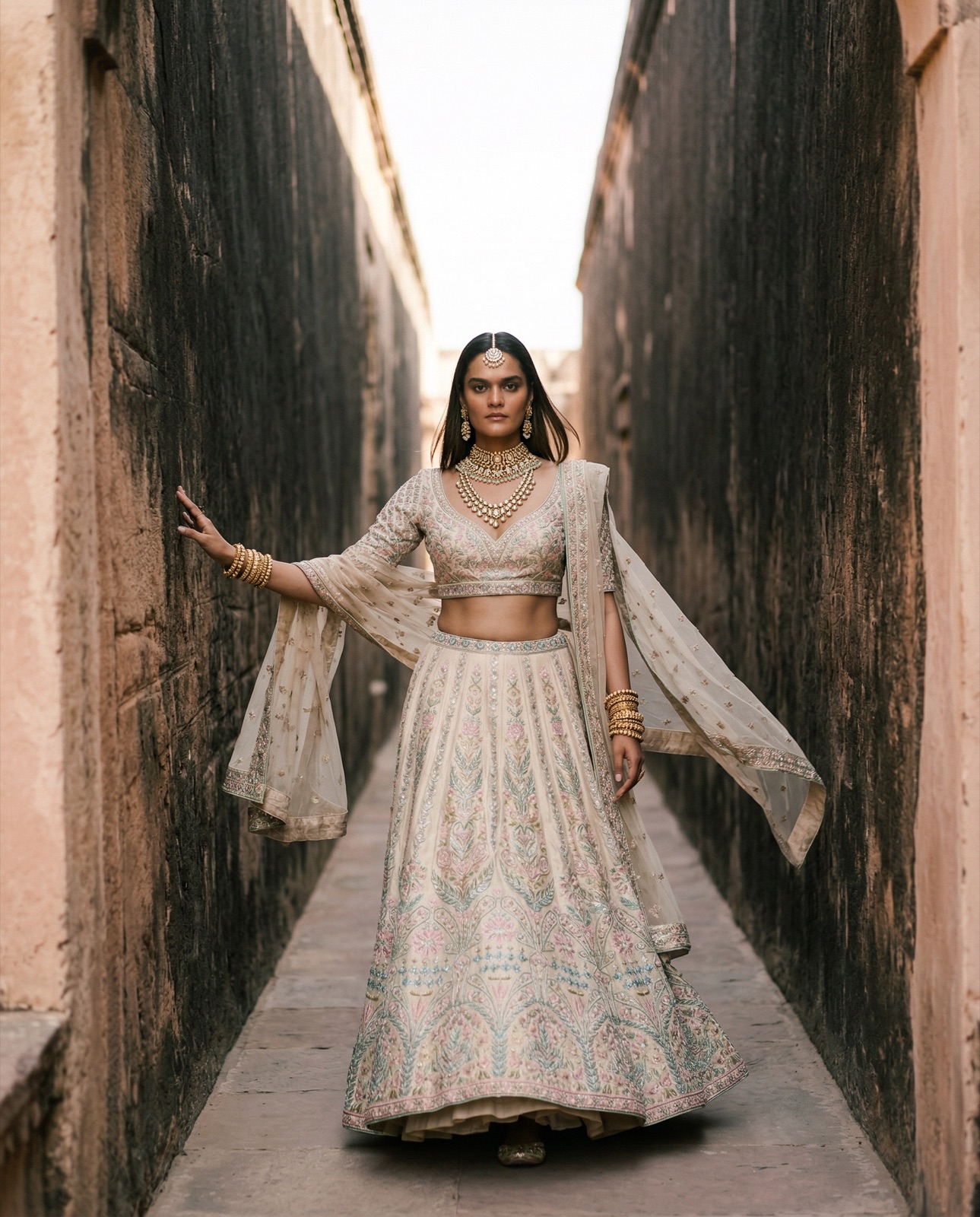
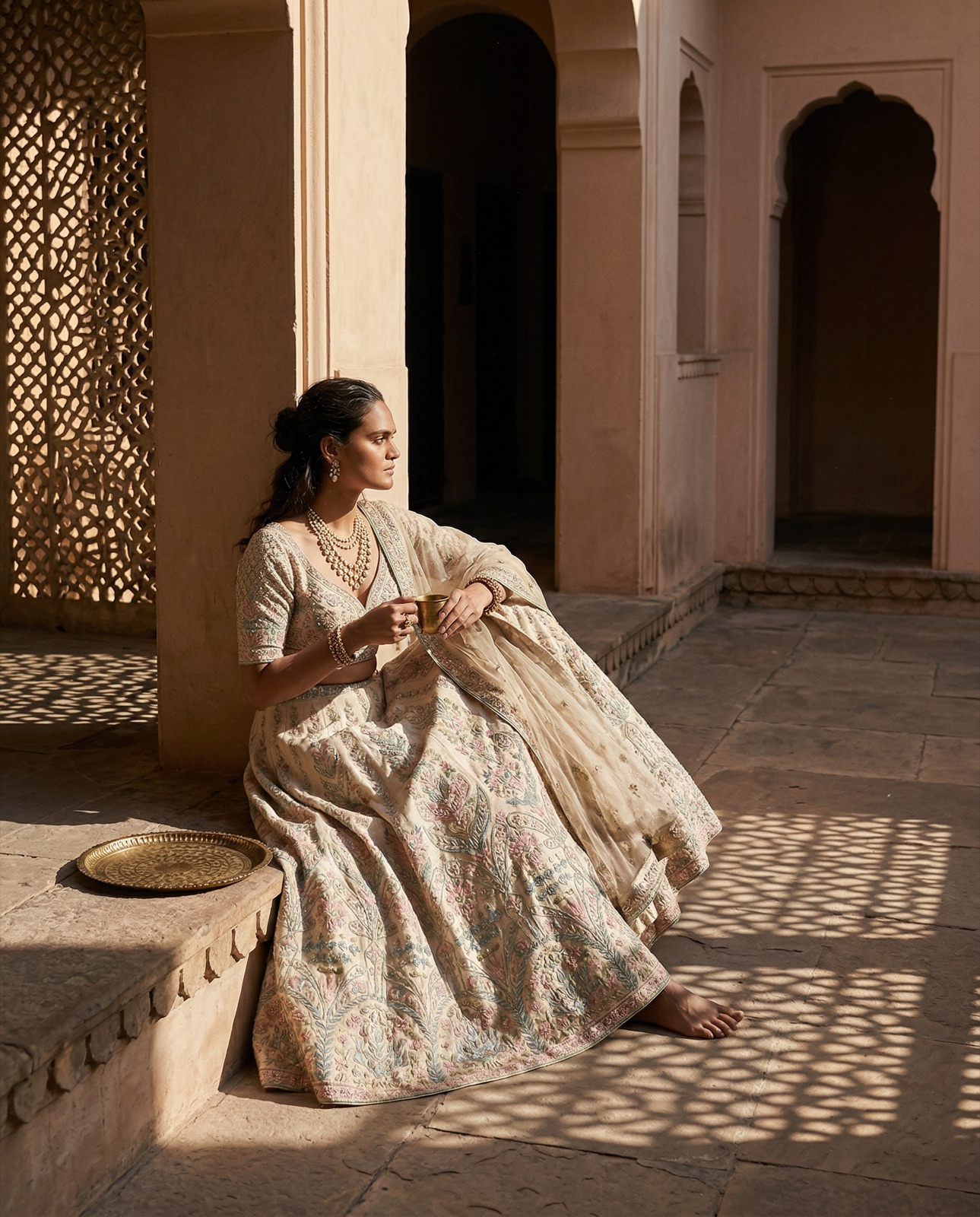
Apparel ad programs usually stall on imagery before they stall on ideas. A new colorway, a capsule, or a restock in a new fabric each needs on-model and detail shots, and each shoot needs a studio, a stylist and models booked weeks out. 100 Creatives makes its product and campaign images with Overs, an AI image tool that makes photos matching a brand without a shoot. Overs is our sister product, made by 100 Creatives' founder; both are brands of 2587689 Alberta Ltd.
Apparel is one of the harder categories for this, and our own records show it. Before Overs existed, we built four campaigns in 2026 by hand with AI image models. Men's trousers on a model took 40 renders to get 11 usable images. Surf apparel on one model took 163 renders for 12 keepers, because holding the same face and body across a dozen looks is much harder than getting one good frame. Across all four campaigns, 361 renders produced 45 keepers, about eight renders per usable photo. That ratio is why we review every frame against the real garment before it goes into an ad. Workflows for high-SKU catalogs are covered in on-model photography at scale.
Some apparel ads still need a camera. A try-on haul, a founder wearing the collection, handwork that a customer will inspect up close, or a garment whose drape changes with every step: when you need a real photo shoot lists those cases, and we'll tell you before quoting if your brief is one of them. If your best-performing ads are creators in their own mirrors, UGC ad creatives explains what that route costs and involves.
What this page used to say
An earlier version of this page described 100 Creatives as the creative and content agency apparel brands hire for everything: hero brand campaigns, billboards and transit, retail and point-of-sale, creator casting and talent management, and virtual photoshoots, all from a named senior team on a flat monthly retainer. It also quoted shoot-day costs without a source. That overstated what we do. 100 Creatives makes static and video ads for Meta, TikTok and Google, and the product imagery behind them, quoted per engagement. It doesn't run brand campaigns, design window graphics or manage creators.
How an engagement works
It starts with a brand intake: visual language, model preferences, colorways and export specs, plus your size guide, fit model measurements, photos or 3D files of each style, and the claims you already make about fit and fabric. From there you get a written quote with a fixed total before any work starts, in one of four ranges: $4,000 to $10,000, $10,000 to $25,000, $25,000 to $50,000 or $50,000+. Apparel imagery for 100 SKUs starts at $10,000 per 100-SKU programme, and product photography projects start at $5,000. Nothing is charged until you approve the quote in writing, quotes are valid for 30 days, and projects are invoiced in advance. Creative batches come back in 48 hours, and so do revisions. Fees are non-refundable once work has started. To compare those numbers with other studios and subscriptions, see ad creative agency pricing.
Which should you buy?
Online apparel brand running paid social
Your styles and colorways are set, Meta, TikTok or Google drives sales, and you need statics, AI video and on-model imagery across your line from $4,000 per engagement.
Real people trying it on
Your best ads are try-on hauls and honest fit reviews. That needs real creators and usage rights, not generated images.
Handwork, drape or a named face
Your pieces are sold on detail a customer inspects up close, or you need a lookbook and campaign with a recognizable model or founder.
A new brand or a big seasonal push
You need positioning, a rebrand, billboards or store windows. Paid-social ads come after that work.