


Apparel · the brand spine

Apparel brand identity is the spine every campaign is built against.

Apparel brand identity is the operational spine every campaign, lookbook, PDP and feed post is built against — the wordmark and type, the palette locked in Pantone-referenced sRGB, the voice, the casting register, and the photography rules that govern light, environment, styling logic and negative space. It is not a logo file and it is not a mood board. For a clothing label it is the system that makes the spring campaign, the wholesale linesheet and the Tuesday Instagram post read as one brand instead of three. The logo proves you exist; the identity system proves you are the same brand across every surface a customer touches. For apparel labels at the three to thirty million revenue band — Buck Mason, Todd Snyder, Reformation, DÔEN, Vuori, Aimé Leon Dore, Frankie Shop, Sézane — the identity is the difference between a label that compounds and one that re-introduces itself every season.

By Abhi Chawla, founder · Last updated: 2026-06-19

Brand-world reference

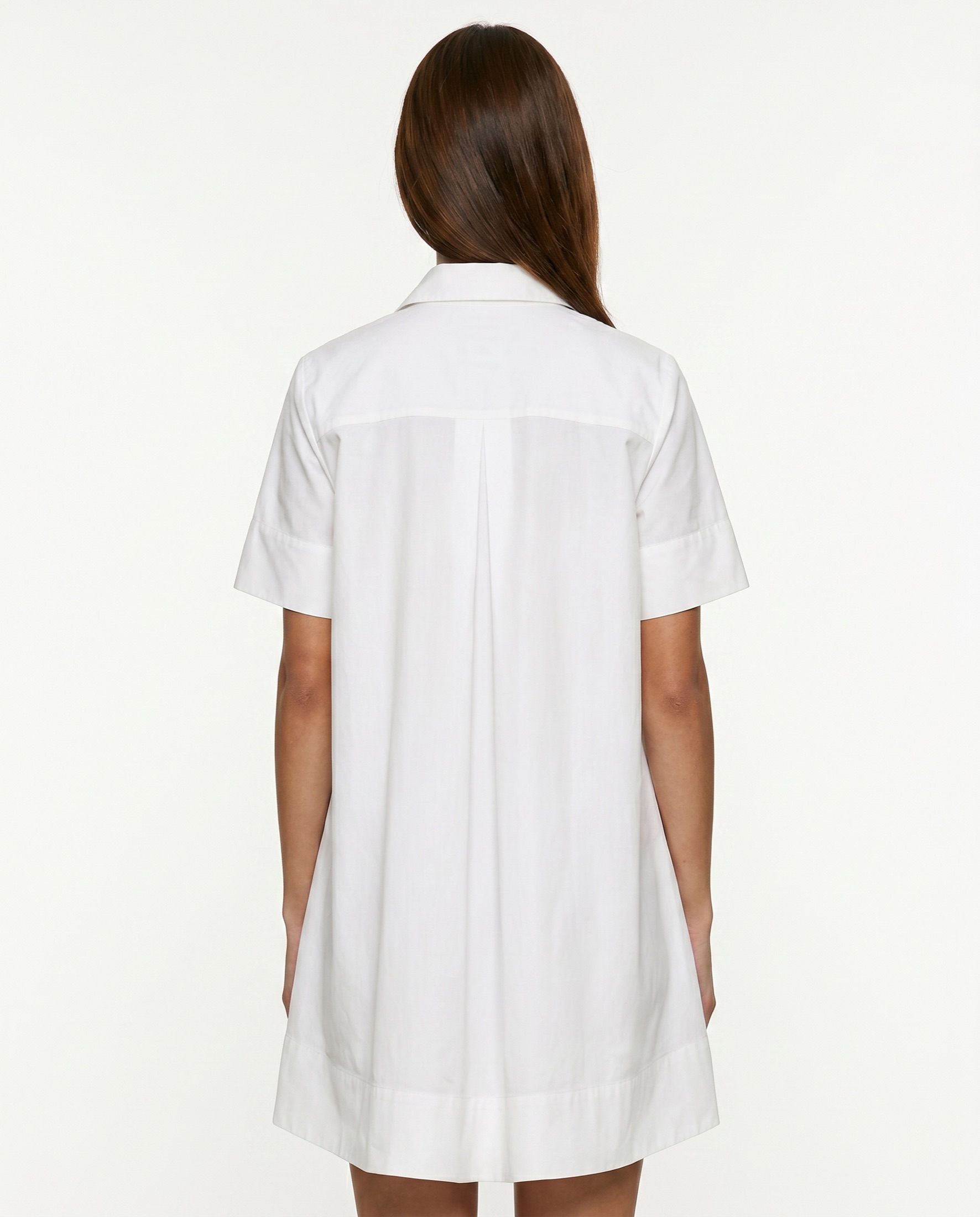
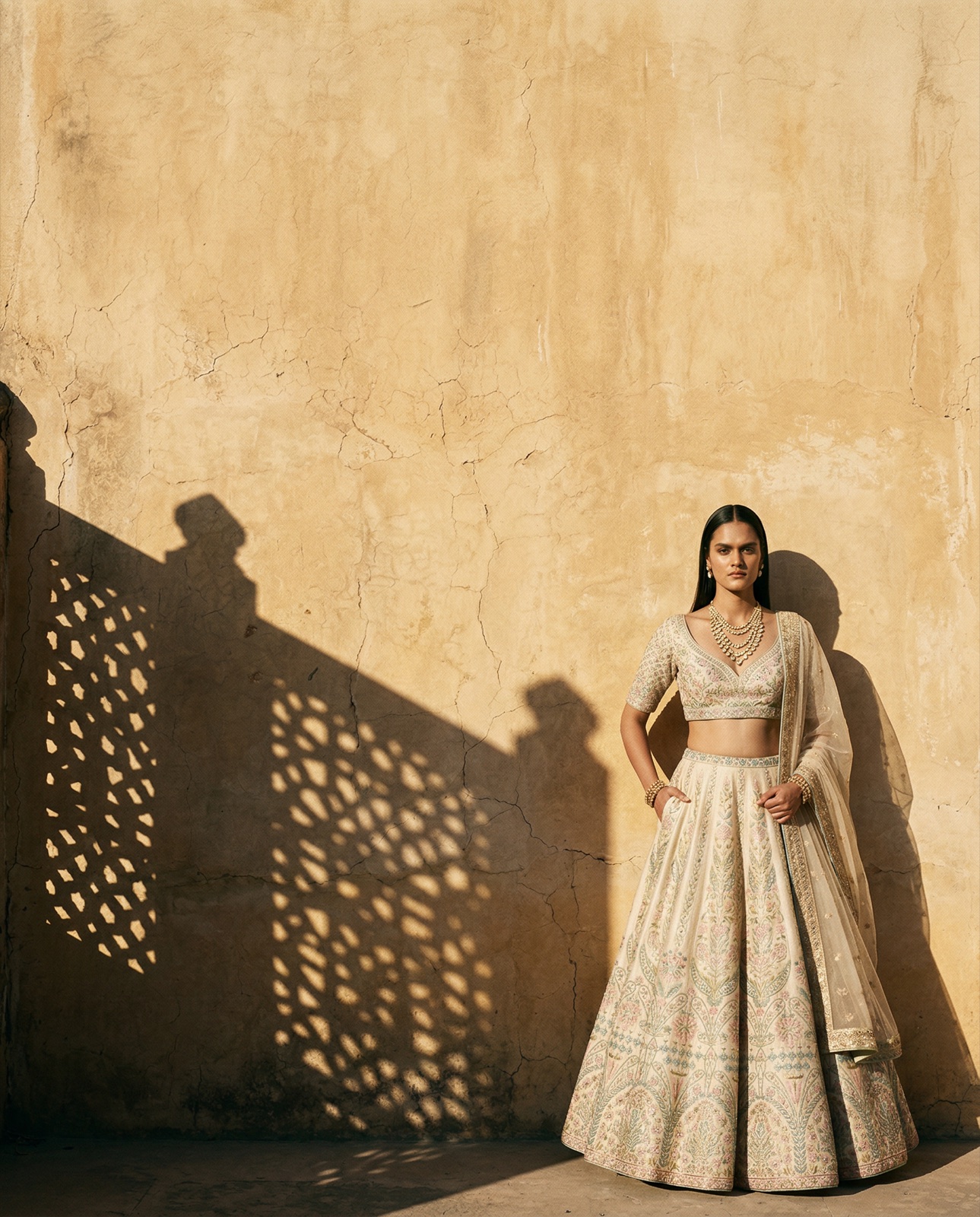
One label, four surfaces, one read — what a locked apparel brand identity looks like.

The brand identity lives in a PDF nobody shoots against.

It is the Monday the autumn campaign brief lands on the brand manager's desk. She opens the brand guidelines PDF the agency delivered eighteen months ago — sixty pages, beautiful, a logo lockup grid, a Pantone swatch board, two pages on "tone of voice", a photography section that is four mood-board collages and the sentence "imagery should feel elevated, authentic and aspirational." She forwards it to the new photographer with the shot list. Three weeks later the autumn frames come back: well-lit, well-styled, and unmistakably a different brand than the spring campaign sitting one row up in the feed grid. Cooler light. Tighter crops. A model who reads five years younger. The guidelines were followed. The brand still drifted.

This is the central failure mode of apparel brand identity as most labels practise it: the identity is a description, not an instruction set. The PDF tells the photographer the brand should feel "elevated and authentic" — a sentence that means something different to every person who reads it. It does not tell them the light comes from a soft north-facing source at roughly forty-five degrees, that the casting register is a thirty-two-year-old with lived-in posture rather than a twenty-two-year-old editorial face, that the negative-space ratio is generous and the crop language is full-figure with headroom. So each season the brand is reinterpreted from scratch, and the drift compounds.

The cost of that drift is not abstract. A customer needs repeated, consistent exposure to recognise a brand, and recognition is what lets a label charge above the commodity price for the same cotton poplin its competitor sells. When the spring shoot and the autumn shoot read as two brands, the customer is meeting a stranger twice instead of a friend twice. Recognition never compounds, so the brand stays a price-taker. Identity is not a design deliverable. It is the mechanism by which a clothing label earns the right to charge more than the fabric costs. This is the same argument the apparel brand positioning work makes one layer upstream — positioning decides the claim, identity makes it legible.

What apparel brand identity actually is — an operational spine, not a logo.

Apparel brand identity is the operational spine the entire visual output of the label is composed against. The logo and palette are its most-cited components and its least load-bearing. A clothing brand lives on imagery — campaign, lookbook, PDP, lifestyle, paid, wholesale — and the wordmark appears on maybe four percent of the pixels a customer ever sees. The other ninety-six percent is governed by the parts of the identity nobody puts on the agency case-study slide: the casting register, the light direction, the named environments, the styling logic, the negative-space ratio, the crop language. An identity that stops at the logo leaves ninety-six percent of the brand un-governed.

The distinction that matters is between a brand book and a brand spine. A brand book describes the brand to a human reader — adjectives, mood boards, aspirational language, a colour story. A brand spine instructs a production. It specifies the palette in Pantone-referenced sRGB with a tolerance — under three Delta E drift, the same standard a print house holds to — so the green in the spring campaign is the green in the autumn paid ad. It specifies light in physical terms rather than as a feeling. It names the environments the customer should recognise rather than gesturing at "elevated locations." The book is read once and filed. The spine is signed against on every frame before it ships.

This is why a label can own immaculate guidelines and still have an identity gap. The guidelines describe a brand the production never produces, because the guidelines were never written as instructions a photographer, a stylist or an AI production pipeline could execute against without interpretation. The brand that compounds is the one whose identity is operationalised — built as the document every downstream surface inherits from. That broader brand-world thinking is laid out in the brand world for fashion primer; the identity spine is the specific, signable artefact at the centre of it.

The eight load-bearing parts of an apparel brand identity.

A working apparel brand identity has eight components, and most labels have built three of them well and the other five not at all. The first three are the table-stakes graphic layer: the wordmark and logo system with clear-space and minimum-size rules; the typographic system with a display face, a working face and the ratios between them; and the palette, locked in Pantone-referenced sRGB with a Delta E tolerance so it survives the trip from the designer's screen to the paid ad to the swing tag. These three are necessary, they are what agencies deliver beautifully, and on their own they govern almost nothing a customer sees.

The next two are where an apparel brand is actually held or lost. The photography rules govern the imagery layer in instruction form — light direction in physical units, named environments, styling logic, negative-space ratio per crop, and the crop language itself. The casting register defines the customer the brand casts to: the age, the posture, the body language, the styling instinct, the relationship to camera. Buck Mason's lived-in thirty-something and Frankie Shop's editorial downtown register are both casting decisions, and getting them onto paper as a rule is what stops the next photographer defaulting to a twenty-two-year-old agency face. These two components decide the ninety-six percent.

The final three carry the system into the world: the voice and tone with real example copy rather than adjectives, so the email subject line and the product description read as one brand; the layout and grid system that governs lookbook spreads, the wholesale linesheet, the PDP module and the feed crop; and the application set that shows the whole system deployed on every surface — swing tag, mailer, dot-com hero, paid ad, packing slip. The application set is the proof the spine survives contact with reality. When all eight are built as instructions and signed against on every output, the brand reads as one across the campaign hero, the campaign system that ships against it and the Tuesday feed post alike.

01

Write instructions, not adjectives

"Elevated and authentic" tells a photographer nothing. "Soft directional light from a north-facing source at forty-five degrees, full-figure crop with headroom, generous negative space at a two-to-one ratio" tells them exactly what to shoot. The identity that holds is written so two photographers six months apart produce frames you cannot tell apart. Every component is an instruction a production can execute without interpreting your mood.

02

Lock the palette in Pantone-referenced sRGB

The brand green has to be the same green on the designer's screen, the paid ad, the dot-com hero and the swing tag. Lock it in Pantone-referenced sRGB with a tolerance under three Delta E — the standard a print house holds. A palette specified as "warm neutrals" drifts every season. A palette specified to a Delta E tolerance is the same brand in spring and in autumn.

03

Make the casting register a written rule

The single fastest way a brand drifts is the next photographer defaulting to a different face. Write the casting register down: the age, the posture, the body language, the relationship to camera. Buck Mason's lived-in thirty-something is a casting decision. So is Frankie Shop's downtown editorial register. When it lives on paper as a rule, it survives the change of photographer.

04

Govern the imagery layer, not just the logo

The wordmark is four percent of the pixels a customer sees. The photography rules govern the other ninety-six. Light direction, named environments, styling logic, negative-space ratio and crop language are the load-bearing components of an apparel identity. A system that perfects the logo and leaves the imagery to interpretation has governed the wrong four percent.

05

Build the spine to be signed against

The test of an identity is not whether it reads well in a deck. It is whether an art director can hold a finished frame against it and sign it off — or reject it — without debate. A spine specifies the colour register, light, casting, negative space and crop precisely enough that sign-off is a check, not an argument. The PDF gets filed. The spine gets used on every frame.

06

Make it inherit, so every surface reads as one

The campaign hero, the lookbook, the wholesale linesheet, the PDP and the feed-depth layer should each inherit the brand from the same spine rather than reinventing it. When the spine is the single source of truth, a season shot once is consistent across every channel for free. Drift happens when surfaces are briefed independently. Coherence happens when they all sign against one document.

The three things brands call "brand identity" — and which one actually holds the label together.

Level 1

The logo package

A wordmark, a secondary mark, a colour palette as hex codes and a font pairing. Delivered as a ten-page PDF, often for three to eight thousand from a freelance designer. It is real and necessary work, and it governs almost nothing downstream. The brand looks consistent on its letterhead and its login screen and drifts on every shoot. Most apparel labels at launch have exactly this and mistake it for an identity, then spend two years wondering why the brand never feels like one brand.

Level 2

The brand guidelines book

The logo package plus tone-of-voice pages, mood boards, a photography "feel" section and application mockups — sixty to a hundred pages, fifteen to sixty thousand from an agency. It describes the brand richly and instructs the production weakly. The photography section is collages and adjectives, not light in physical units or a written casting register. It reads beautifully and gets filed. The next photographer reinterprets it, and the drift the book was meant to solve continues one register quieter.

100 Creatives

The operational brand spine

The graphic layer plus the load-bearing imagery layer written as instructions — palette in Pantone-referenced sRGB under three Delta E, light direction in physical units, a written casting register, named environments, negative-space ratio, crop language and a voice section with real example copy. Built to be signed against on every frame, and built to be inherited by the campaign, lookbook, linesheet, PDP and feed. The brand reads as one across every surface because every surface is composed against the same document.

Why identity without positioning is beautiful nonsense.

The most expensive mistake in apparel branding is building the identity before the positioning is settled. Positioning is the strategic claim: the price tier you occupy, the customer you serve, the brand you are explicitly against. It decides that the label is premium-casual American menswear at the Buck Mason tier rather than the Uniqlo tier below it or the Tom Ford tier above. Identity is downstream of that — the visual and verbal system that makes the claim legible without anyone reading a word. Get positioning wrong and the identity is a perfectly executed answer to the wrong question.

You can read the price tier off the imagery before the wordmark loads, and that is the identity doing the positioning's work. A warm-neutral palette, soft directional light, generous negative space, a lived-in thirty-something casting register and a controlled studio environment signal premium-casual at a specific price point. Saturated colour, hard flash, dense crops and a twenty-two-year-old editorial face signal a different price point and a different customer. Neither is better. They are answers to different positioning decisions, and the identity's only job is to encode the decision the positioning already made — accurately, repeatably, on every surface.

This is why the identity work and the positioning work cannot be sequenced backwards. A label that commissions a stunning identity system while still describing itself as "premium but accessible" — the positioning mush every founder eventually says out loud — has bought a beautiful encoding of an undecided claim. The frames will be gorgeous and they will signal three price points at once, because the brief did. Settle the positioning first; the apparel brand positioning framework is built to force the decision. Then the identity has something true to encode. For Canadian labels building both at once for a global market, the apparel creative agency engagement runs the two together.

What locking the spine looks like when the brand is moving onto it.

Locking an apparel brand identity is two to four weeks of working sessions and then two to three campaigns of proof. The first sessions are ingestion: we walk the existing brand — the strongest campaign frames the brand has ever shot, the wordmark and type, whatever palette exists, the positioning as it actually stands rather than as the website claims it. We pull the implicit rules out of the work that already reads right and discard the frames that drifted. The output of ingestion is not a mood board. It is the first draft of an instruction set: this is the light, this is the casting register, this is the negative-space ratio, this is the environment list.

The middle sessions build and test the imagery layer. We compose a first wave of test frames against the draft spine — across the campaign, lifestyle and PDP registers — and the art director signs each off or rejects it against the written rules. Where a frame is rejected, the rule was either wrong or under-specified, and we tighten it. This is the step the guidelines-PDF process skips entirely, and it is the step that converts a description into a spine. By the end the document is a forty-page operational artefact: every component written as an instruction, every imagery rule proven against frames the art director has already signed.

Then the spine proves itself over the first few campaigns. The spring campaign is composed against it, the lookbook inherits it, the PDP refresh inherits it, the feed-depth lifestyle layer inherits it, and the autumn campaign — shot by a different photographer or produced through our AI pipeline — reads as the same brand because it was signed against the same document. The drift stops, the recognition compounds, and the brand starts behaving like one brand. When the identity and a first campaign are commissioned together as a single engagement, that is the productised apparel brand identity and campaign system — the same spine, delivered with the season's launch campaign built against it on day one.

Apparel brand identity · frequent questions

What is apparel brand identity?

Apparel brand identity is the operational spine every campaign, lookbook, PDP and feed post is built against — the wordmark and type, the palette locked in Pantone-referenced sRGB, the voice, the casting register, and the photography rules that govern light, environment, styling logic and negative space. It is not a logo file and it is not a mood board. For a clothing label it is the system that makes the spring campaign, the wholesale linesheet and the Tuesday Instagram post read as one brand instead of three. The logo proves you exist. The identity system proves you are the same brand across every surface a customer touches.

Isn't apparel brand identity just the logo and the colour palette?

The logo and palette are the smallest, most-cited part of it and the part agencies over-deliver because it photographs well in a case study. The load-bearing part for an apparel brand is everything that governs imagery — the casting register, the light direction in physical units, the named environments the customer recognises, the styling logic, the negative-space ratio, the crop language. A clothing label lives or dies on imagery, and the logo appears on maybe four percent of the pixels a customer ever sees. An identity that stops at the logo leaves the other ninety-six percent un-governed, which is why two shoots by two photographers six months apart read as two different brands.

Why does our brand identity keep drifting season to season?

Because the identity lives in a static PDF nobody shoots against. Each season a new photographer, a new freelance creative director or a Sunday phone shoot reinterprets the brand from scratch, anchored to whatever reference is on the mood board that week. The drift is not a discipline failure by any one person — it is a missing spine. When the identity is a forty-page operational document that specifies the colour register, light, casting and crop rules every frame is composed against, the drift stops because there is a single source of truth to sign against. The PDF describes the brand. The spine produces it.

How is brand identity different from brand positioning?

Positioning is the strategic claim — the price tier you occupy, the customer you serve, and the brand you are against. Identity is the visual and verbal system that makes that claim legible without words. Positioning decides the brand is premium-casual American menswear at the Buck Mason tier rather than the Uniqlo tier or the Tom Ford tier. Identity then encodes that into the warm-neutral palette, the soft north-window light, the lived-in casting and the generous negative space that signal exactly that price point. Get positioning wrong and the identity is beautifully executed nonsense. Get identity wrong and the positioning never reaches the customer.

What does a real apparel brand identity system actually contain?

Eight load-bearing components: the wordmark and logo system with clear-space and minimum-size rules; the typographic system with a display and a working face and the ratios between them; the palette in Pantone-referenced sRGB with under three Delta E drift tolerance; the photography rules covering light direction in physical units, named environments, styling logic, negative-space ratio and crop language; the casting register that defines the customer's face and body language; the voice and tone with real example copy; the layout and grid system for lookbook, linesheet, PDP and feed; and the application set showing the system on every surface from the swing tag to the paid ad. The first three are table stakes. The photography rules and casting register are what actually hold an apparel brand together.

How long does it take to lock an apparel brand identity?

The spine document itself locks in two to four weeks of working sessions — ingestion of the existing brand, positioning alignment, palette and type, then the photography rules and casting register built against a first wave of test frames the art director signs off. The slower part is proving it holds, which happens over the first two to three campaigns shot against the spine. A brand that locks the identity in three weeks and then shoots three consecutive campaigns against it has a working identity inside a quarter. A brand that commissions a beautiful sixty-page guideline PDF and never shoots against it has spent the budget and bought drift.

We have a logo and guidelines already. Do we need this?

If your last three campaigns read as one brand at a glance with the wordmark removed, you do not. If a customer scrolling your feed could not tell the spring shoot from the autumn shoot apart by their visual register alone, your guidelines describe a brand the production never produces — and you have an identity gap, not an identity. The test is not whether you own a guidelines PDF. The test is whether the imagery downstream of it is governed by it. Most apparel brands at the three to thirty million band own the PDF and have never operationalised it into the photography rules that decide ninety-six percent of what the customer sees.

Where does apparel brand identity sit relative to the campaign work?

Upstream of all of it. The identity spine is the document the campaign hero, the lookbook, the wholesale linesheet and the feed-depth lifestyle layer are each composed against. Get the spine right and every downstream surface inherits the brand for free. The productised version — where identity and a first campaign are delivered together as one engagement — is the apparel brand identity and campaign system. This page is the broader answer to what apparel brand identity is and how it works as an operational spine; that page is the service that builds and ships it alongside a season's campaign.

Lock the spine

Bring us the brand that keeps drifting. We'll build the spine it shoots against.

If you are a brand manager, creative director or founder at a three to thirty-million apparel label and your identity lives in a PDF nobody shoots against, send your strongest campaign frames and your current guidelines. We will pull the implicit rules out of the work that already reads right, build the eight components as an operational spine, and prove it across your next campaigns. Send your brand and we will reply with a plan — abhi@paperkites.co.

Talk through your brand spine