
Apparel · the system beneath the campaign

What is a brand world for fashion, and why does it beat one more shoot.

A brand world for fashion is the durable visual system every campaign, lookbook, drop and feed post is composed against — the palette held in Pantone-locked sRGB, the light direction, the casting and model identity, the named environments the customer recognises, the negative-space ratio and the styling logic. It is not a single shoot and it is not a logo file. It is the spine that makes a Reformation post read as Reformation before the wordmark loads, the system that lets a label shoot three campaigns a year that read as one continuous brand rather than three different agencies passing through. For the founder who keeps re-briefing a "look" every season and quietly wonders why the brand never seems to compound, the answer is almost never the photographer and almost always the absence of a world for the photographer to work inside. The campaign is the seasonal expression. The brand world is the constant underneath it that accumulates.

By Abhi Chawla, founder · Last updated: 2026-06-19

Brand-world reference

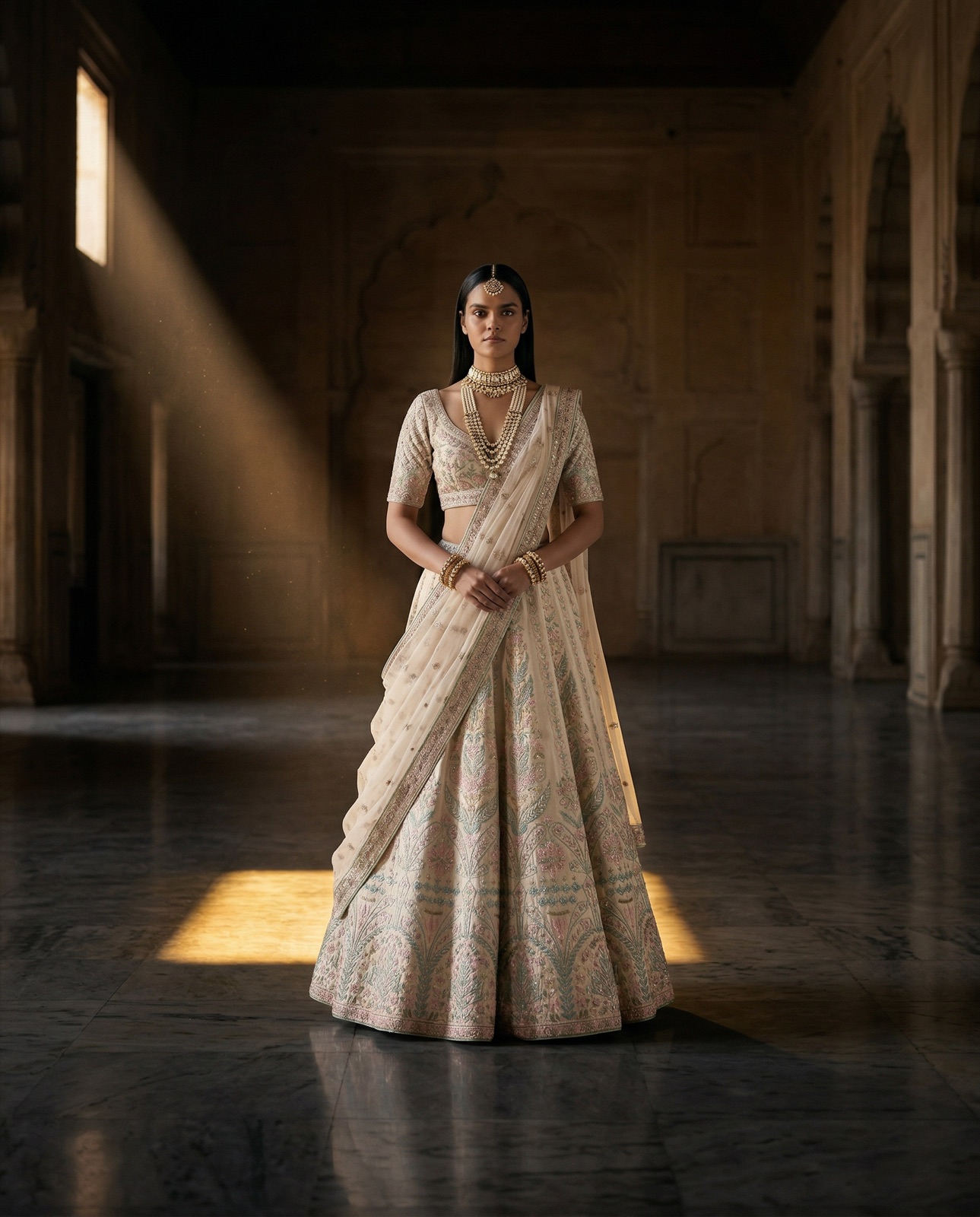
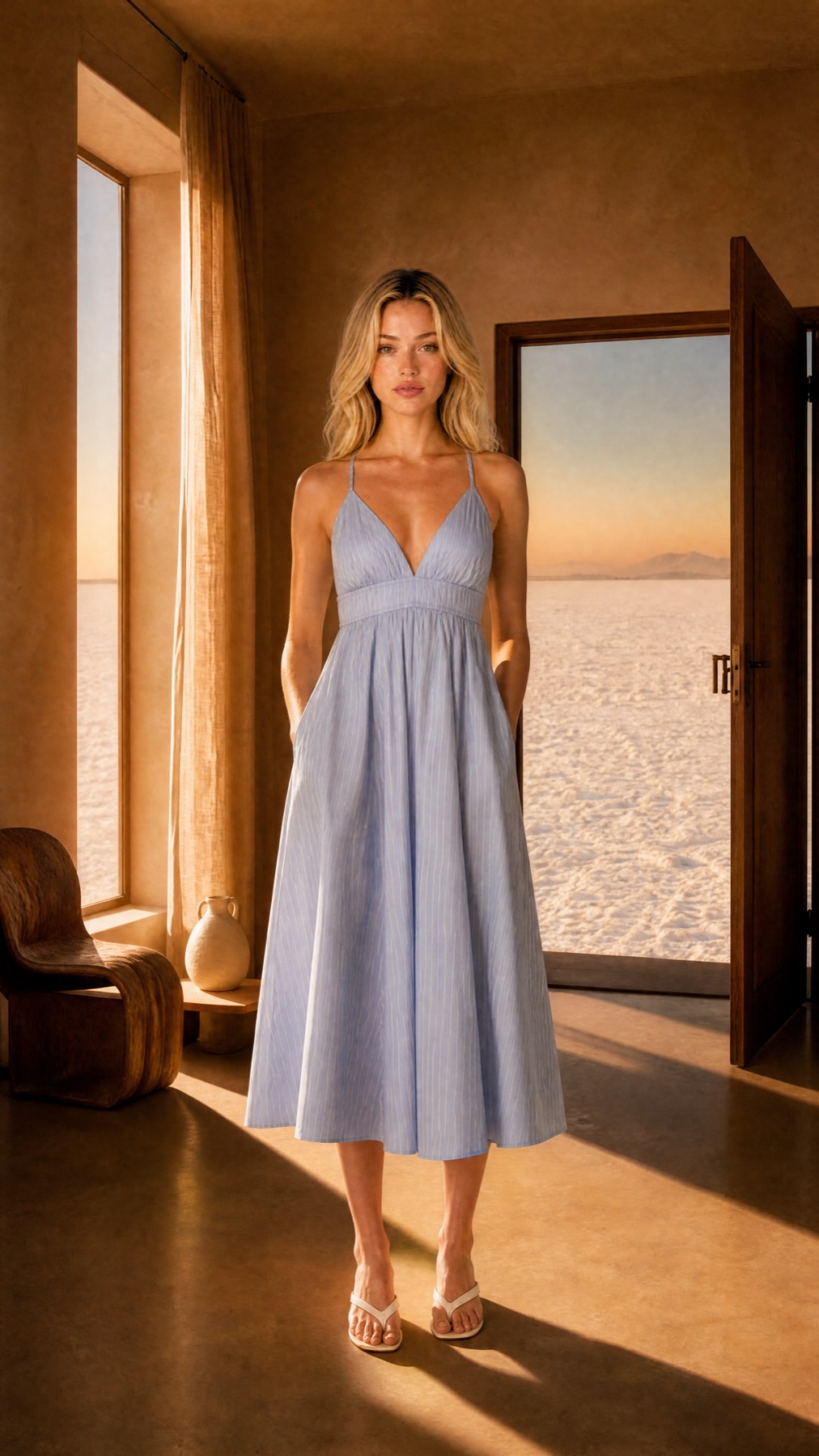
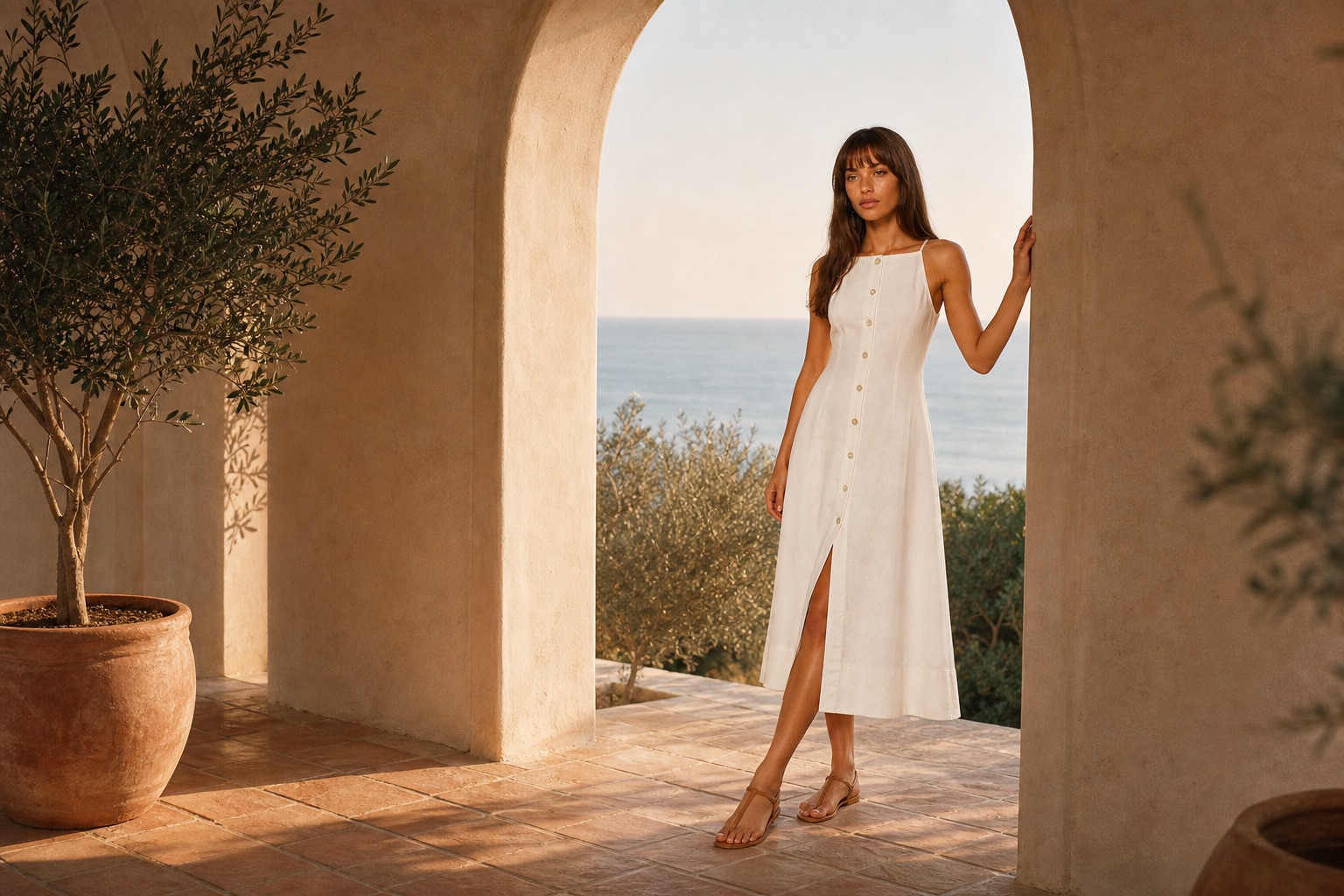
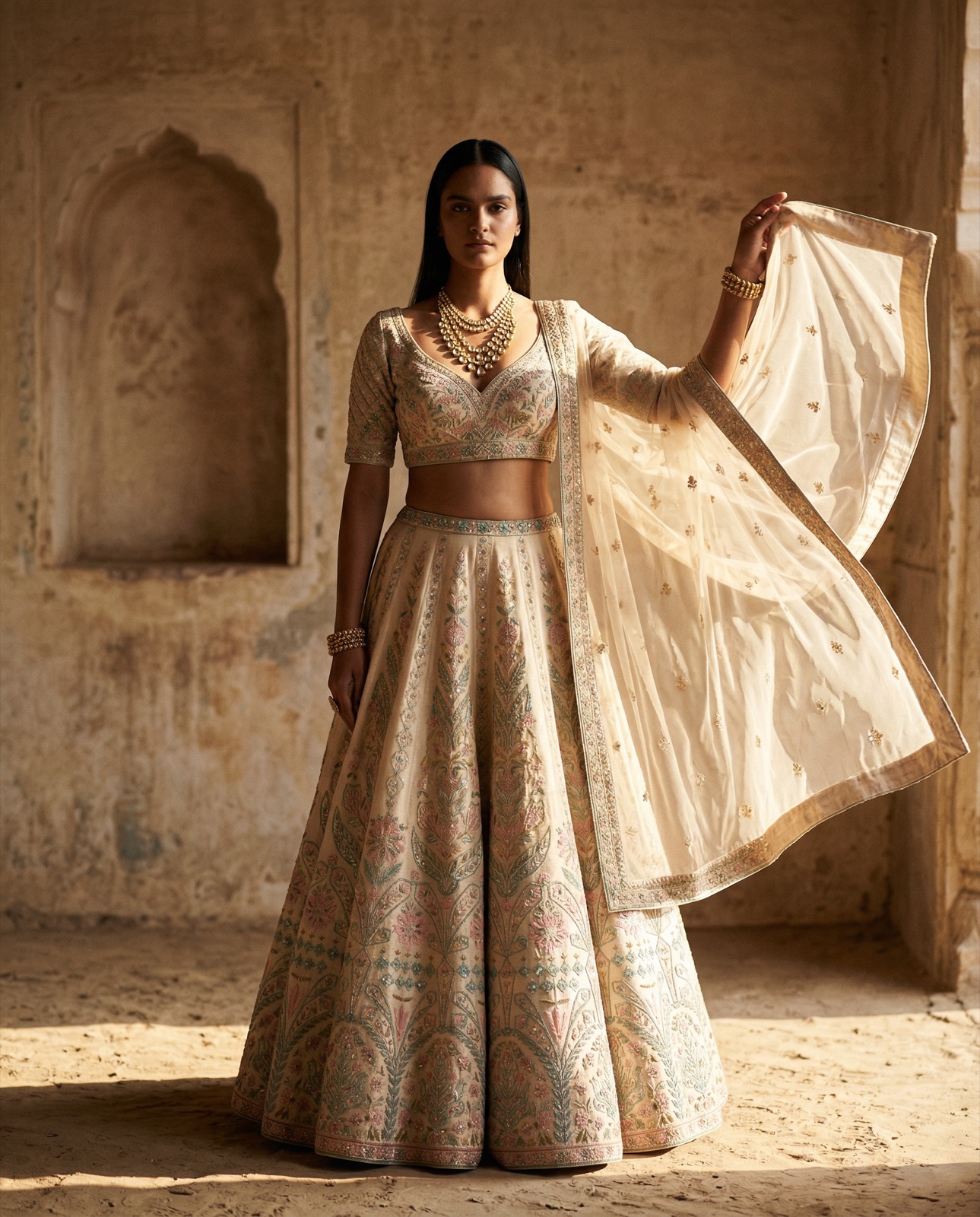
Four shoots, four brands, one system each — what a brand world for fashion looks like in frame.

It is the third season and the brand still does not look like itself.

It is the kickoff call for the third campaign. The founder pulls up the last two seasons side by side and something is wrong that she cannot name in a sentence. Season one was shot by a photographer who lit warm and shot tight. Season two went to a different studio that lit cool and left air around the garment. Both shoots were good. Both ran their six to twelve weeks. But scrolled together in the grid they read as two different labels, and the new agency on the call is already asking for a moodboard so they can establish "the look" — for the third time in eighteen months. The founder has paid for three looks and owns zero of them, because each one expired the week the campaign rotated out.

This is the re-briefing trap, and almost every emerging fashion label is in it. The instinct is correct — you do need to shoot every season. The error is treating each shoot as the unit of brand-building rather than as one expression of a system that should already exist. Without a brand world, the photographer is the brand. Change the photographer and you change the brand. The label is renting its identity one shoot at a time from whoever holds the camera that quarter, and renting is the opposite of compounding.

The brands that look, by year three, like they have always existed did not shoot better than everyone else. They shot against a system. Aritzia did not discover its sun-washed contemporary register by luck across forty unrelated shoots; the register is documented and every shoot inherits it. Reformation's feed reads as one continuous brand because the palette, the casting and the negative-space ratio are fixed and only the season changes inside them. The shoot is the variable. The world is the constant. The compounding lives entirely in the constant.

A brand world is a documented system, not a mood and a vibe.

The word "brand world" gets used loosely, so define it precisely. A brand world for fashion is a documented production system with six locked components, and the test of whether you have one is brutally simple: could a photographer you have never met shoot a frame that your art director would sign off without notes, working only from the document? If yes, you have a world. If the answer depends on which photographer it is, you have a relationship with a photographer, which is a different and more fragile asset.

The first component is palette — the colour register held in Pantone-locked sRGB under three Delta E of drift, so the ivory in a launch frame and the ivory in a Tuesday feed post are the same ivory. The second is light — direction, quality and colour temperature specified in physical units, so the warm directional window light of one frame is reproducible in the next without "we'll match it in post." The third is casting and model identity — the face, posture, age register and body language that carry across the season, so the customer recognises the woman before she reads the caption.

The fourth is environment — the named, recognisable settings the brand returns to, whether that is a warm-plaster interior, a salt-flat exterior, a sandstone palace corridor or a coastal stucco archway. The fifth is negative space — the ratio of garment to air, which is the single loudest signal of price tier in apparel imagery; quiet luxury is mostly air, fast fashion is mostly garment. The sixth is styling logic — how the piece is worn, layered, accessorised and cropped. Lock these six and you can hand the system to anyone. Leave them implicit and you are back to renting your brand from a photographer's instincts. The mechanics of the upstream layer are documented in our piece on apparel brand identity, which the brand world is the photographic expression of.

01

Palette, in Pantone-locked sRGB

Not "earthy neutrals" but specified values held under three Delta E of drift across every frame, every channel and every season. The colour is the first thing the eye reads and the first thing that breaks when a shoot is briefed from a moodboard instead of a document. Lock it once and every subsequent shoot inherits the exact same register.

02

Light direction in physical units

Soft directional north-window light is a sentence; the actual angle, height, quality and colour temperature is a spec. A brand world specifies light the way a building specifies load, so a launch frame and a feed post shot eleven weeks apart sit next to each other in the grid without a temperature shift the customer registers before the caption.

03

Casting and model identity

The face, posture, age register and body language locked for the season. The customer recognises the woman before the wordmark loads. A rotating cast of stock models reads as a stock library; a locked casting frame reads as a brand with a point of view about who it is dressing.

04

Named, recurring environments

A warm-plaster interior, a salt flat at dusk, a palace corridor, a coastal archway — settings the brand returns to so the customer learns the world the way they learn a film director's locations. The environment is not a backdrop. It is a recurring character that makes the imagery feel like one continuous place.

05

The negative-space ratio

The proportion of garment to air is the loudest price signal in apparel imagery. Quiet luxury is mostly air; volume fashion fills the frame. A brand world fixes the ratio so the price tier is legible before a price appears — and so the brand never accidentally undersells or oversells itself one shoot at a time. This is the mechanic that ties straight to apparel brand positioning.

06

Styling logic as a rule, not a taste

How the garment is worn, layered, cropped and accessorised, written down so it survives a change of stylist. Styling is where a brand world most often quietly drifts — a new stylist's instincts overwrite the system one shoot at a time. Documented styling logic is what keeps the third season recognisable as the first.

Why a brand world beats one more one-off shoot.

The economics of the one-off shoot look fine in isolation and ruinous in aggregate. A single campaign shoot at the contemporary tier — location, permits, talent, stylist, glam, photographer, assistants, post and contingency — runs sixty to two-hundred-twenty thousand and produces forty to ninety usable frames that carry six to twelve weeks. Do that two to four times a year and the label spends two-hundred to eight-hundred thousand annually on imagery, none of which compounds, because each shoot starts the brief from zero and ends when the campaign rotates out. The label is buying expensive disposables.

A brand world changes what each shoot is. The first investment is the system itself — a brand-spine session that documents the six components into one signed reference. From that point every shoot is a withdrawal against a fixed account rather than a fresh deposit into an empty one. The photographer no longer establishes the look; the photographer executes a documented one. Production gets faster because the decisions that eat the first half of every shoot — what's the palette, where's the light, who's the woman, how much air — are already made. Per usable frame, cost falls while consistency rises, which is the only combination in apparel imagery that actually compounds brand equity.

The second-order effect is the one founders feel most. With a world locked, the brand stops being hostage to a single photographer's calendar, instincts or availability. A new collaborator can be onboarded against the document in an afternoon. The feed layer between campaigns can be produced against the same spine so it reads as the brand rather than as filler — the mechanic we detail in fashion lifestyle photography. And the next campaign is visually continuous with the last from day one, because both are composed against the same constant. The shoot solves a season. The world is the thing that lets the seasons add up.

How an apparel label actually builds a brand world.

Build it from the position down, never from the moodboard up. The most common failed brand world is a beautiful Pinterest board with no point of view about price, customer or competitor — which produces imagery that is pretty and says nothing. Lock the positioning first: the price tier, the customer you are dressing, and the against-whom. A brand world is the visible, photographable expression of a position, so if the position is the "premium but affordable" mush, the imagery will be mush too. The sharper the position, the easier the six components are to lock.

Then run the spine. We do this as a working session with the founder and whoever owns creative — walking the existing imagery, the aspiration references, the actual product, and forcing a decision on each of the six components until they are specified rather than vibed. The output is a single signed reference document: palette in Pantone-locked sRGB, light in physical units, the casting register, the named environments, the negative-space ratio, the styling logic. It is not a forty-slide aesthetic deck. It is a production contract a photographer can shoot against.

Then prove it with a first campaign. A brand world that lives only in a document is a hypothesis; a brand world with a campaign shot against it is a system. We ship the first campaign against the freshly locked spine inside the same production cycle, so the founder sees the world expressed in real frames and the document gets corrected against reality before it ossifies. From there the world runs: every subsequent campaign, lookbook and feed sprint is briefed against the same reference, and the label finally compounds. For Canadian labels building this with a local studio inside the production cycle, the path is laid out in our campaign studio for independent fashion labels. This page is the educational primer; if your register is quiet-luxury restraint specifically, the applied version lives in our luxury apparel brand world and campaign piece, which treats the same six components as a discipline of subtraction rather than a how-to.

Three ways apparel labels relate to their own imagery.

No system

Shoot-to-shoot, photographer-as-brand

Every season briefed from zero with whoever holds the camera that quarter. Each shoot is good in isolation and incoherent in aggregate. The brand is rented one shoot at a time and expires the week the campaign rotates out. Year three looks like three different labels in one grid. Spend is high, equity is zero, and the founder cannot say in a sentence why the brand never quite reads as itself.

Identity only

A brand book that nobody shoots against

Logo, type, colour and voice locked in a PDF — the upstream identity is sharp. But there is no photographic system, so the moment a human wears the clothes in a real place the imagery drifts back to stock-library energy. The identity is correct and unphotographable. The feed reads as generic even though the wordmark is beautiful, because identity without a world is half a system.

Brand world

A documented system every shoot inherits

The six components locked into one signed reference — palette, light, casting, environments, negative space, styling logic — and a first campaign proven against it. Every subsequent shoot is a withdrawal against a fixed account, not a fresh deposit. Production gets faster and cheaper per frame while consistency rises. New collaborators onboard in an afternoon. By year three the brand looks like it has always existed, because the constant underneath the seasons finally compounded.

Brand world for fashion · frequent questions

What is a brand world for fashion?

A brand world for fashion is the durable visual system every campaign, lookbook, drop and feed post is composed against — the palette in Pantone-locked sRGB, the light direction, the casting and model identity, the named environments your customer recognises, the negative-space ratio and the styling logic. It is not a single shoot and it is not a logo file. It is the spine that makes a Reformation post read as Reformation before the wordmark loads, the system that lets a brand shoot three campaigns a year that look like one continuous label rather than three different agencies. The campaign is the seasonal expression. The brand world is the constant underneath it that compounds.

How is a brand world different from a one-off campaign shoot?

A one-off shoot solves this season and then expires. You brief a photographer, you scout a location, you shoot forty looks, you run them for six to twelve weeks, and the next season you start the brief from zero with a new photographer who has their own instincts. Nothing compounds. A brand world is the layer above the shoot — the documented system the shoot is composed against. With a brand world locked, every subsequent shoot inherits the palette, the light, the casting frame and the negative-space ratio, so the label accumulates visual equity instead of resetting it. The shoot is the withdrawal. The brand world is the account it draws from.

What does a fashion brand world actually contain?

Six locked components. Palette — the colour register in Pantone-locked sRGB held under three Delta E drift across every frame. Light — the direction, quality and colour temperature, specified in physical units so a Tuesday frame matches a launch frame. Casting and model identity — the face, posture, age register and body language that carries across the season. Environments — the named, recognisable settings the brand returns to, from the warm-plaster interior to the salt-flat exterior. Negative space — the ratio of garment to air that signals the price tier before the customer reads a price. Styling logic — how the garment is worn, layered and accessorised. Together these six make the system; any campaign is just one expression of them.

Why do most fashion brands never build a brand world?

Because the incentives all point at the next shoot, never at the system underneath it. A campaign has a launch date, a budget line and a visible deliverable. A brand world has none of those — it is invisible until the third season, when the label that built one looks like a coherent house and the label that did not looks like a stock-photo feed. Founders re-brief a look every season because re-briefing is concrete and system-building is abstract. The cost shows up later as a brand that never compounds, a feed that reads as a dozen different labels, and an ad account where every new creative has to re-establish who the brand is from scratch.

How do you build a brand world for a fashion label?

Start from positioning, not from a moodboard. Lock the price tier, the customer and the against-whom first, because the visual system is the legible expression of the position. Then run a brand-spine session that documents the six components — palette, light, casting, environments, negative space, styling logic — into a single signed reference. Then produce a first campaign composed against that spine so the system has a real expression to point at. From there every shoot, lookbook and feed sprint is briefed against the same document. We build the spine in a working session and ship the first campaign against it inside the same production cycle, so the brand world is documented and proven in one pass rather than theorised in a PDF nobody shoots against.

Is a brand world the same as a brand identity?

They overlap but they are not the same layer. Brand identity is the upstream system — logo, wordmark, typography, colour, voice, the rules a designer works inside. The brand world is the photographic and environmental expression of that identity — what the brand looks like when there is a human wearing the clothes in a real place under real light. The identity lives in a brand book; the brand world lives in the campaign imagery, the lookbook and the feed. A label can have a sharp identity and no brand world, which is why the feed reads as a stock library even when the logo is beautiful. The world is where the identity becomes photographable.

How much does it cost to build and run a brand world versus shooting season by season?

A traditional season-by-season model runs two to four campaign shoots a year at sixty to two-hundred-twenty thousand each, plus a lookbook and a feed layer, with nothing carrying between them — call it two-hundred to eight-hundred thousand a year of imagery that does not compound. Building a brand world adds a one-time spine session and then lets every subsequent shoot inherit the system, so production cost per usable frame falls while consistency rises. On the brand-world studio model the spine is locked once and campaigns ship against it at a fraction of the per-frame cost of re-briefing from zero every season. The saving is not only cash — it is the visual equity the label stops throwing away every quarter.

How long does a brand world stay valid before it needs a refresh?

A well-built brand world holds for two to four years and evolves rather than resets. The deep layer — palette philosophy, casting register, negative-space ratio, the customer the brand is dressing — should stay stable for years; that stability is the whole point. The surface layer — specific environments, seasonal palette extensions, the active casting frame — refreshes each season inside the fixed system. The mistake is treating the deep layer as seasonal, which is exactly what re-briefing a look every season does. Brands that hold the deep layer and evolve only the surface are the ones that look, by year three, like they have always existed.

Stop re-briefing the look

Build the world once. Let the seasons add up.

If you are a founder or creative director who has briefed a "look" three seasons running and the brand still does not read as itself, the fix is the system, not the next photographer. Bring us your positioning and your existing imagery and we will walk the six components — palette, light, casting, environments, negative space, styling logic — lock the brand-spine document, and prove it with a first campaign inside the same production cycle. Want a written read on your current imagery before we talk? Email abhi@paperkites.co with a link to your feed and we'll send back where the world is drifting.

Talk through your brand world