
Apparel · the social campaign engine

An apparel brand social campaign that holds the feed between the drops.

An apparel brand social campaign is the always-on social asset system that holds the feed between the seasonal drops and the paid pushes — not a single launch post but the running engine of feed, story, reel and paid-social frames that keep the brand world legible on Instagram, TikTok and Pinterest for the weeks between campaign moments. The drop is the spike. The social campaign is the line that holds between spikes. It is composed against the brand-spine document the seasonal campaign hero was built on, so the customer scrolling on a Tuesday reads the same brand she saw on launch day. For apparel labels at the three to thirty million revenue band — Reformation, DÔEN, Sézane, Buck Mason, Todd Snyder, Aimé Leon Dore, Frankie Shop, Vuori, ALO Yoga, On Running — the social feed is the primary storefront, and it is either held as one brand or quietly lost between drops.

By Abhi Chawla, founder · Last updated: 2026-06-19

Campaign reference

One brand world, shipped as a channel-native apparel brand social campaign.

The drop launched, the paid burned hot for ten days, then the feed went quiet.

It is the Tuesday two weeks after the spring drop went live. The launch post did the numbers — the hero frame saved well, the announcement reel cleared two-hundred-thousand views, the paid prospecting set ran efficiently for the first ten days. Then the algorithm cooled the launch creative, the saved audience stopped re-engaging, and the feed dropped back to a reposted customer photo cropped wrong, a product-on-white carousel and a screenshot of a press mention. The social lead opens the content calendar and the next nine cells say "social content — TBD". The drop was the easy part. The six weeks of feed before the next drop are where the brand quietly stops looking like itself.

This is the failure mode the apparel brand social campaign exists to close. The drop campaign gets the budget, the named photographer and the launch attention. The feed that has to carry between drops gets whatever the in-house team can shoot on a Sunday. So the grid alternates between a named-photographer launch frame and a phone snap lit by ambient apartment light at a different colour temperature, and the eye registers the shift before the customer reads the caption. The brand spent forty thousand making the drop look like one thing and then let the other forty-five weeks of the year look like something else.

The deeper problem is mechanical, not creative. Meta's and TikTok's auctions reward fresh creative volume; a feed that ships two on-brand frames a week against a paid account asking for ten fresh assets is structurally starved. The same dynamic we document in scaling a DTC fashion brand with content shows up here at the feed level — the auction does not care how beautiful the launch hero was three weeks ago. It wants new frames now, and it wants them on the brand spine or the customer bounces.

Why “post more,” the UGC pack and the single creator deal all break the feed.

The first instinct when the feed goes quiet is to post more. The social manager batches whatever exists — leftover drop frames, a behind-the-scenes clip, a customer repost, a quote card — and the cadence holds for a fortnight. But posting more without a spine does not build a brand; it fills the grid with frames that read as different brands. The launch hero sits beside a screenshot beside a cropped repost, and a customer who tapped through from a paid ad lands on a grid that does not match the ad that brought her. The bounce happens on the profile visit, before she ever reaches a product.

The second instinct is the UGC pack — forty creators, a brief template, ninety days of rolling delivery. Volume arrives. Coherence does not. Forty creators shoot against forty phones, forty colour profiles, forty framing instincts and forty model registers. The social manager batches the strongest into the calendar and the feed reads as forty brands stitched together by someone who was not in the room when the drop's editorial register was set. We have watched a brand run a UGC pack alongside a paid account and lose efficiency on the same quarter — the landing experience stopped matching the ad creative, and the auction read the drop in relevance before the brand did.

The third instinct is to sign one named creator for a season — one register that nominally aligns, one calendar the brand does not control. It works for the four-to-six weeks the creator is contractually active and evaporates when the deal ends. The brand is now hostage to one person's camera roll. The creator goes on holiday in week five. The dot-com asks for fresh social-module imagery. Nothing ships, because the season's social campaign was sitting inside one freelancer's approval cycle. This is the same fragility we map in drop campaign photography when a brand tries to run frequent drops off a single production dependency.

All three failures share one cause: none are composed against the brand-spine document the drop campaign was built on. The fix is not more posting, better creators or a bigger creator deal. It is treating the social feed as a production discipline composed against the same spine the drop hero was built on, on a cadence that aligns to the social calendar and feeds the paid auction the volume it needs.

The five social formats that compose the brand-spine feed.

The apparel brand social campaign is built on the same brand-spine document the drop hero is composed against, then organised into the five channel-native formats the feed actually runs on. We lock the five formats in week one of any season. Each is a defined aspect ratio, a defined job in the feed, a defined relationship to the season's casting frame, and a defined place in the paid-and-organic rotation. The formats are not interchangeable — the frame that stops the scroll in a paid placement is not the frame that earns the save on a quiet organic Tuesday.

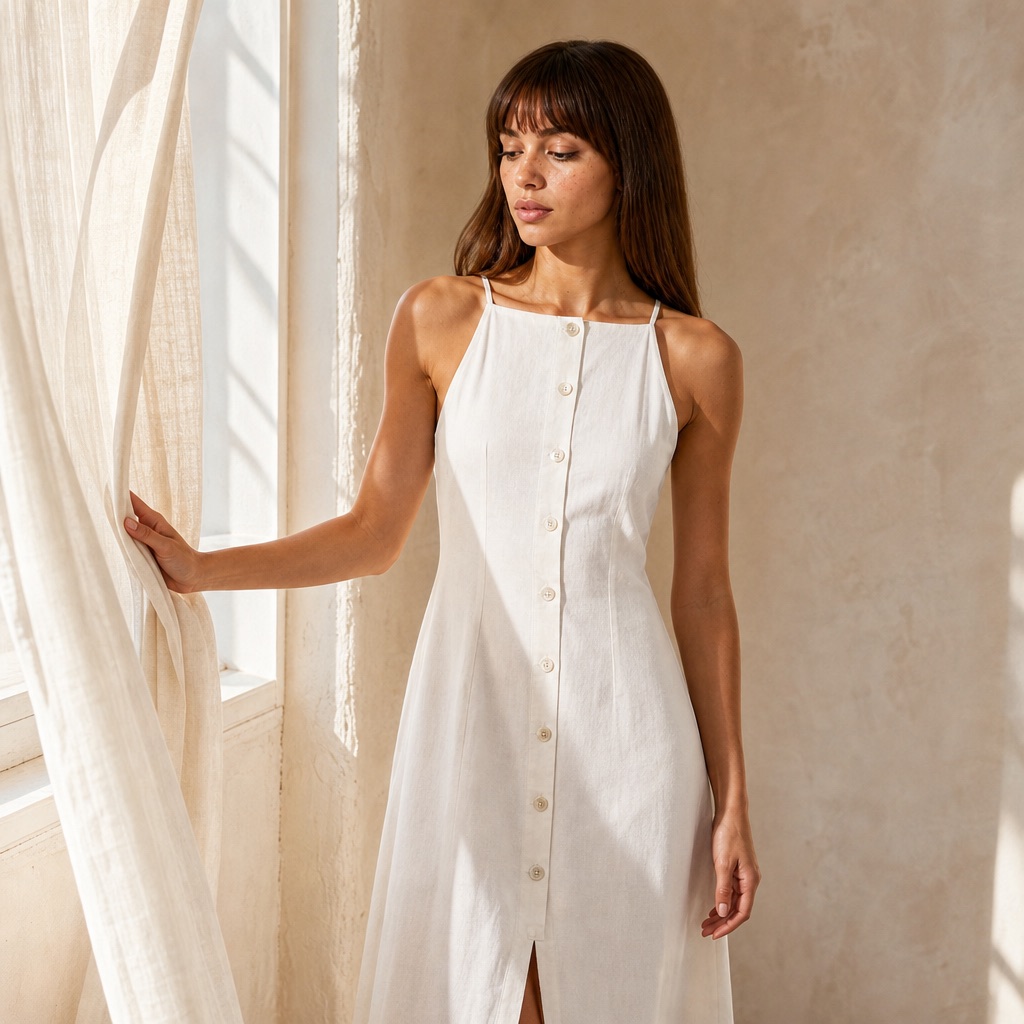
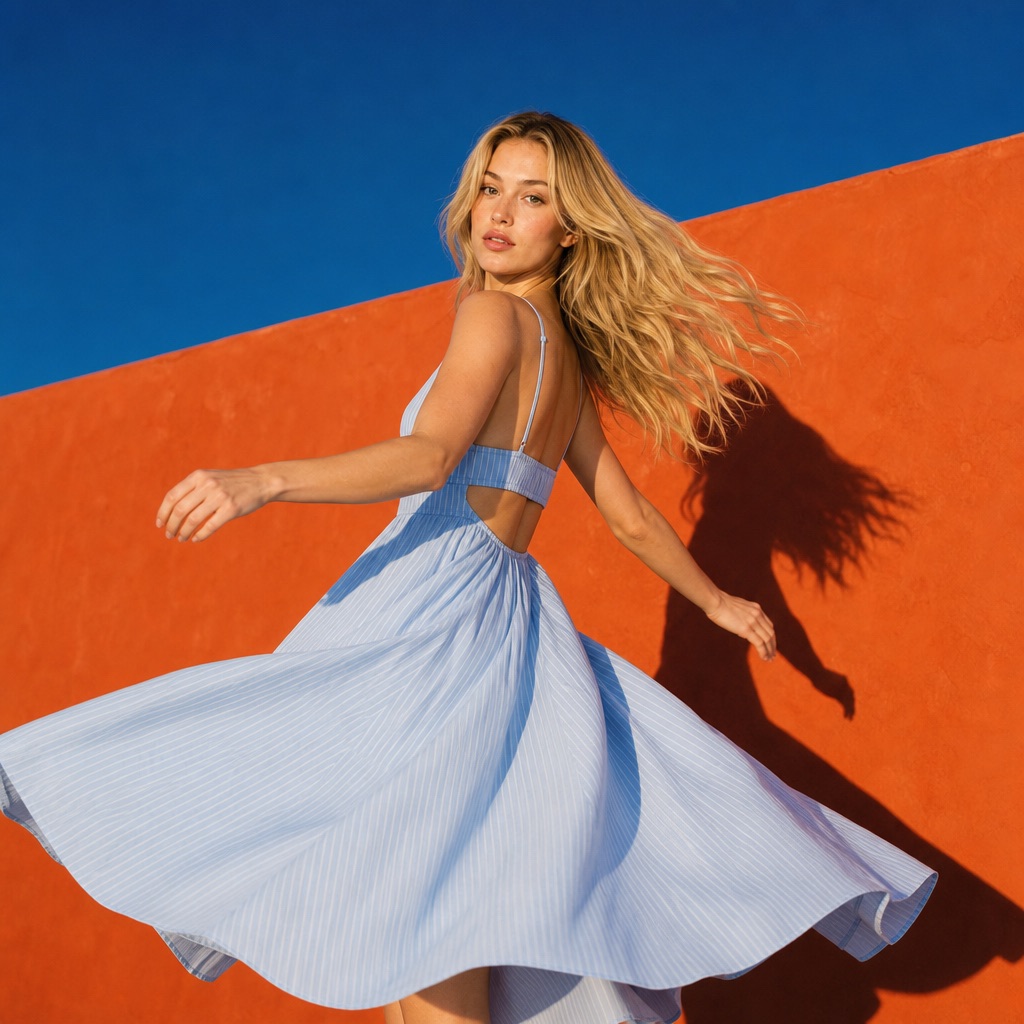
The first format is the hero post — the one-to-one or four-by-five anchor frame that opens a week, composed in the season's primary palette and light direction, single-figure on the locked casting frame. The second is the carousel set — three to seven frames that tell a look or a styling story, the format that holds dwell-time and earns the save, built so frame one survives as a standalone if the customer never swipes. The third is the reel still — the nine-by-sixteen frame engineered as a cover or pause-point for motion, higher contrast and tighter crop than the feed post because it competes against video in the scroll.

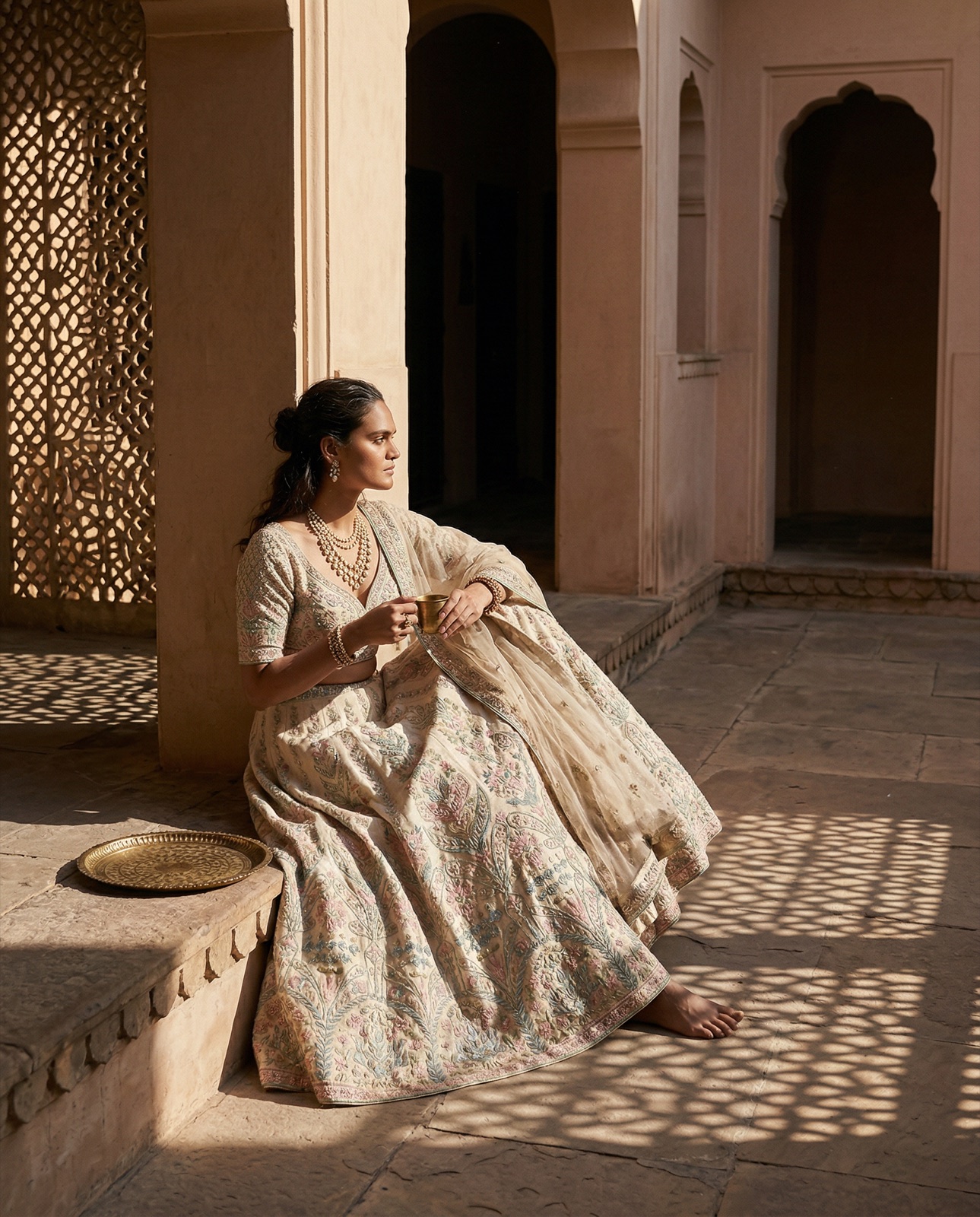
The fourth format is the story sequence — a run of nine-by-sixteen frames designed to be read in two seconds each, the casting frame in motion-implied poses, the format that carries the day-to-day pulse of the brand. The fifth is the paid frame — the placement-cropped asset built for the Meta and TikTok auction, the scroll-stopping crop tested in variants against the same garment so the media buyer has the volume the auction rewards without breaking the spine. Five formats, one locked casting frame, one brand world across the entire grid and ad account.

Inside the brand-spine document the five formats are tied to a one-page production contract. Every frame is composed against it before it ships — colour register in Pantone-locked sRGB at under three Delta E drift, light direction in physical units, negative-space ratio per format, on-figure styling logic, casting-frame identity, named environment list. The same spine that holds the feed-depth lifestyle layer together is here deployed for the channel-native social surface. Different formats, the same production mechanic.

How one season composes into the five social formats.

The social campaign runs as a funnel — one brand spine and one casting frame feeding five channel-native formats, each cropped to every placement it needs. Click a stage to see what ships, where it lives in the feed, and the job it does in the rotation.

Hero post — the weekly anchor

The one-to-one and four-by-five anchor frame that opens a week on the grid. Single-figure on the locked casting frame, composed in the season's primary palette and light direction, with the negative-space ratio the drop hero is built on. This is the frame a customer arriving from a paid ad sees first when she taps to the profile — it has to match the ad that brought her. Ships cropped 1:1 and 4:5, with a 3:4 dot-com module variant.

The two-week sprint, indexed back from the content calendar.

The sprint is the operating system of the social campaign. We run it on a fortnightly cadence locked to the content calendar. Every two weeks the brand ships a wave of twenty to forty social frames across the five formats, cropped to every placement, into the DAM the social team works out of — Bynder, Brandfolder, Frontify, Dash, Cloudinary, or the lightweight Notion-plus-Drive stack at the smaller end. The sprint replaces the Sunday phone shoot the brand could not scale and the UGC pack it was reading as forty brands.

Week one runs on the brand side. Monday the social lead or brand lead sends the sprint brief — twenty to forty frame requests, distributed across the five formats and indexed to specific calendar slots over the next two weeks. The brief is one page. It cites the brand-spine document by section, specifies the casting frame, names the environments per frame, and references the drop hero the social campaign sits alongside. Wednesday the studio confirms the composition plan. Friday the brand lead signs off. Four touchpoints and roughly six hours of producer time across the week.

Week two runs on the studio side. Monday through Wednesday the studio composes every frame against the brand-spine document and the sprint brief. Thursday the first pass lands in the DAM. Friday the brand lead reviews against the spine — colour register, light direction, negative-space ratio, casting identity, named environment — and flags any frame that fails the contract. Friday afternoon the studio finishes the flagged frames. Friday evening the final wave lands cropped to every placement aspect ratio. The media buyer has fresh paid variants and the social manager has the next fortnight of organic before the weekend.

The cadence has a second-order effect the invoice does not show. The social manager stops being the production team and goes back to being the strategist. The designer stops shooting on Sundays. The media buyer stops recycling stale creative into a fatiguing auction. The same sprint discipline scales up to the full-funnel work we run as an apparel creative agency for brands that want identity, campaign, lookbook and social from one studio rather than four vendors who never see each other's files.

The three social-campaign paths most apparel brands have already tried.

Tier 1

The in-house social shoot

Eight to twenty-two thousand per shoot day — photographer, stylist, model, location or studio against forty to seventy usable social frames. Quality is good inside the shoot and the frames stale inside three to four weeks of feed. The brand books one when the budget allows, burns through the output, and goes quiet until the next one clears finance. The math works if the brand posts twice a week and runs no paid. It does not work for a feed asking for ten fresh frames a week and a paid account fatiguing creative every fortnight.

Tier 2

The UGC pack or single creator deal

Sixteen to forty-five thousand per quarter for forty creators on rolling delivery, or twenty-five to seventy thousand for one named-creator season. Volume is high, coherence is low. Forty creators produce against forty colour profiles; one creator produces a coherent season then disappears when the deal ends. The grid reads as a different brand than the paid ad that brought the customer, and the landing experience breaks the relevance the auction was rewarding. The customer reads the inconsistency on the profile visit, before the caption.

100 Creatives

The feed-depth social campaign contract

Twelve to thirty thousand per month against a two-week sprint shipping eighty to one-hundred-sixty social frames across the five formats — all composed against the brand-spine document the drop hero was built on, all cropped to every channel and paid placement in the social team's DAM. Model identity locks to the season's casting frame. The media buyer gets fresh variants every fortnight. The grid reads as one brand and matches the ad. The shoot day stays for the tentpole. The contract holds the feed in between.

The math against the annual social-content line.

An apparel brand at the three to thirty million band typically runs an annual content-and-photography budget between one-hundred-eighty thousand and one-point-one million fully loaded. Drop campaign shoots absorb the majority — the named-photographer hero, the launch paid push, the seasonal lookbook. What is left for the social feed that has to carry the other forty-five weeks of the year is the residual line nobody has a clean number for: typically a handful of in-house shoot days at eight to twenty-two thousand each, plus a UGC pack, plus the social manager's nights and weekends. On the cash math, that residual rarely tops one-hundred-twenty thousand a year against a feed and a paid account asking for ten fresh frames a week. The math does not close on any traditional model. This is why the feed goes quiet.

The feed-depth social campaign contract closes the math. The cash line lands at twelve to thirty thousand per month — one-hundred-forty to three-hundred-sixty thousand per year — against eighty to one-hundred-sixty social frames per month across the five formats, all composed against the brand spine, all cropped to every channel and paid placement. The brand recovers the line out of the in-house-shoot-plus-UGC spend that was being half-spent and never quite holding the grid. The drop campaign budget stays intact for the named-photographer launch moments the brand keeps. On the per-frame economics the studio operates against, social frames ship at seventy to one-hundred-sixty dollars each versus three-hundred to nine-hundred on a per-frame in-house shoot basis.

The second-order economics sit on the paid account and the team's calendar. A paid-social account fed fresh on-brand creative every fortnight fatigues slower and holds CAC flatter than one recycling launch frames into week six — the same creative-volume mechanic we quantify in scaling a DTC fashion brand with content. And the social manager who was producing weekend shoots gets forty to sixty hours per quarter back to do the strategy, community and analytics work she was actually hired for. Neither line shows on the invoice. Both show up in the numbers.

What the first three sprints look like when the brand is moving onto the contract.

The first sprint is brand-spine ingestion. We run a four-to-six-hour working session with the social lead, the brand lead and the media buyer — walking the most recent drop hero, the season's casting frame, the colour register in Pantone-locked sRGB, the light direction, the named environments the customer recognises, the negative-space ratio of the drop hero, and the styling logic per format. The output is a brand-spine document signed by the brand lead that becomes the production contract for the season. We ship the first twenty social frames across the five formats against the spine inside the same two weeks. The brand lead sees the first sprint land and recognises the grid on every frame.

The second sprint is rhythm. The Monday-Wednesday-Friday touchpoints become routine. The social lead stops being the producer and starts being the reviewer. The media buyer loads fresh paid variants into the auction against the frames that arrived Friday evening. The dot-com social module refresh runs mid-week against the new inventory. The Pinterest and story calendars open up because the frames finally exist. On the data we see at apparel brands operating in this band, the paid account's creative fatigue curve flattens inside the first two sprints because the auction is finally getting volume on the spine rather than recycled launch frames.

The third sprint is integration. The reel-still and paid-frame formats are now tested in variants so the media buyer has a deck of on-brand creative to rotate without breaking the grid. The next drop is being briefed against the same brand-spine document the social campaign is running on, which means the launch and the feed that follows it are visually continuous from day one. The customer who taps from a paid ad lands on a profile that matches the ad, and the relevance the auction rewards holds across the visit. The brand is operating as one world across the entire feed and ad account, not a launch frame surrounded by phone snaps.

Apparel brand social campaign · frequent questions

What is an apparel brand social campaign?

An apparel brand social campaign is the always-on social asset system that holds the feed between the seasonal drops and the paid pushes — not a single launch post but the running engine of feed, story, reel and paid-social frames that keep the brand world legible on Instagram, TikTok and Pinterest for the weeks between campaign moments. The drop is the spike. The social campaign is the line that holds between spikes. It is composed against the brand-spine document the seasonal campaign hero was built on, so the customer scrolling on a Tuesday reads the same brand she saw on launch day.

How is this different from just posting more or buying a UGC pack?

Posting more without a spine fills the grid with frames that read as different brands. A UGC pack of forty creators produces volume against forty colour profiles, framing instincts and model registers — the feed gets full and reads as forty brands stitched together. The social campaign we ship is composed against the brand-spine document the season's drop campaign was built on: same colour register in Pantone-locked sRGB, same light direction, same model identity locked to the season's casting, same negative-space ratio. The customer cannot tell the Tuesday feed frame was not shot on the same day as the launch hero. Volume on a spine, not volume against the spine.

Which channels and formats does the social campaign cover?

Instagram feed at one-to-one and four-by-five, Instagram and TikTok nine-by-sixteen for reels and stories, Pinterest two-by-three, email hero at six-hundred-pixel width, dot-com social modules, and paid-social frames cropped for Meta and TikTok ad placements. Every frame ships cropped to every aspect ratio it needs in the DAM the social team works out of, so the social manager is not re-cropping a feed frame into a story at eleven at night. The five social formats — hero post, carousel set, reel still, story sequence and paid frame — are the funnel the season is produced against.

What does a season of social campaign imagery cost compared to an in-house shoot or a UGC contract?

An in-house social-content shoot at the three to thirty million revenue band — a day of studio or location with a photographer, stylist and model against forty to seventy usable social frames — runs eight to twenty-two thousand per shoot day and stales inside three to four weeks of feed. A UGC contract runs sixteen to forty-five thousand per quarter for rolling creator delivery with low brand coherence. The feed-depth social campaign contract runs twelve to thirty thousand per month against eighty to one-hundred-sixty social frames across the five formats, all composed against the brand spine, all cropped to every channel. The shoot day stays for the tentpole. The contract holds the feed in between.

How do you keep the feed reading as one brand across so many frames?

By composing every frame against the brand-spine document and locking the model identity to the season's casting frame. The spine captures the colour register in Pantone-locked sRGB at under three Delta E drift, the light direction in physical units, the named environments the customer recognises, the negative-space ratio the campaign hero is built on, and the on-figure styling logic. The casting frame is locked in week one and carried across the whole season. The customer scrolling sees the same woman, the same light, the same world on Monday's hero post, Wednesday's carousel and Friday's reel still. The grid reads as one brand because every frame was composed against one contract.

How does the social campaign work alongside the seasonal drops and paid?

On a two-week sprint indexed back from the social calendar. Week one, the social or brand lead confirms the next twenty to forty frame briefs across the five formats against the brand-spine document and the content calendar. Week two, the studio composes, ships first pass, the brand lead reviews against the spine, the studio finishes, and the frames land in the DAM cropped to every channel aspect ratio. The drop campaign and the paid pushes stay where they are on the calendar; the social campaign fills the weeks around them and feeds the paid auction the creative volume it needs to keep CAC flat.

Will the social campaign look like our brand or like a generic apparel agency house style?

Like your brand. The brand-spine ingestion in week one captures your colour register, your light direction, your named environments, your model identity and your negative-space ratio. Every social frame is composed against that spine. The agency house-style trap — where the agency is fluent in one look and translates every client through it — is the failure mode the brand-spine contract is engineered to avoid. The test on every frame is whether your art director would have signed it off without notes. If a frame fails the spine, it does not ship.

What kind of apparel brands does the social campaign engine fit?

Apparel labels at roughly three to thirty million in revenue running two to four drops per year, a feed that has to carry between drops, a paid-social spend that needs fresh creative weekly, and a brand world the founder takes seriously. Sharpest fit: contemporary women's brands at the Reformation, DÔEN, Sézane, Frankie Shop tier; men's brands at the Buck Mason, Todd Snyder, Aimé Leon Dore tier; activewear and crossover labels at the Vuori, Outdoor Voices, ALO Yoga, On Running sub-tier where social imagery does the brand work and the feed is the primary storefront before the customer ever reaches the PDP.

Where does the social campaign sit alongside the drop campaign and the lifestyle layer?

Between them. The drop campaign is the signature launch moment per season — the hero frame, the paid push, the announcement. The lifestyle layer is the in-context feed-depth imagery that holds the brand world over the weeks. The social campaign is the channel-native production discipline that takes the brand spine and the lifestyle registers and ships them as feed posts, carousels, reel stills, story sequences and paid frames cropped to every placement. It is the surface where the drop campaign and the lifestyle layer become the daily feed the customer actually scrolls.

Start the next sprint

Bring us the next season. The feed will not go quiet.

If you are a social lead, brand lead or head of content at a three to thirty-million apparel label and the content calendar has "social content — TBD" in the next nine cells — send the season's casting frame and the most recent drop hero. The brand-spine document will be locked in the first week, the casting frame will be locked across the season, and the social campaign will ship on a two-week sprint cadence across every format and placement inside your team's calendar. Send your brand and we'll reply with a plan — abhi@paperkites.co. The drop is the spike. The social campaign is the line that holds between spikes.

Book a social campaign call