

Apparel · the buyer's working document

How to create a fashion wholesale deck buyers actually open.

A fashion wholesale deck is the visual sell document you put in front of a retail buyer to win an order — the artefact a boutique owner, a department-store buyer or a multi-brand-platform merchandiser opens before, during and after a market appointment. It is not a lookbook and it is not a pitch deck. It carries the brand story for two slides, then turns into a buyer's worksheet: hero imagery, the season's looks, a linesheet with style numbers, wholesale and retail pricing, minimums, delivery windows and terms. The deck is the thing the buyer screenshots, forwards to her open-to-buy meeting, and writes the order against. Get the structure and the imagery right and the order writes itself; get it wrong and a strong collection gets admired in the appointment and never makes the buy sheet. This guide walks the structure, the three image types, the pricing and MOQ slides, and the mistakes that lose orders — with a free wholesale-deck checklist at the end.

By Abhi Chawla, founder · Last updated: 2026-06-19

Deck reference

Brand-world front, garment-accurate back — the two halves of a fashion wholesale deck.

The collection was finished. The deck was forty slides and no order.

It is the Thursday before a market week and the deck is a forty-slide PDF the founder built in Canva over two late nights. The first thirty slides are gorgeous — full-bleed editorial frames, a manifesto slide, the founder's origin story, a moodboard. Somewhere around slide thirty-four is a screenshot of a spreadsheet with style numbers in eight-point grey type, and a line at the bottom that says "MOQ and pricing on request". The boutique buyer at the appointment will give the brand twelve to twenty minutes, half of it spent flipping past the editorial to find the part she needs. She will not find a clean linesheet. She will say "this is beautiful, send me the linesheet and the terms" and the brand will spend the next three weeks in an email thread instead of writing an order on the spot.

This is the most common way a strong collection loses the room. The founder treats the wholesale deck as a portfolio when the buyer treats it as a working tool. A retail buyer at a boutique, a Nordstrom or Anthropologie merchandiser, or a Faire and NuOrder platform reviewer is not browsing — she is filling an open-to-buy budget against a deadline, comparing fifteen brands the same week, and she needs to transcribe an order. The deck either makes that fast or it gets set aside. The editorial belongs in the deck. It belongs in the front two slides and the lookbook spreads. It does not belong in front of the linesheet she came for.

The fix is not a prettier deck. It is a deck built in two halves with a clear hinge: a brand-world front that sets the price point and the customer in under a minute, and a garment-accurate back that functions as the buyer's order worksheet. Everything in this guide is in service of that structure. Build the front to earn the price; build the back so the order writes itself. The brands that book reorders are the ones whose decks the buyer could work from without a single follow-up email.

What goes in a fashion wholesale deck, in the order it earns attention.

A wholesale deck has a fixed running order because the buyer's attention has a fixed shape: front-loaded on story, then resident in the linesheet. Slide one is brand context — who you are, the customer, the price point, the proof. Proof is not a manifesto; it is stockists, press hits and sell-through numbers. "Stocked in fourteen boutiques across the Northeast, ninety-second-percentile sell-through on outerwear at retail, featured in the spring Vogue accessories edit" does more in one line than a page of brand philosophy. The buyer is underwriting risk; proof is what retires it.

Slide two names the season concept and the delivery window — "Resort '26, two drops, June and August delivery". Then six to twelve lookbook spreads carry the range on-figure: the editorial frames that establish the look the customer will wear. This is the front, and it should take the buyer under a minute. Then the hinge, and the linesheet — the load-bearing section. Every style gets a clean, garment-accurate image, a style number, the colourways, fabrication, size run, wholesale price, MSRP and case pack. Then a terms slide: minimums, delivery dates, payment terms, reorder cutoffs. Then one contact-and-next-step slide. That is the whole deck.

The discipline is ruthless about the front. Nothing in the first third the buyer would skip — no second moodboard, no founder portrait, no three-paragraph origin story. And nothing missing from the back she would have to email to ask. The most reliable test is to hand the deck to someone who has never seen the collection and ask them to write a mock order from it alone. If they can, the deck works. If they come back with questions, every question is a missing slide. The same buyer's-worksheet logic governs the apparel wholesale photography a deck is built on — the imagery exists to be transcribed into an order, not admired.

Three image types doing three jobs across the front and the back.

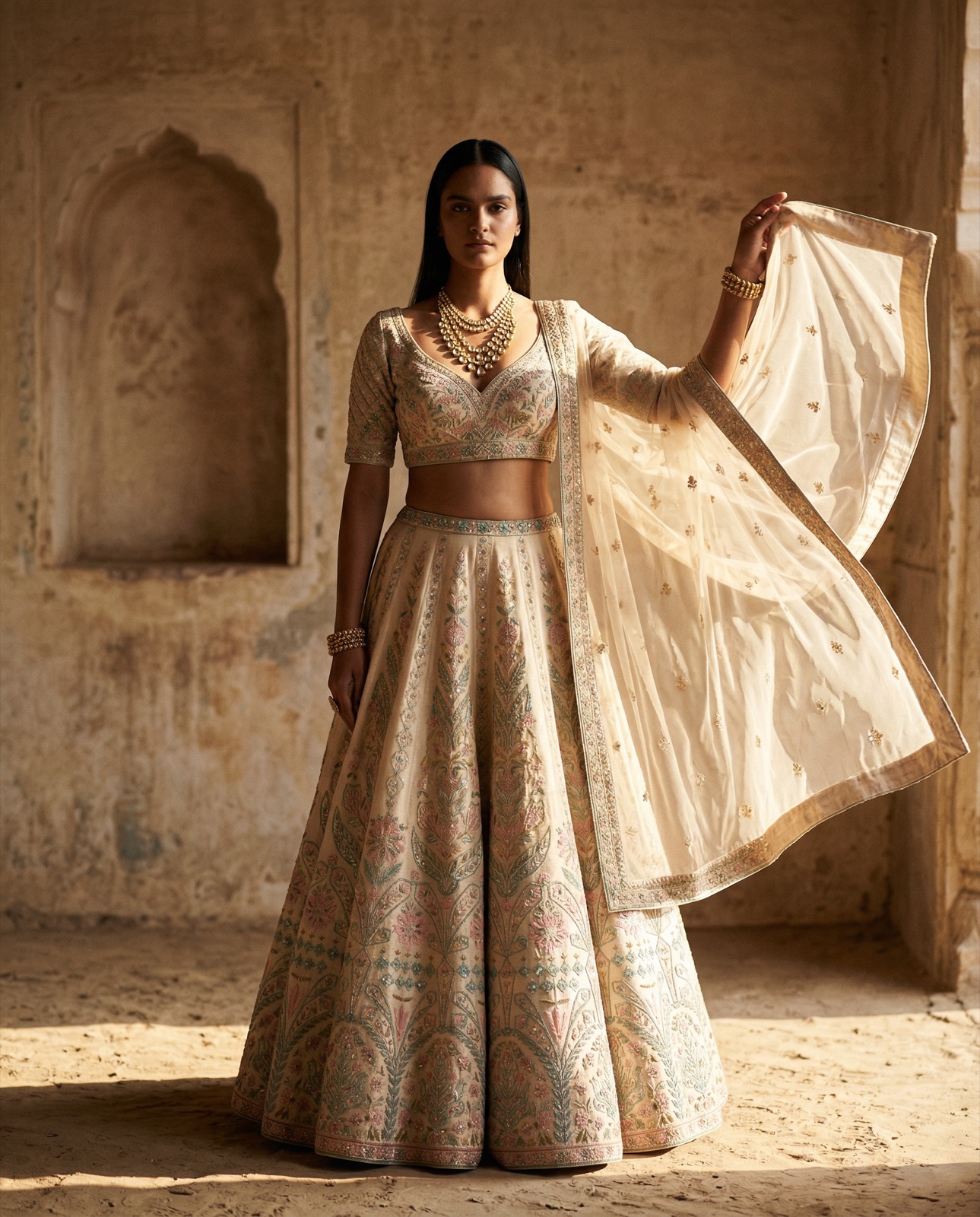
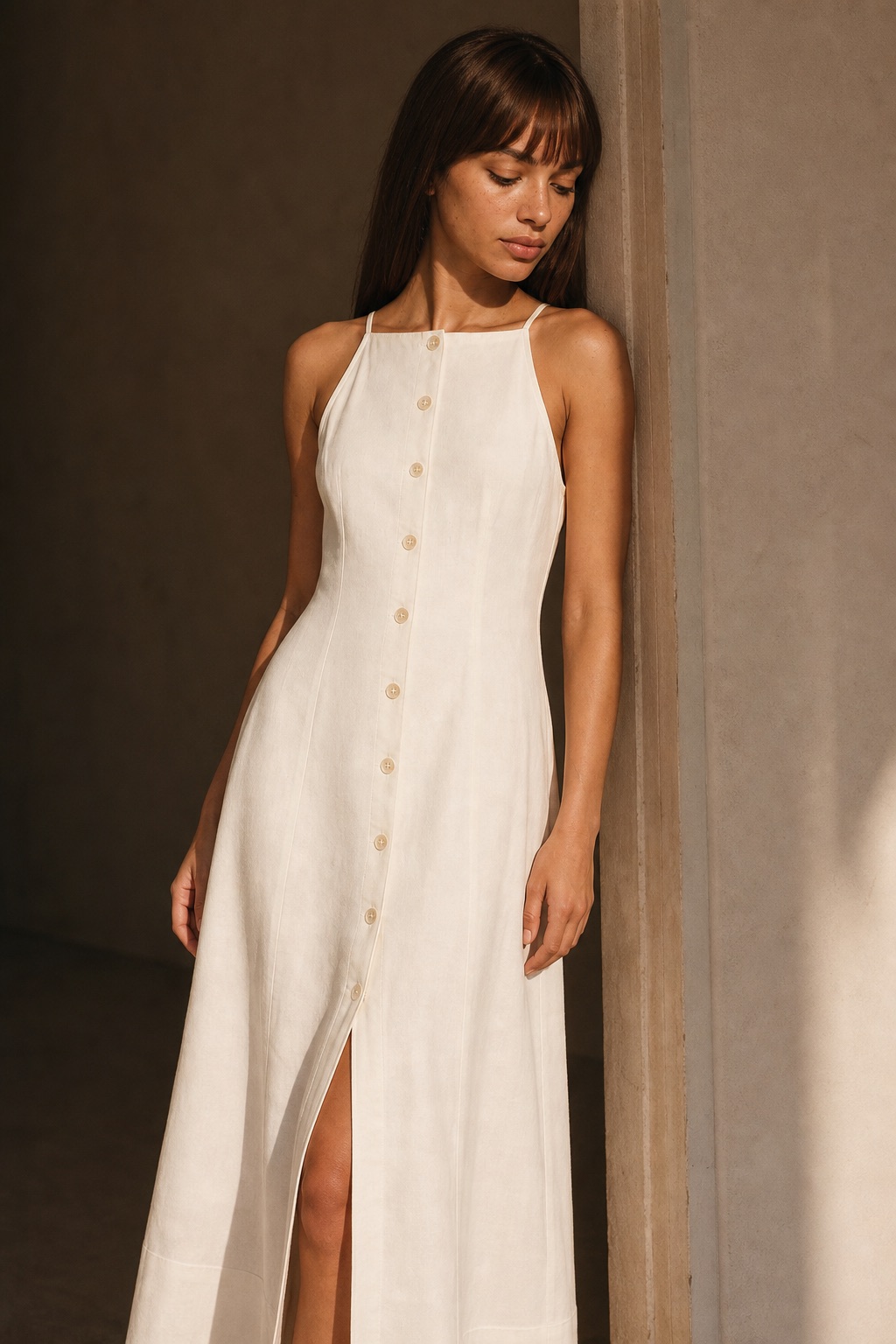
A wholesale deck needs three distinct image types, and confusing them is where most decks fail. The first is hero and lookbook imagery for the front — on-figure, brand-world, built against the campaign spine. Its job is to establish the price point and the customer in the buyer's mind in the first thirty seconds. This is the same register as a Reformation or DÔEN seasonal lookbook: full-bleed, editorial, aspirational. It justifies the wholesale number before the buyer sees it. A capsule that wholesales at sixty dollars but presents like a forty-dollar fast-fashion catalogue will get marked down in the buyer's head before pricing is ever discussed.

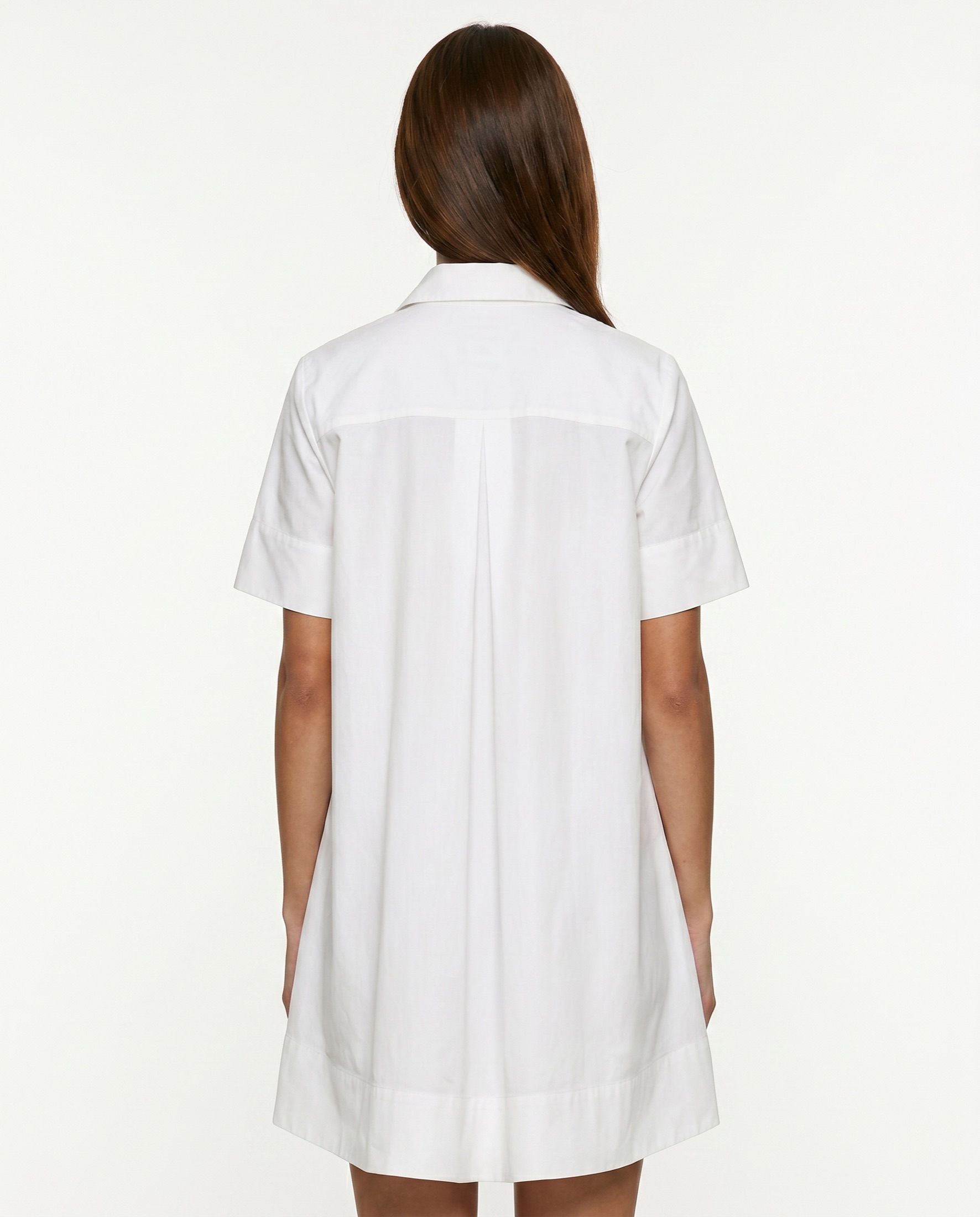
The second type is linesheet imagery for the back — clean, consistent, garment-accurate. Every style shot on the same backdrop, same crop, same light direction, so colour reads true across the range and the buyer trusts the order will arrive looking like the slide. This is the load-bearing imagery in the deck and it is where the iPhone-flats-in-a-rush approach destroys an order: when style four is shot on a white wall in tungsten light and style nine on a grey backdrop in daylight, the buyer cannot trust the navy is actually navy, and a range she cannot trust gets ordered thin or not at all. Front and rear views matched, like the shirtdress front-and-back in the reference gallery above, are the baseline buyers expect.

The third type is the detail or texture still — fabric in hand, hardware, hem finish, the lining of a jacket. One or two per range. Its job is the make-quality argument the on-figure frame cannot make: the buyer evaluating margin and return risk needs to see the seam, the weight of the cloth, the finish. For an occasion-wear or knitwear brand this register does disproportionate work. Whether to commission the lookbook layer and the linesheet layer separately or shoot both off one production is the decision laid out in the lookbook versus product photography framework — and the economics almost always favour one spine, two outputs.

Pricing, MOQ and terms the buyer can read without emailing you.

Pricing belongs in the open, on the linesheet table and a dedicated terms slide — never buried in a caption and never "on request". A buyer who has to email to learn the minimum has already moved to the next brand. The linesheet row carries style number, name, colourways, fabrication, size run, wholesale price, MSRP and case pack. Show the MSRP even though it is the retail price, because it lets the buyer see her margin without doing arithmetic in the appointment. Most apparel categories run a keystone-or-better markup: roughly 2 to 2.6 times cost to land at wholesale, then 2 to 2.5 times wholesale to retail. A style that costs you nineteen dollars to make wholesales around forty-eight and carries an MSRP near one hundred and ten. Printing the MSRP signals you understand her business.

The terms slide states the things that decide whether the order is even possible for the buyer. Opening-order minimum and reorder minimum, in dollars or units — a small boutique with a tight open-to-buy needs to know if your fifteen-hundred-dollar opening order fits before she falls in love with the line. Delivery window by month, because she is buying against a floor-set calendar. Payment terms — net 30 or net 60 for established accounts, proforma or credit-card-on-first-order for new ones. And the reorder cutoff, so she knows how long the range is live. State it plainly; the buyer reads a clear terms slide as a sign you have shipped wholesale before.

One more economic reality belongs on this slide's logic even if not its face: the order has to pencil for both sides. If your costs sit too high to keep a keystone wholesale price competitive against the buyer's other vendors, no deck design fixes it — that is a production-cost conversation upstream of the deck, the kind covered in the fashion brand launch strategy sequence where pricing architecture is set before the first collection ships. The deck presents the math honestly; it cannot manufacture margin that the cost structure does not allow.

Run the deck against the buyer's working checklist.

Before a market appointment, run your deck against the six things every retail buyer needs to write an order on the spot. Tap each item you can answer "yes" to without a follow-up email. Anything unchecked is a missing slide — and a buyer's reason to set the deck aside. Want the full expanded version as a one-page template? It is offered at the end of this page.

Brand context and proof in the first two slides

Customer, price point and proof — stockists, press, sell-through — stated up front, not a manifesto. The buyer is underwriting risk; proof retires it before the linesheet.

Six to twelve on-figure lookbook spreads

Brand-world editorial frames that establish the price point and the customer in under a minute. Enough to sell the feeling, not so many the buyer never reaches the linesheet.

A consistent, garment-accurate linesheet

Every style shot on the same backdrop, same crop, same light so colour reads true across the range. Matched front and rear views. The section the buyer actually orders from.

Style numbers, colourways, size runs and case packs

Every linesheet row carries the data the buyer transcribes into the order. Missing style numbers or case packs turn the deck into an email thread instead of a buy.

Wholesale price and MSRP shown openly

Both prices on the linesheet so the buyer sees her margin without doing the math. Never "pricing on request" — that line loses the appointment.

A terms slide: MOQ, delivery, payment, reorder cutoff

Opening and reorder minimums, delivery window by month, net-30 or proforma terms, and how long the range stays live. Everything that decides whether the order is possible.

Deck readiness0 / 6

Three decks a buyer sees in a market week — and which one gets the order.

The portfolio deck

All lookbook, no linesheet

Forty editorial slides, a manifesto, a founder portrait, and "MOQ and pricing on request" at the bottom. It is admired in the room and never makes the buy sheet. The buyer cannot transcribe an order from a full-bleed mood frame, so she asks for the linesheet by email and the appointment becomes a three-week thread. Beautiful, and unorderable. This is the most expensive deck a brand builds, because the collection behind it was good enough to win.

The spreadsheet deck

All linesheet, no brand world

A bare grid of iPhone flats, style numbers and prices, every garment on a different backdrop in different light. The buyer can order from it — and she orders thin, because nothing established the price point or the customer, and she cannot trust that the navy is navy. The range reads as a commodity, gets a cautious opening order, and never reorders because the brand never registered as a brand. Functional, and forgettable.

The two-half deck

Brand-world front, working back

Two brand-context slides, eight lookbook spreads on the campaign spine, a clean garment-accurate linesheet with every number the buyer needs, a plain terms slide, one contact slide. Under fifteen megabytes, opens on a phone. The buyer works it without a single follow-up, writes the opening order in the room, and reorders the next season because the brand registered as one world. This is the deck that gets the order — and it comes off one production, not three.

Shoot the season once and the wholesale deck imagery is already done.

The reason most wholesale decks are stitched together from mismatched sources is that the imagery is treated as three separate jobs scheduled at three different times — the lookbook shot in a studio in January, the linesheet flats rushed on a phone the week before market, a borrowed editorial frame from last season filling a gap. The result is exactly the inconsistency that loses the buyer's trust. The fix is to treat the season as one production against one brand-spine document: the lookbook frames for the deck front and the linesheet frames for the deck back come off the same shoot, the same model identity, the same colour register, the same light direction.

The economics of that are not marginal. A traditional split — a separate lookbook shoot at fifteen to forty thousand and a separate linesheet day at three to eight thousand, with a stylist re-booked and a model re-cast between them — runs both higher and slower than a single spine-driven production that ships both outputs cropped to deck, dot-com, linesheet table and wholesale-platform specs. The buyer flipping from the brand-world front to the working linesheet back never feels the seam because there is no seam: every frame was composed against the same document. Those same assets then feed the dot-com PDP, the campaign feed and the NuOrder or Faire brand page without a second shoot.

This is the production discipline behind every wholesale deck that holds together, and it is the same discipline that carries a brand from its first market appointment to a repeatable wholesale motion. For a brand approaching its first season at retail, the deck sits inside a wider launch sequence — positioning, brand world, the launch campaign and the wholesale push — laid out in the fashion brand launch strategy guide. Build the imagery once, on a spine, and the wholesale deck stops being a Thursday-night Canva scramble and becomes the highest-leverage sales document the brand owns.

Fashion wholesale deck · frequent questions

What is a fashion wholesale deck?

A fashion wholesale deck is the visual sell document a brand puts in front of a retail buyer to win an order — the slide-and-linesheet artefact a boutique owner, a department-store buyer or a multi-brand-platform merchandiser opens before, during and after a market appointment. It is not a lookbook and it is not a pitch deck. It is the working document that carries the brand story for two slides, then turns into a buyer's worksheet: hero imagery, the season's looks, the linesheet with style numbers, wholesale and retail pricing, minimums, delivery windows and terms. The deck is the thing the buyer screenshots, forwards to her open-to-buy meeting, and writes the order against.

What should a fashion wholesale deck include, in order?

In order: one brand-context slide (who you are, the customer, the price point, the proof — stockists, press, sell-through); one season-concept slide that names the story and the delivery window; six to twelve lookbook spreads showing the range on-figure; the linesheet, which is the load-bearing section — every style as a clean garment-accurate image with style number, colourways, fabrication, size run, wholesale price, MSRP and case pack; a terms slide with minimums, delivery dates, payment terms and reorder cutoffs; and a single contact-and-next-step slide. Brand story front, buyer's worksheet back. The buyer flips past the story in thirty seconds and lives in the linesheet for the rest of the appointment.

How is a wholesale deck different from a lookbook?

The lookbook sells the feeling; the wholesale deck sells the order. The lookbook is full-bleed on-figure editorial that builds desire and lives on the brand's dot-com and Instagram. The wholesale deck borrows six to twelve of those lookbook frames for the front, then does the job the lookbook cannot: the linesheet. The buyer cannot write an order off a moody full-bleed editorial frame — she needs the style number, the flat or clean on-model garment-accurate shot, the colourway swatches, the wholesale price and the case pack. A wholesale deck that is all lookbook and no linesheet gets admired and not ordered. One that is all linesheet and no brand world gets ordered thin and never reordered.

What imagery does a wholesale deck actually need?

Three image types doing three jobs. Hero and lookbook frames for the front — on-figure, brand-world, built against the campaign spine — to establish the price point and the customer in the buyer's mind. Linesheet imagery for the back — clean, consistent, garment-accurate, every style shot on the same backdrop, same crop, same light, so colour and silhouette read true and the buyer trusts the order will arrive looking like the slide. And one or two detail or texture stills — fabric in hand, hardware, hem finish — to carry the make-quality argument the on-figure frame cannot. The most common failure is mixing iPhone flats, last season's catalogue and a borrowed editorial frame into one linesheet, so colour drifts style to style and the buyer discounts the whole range.

How do I show pricing and MOQ in a wholesale deck?

On a dedicated linesheet table and a dedicated terms slide — never buried in a caption. The linesheet row carries style number, name, colourways, fabrication, size run, wholesale price, MSRP and case pack. The keystone markup most apparel categories run is roughly 2 to 2.6x cost to wholesale and 2 to 2.5x wholesale to retail, so a fifty-dollar wholesale style retails at one hundred to one twenty-five; show the MSRP so the buyer can see her margin without doing the math. The terms slide states the order minimum (opening order and reorder), the delivery window by month, payment terms (net 30, net 60, or proforma for first orders), and the reorder cutoff. Buyers reject decks that make them email to ask the minimum.

What are the most common fashion wholesale deck mistakes?

Five recurring ones. Inconsistent linesheet imagery — every style on a different backdrop, so colour cannot be trusted. No style numbers or case packs, so the buyer cannot transcribe the order. Pricing hidden or absent, so the deck becomes a back-and-forth email thread instead of an order. A forty-slide deck that buries the linesheet behind thirty editorial frames the time-boxed buyer never reaches. And a file that is a five-hundred-megabyte PDF the buyer cannot open on her phone in the appointment. The deck is a working tool on a deadline, not a portfolio. Every slide either helps the buyer write the order or it is cut.

How long should a fashion wholesale deck be?

Short front, complete back. Two brand-context slides, six to twelve lookbook spreads, a linesheet that is as long as the range demands (one row per style, often eight to thirty styles), one terms slide and one contact slide. For a focused capsule that is twelve to eighteen slides; for a full seasonal range with multiple delivery drops it might run twenty-five to thirty-five. The buyer's attention is front-loaded and the linesheet is reference, so the length rule is: nothing in the front the buyer would skip, and nothing missing from the back she would have to email to ask. Keep the PDF under fifteen megabytes so it opens on a phone.

Can the imagery for a wholesale deck come from the same shoot as the lookbook?

Yes, and it should — that is how the season gets shot once and used everywhere. The lookbook frames for the deck front and the linesheet frames for the deck back are produced against the same brand-spine document in the same production cycle: same model identity, same colour register, same light direction. The lookbook frames run full-bleed editorial; the linesheet frames run clean and garment-accurate on a consistent backdrop. Because both come off one spine, the buyer flipping from the brand-world front to the working linesheet back never feels the seam, and the same assets feed the dot-com, the campaign feed and the wholesale partner brand pages without a second shoot. This is the production economics covered in the lookbook versus product photography piece.

Get the template

Build the deck the buyer can order from. We'll send the checklist.

If you are a founder prepping for a market appointment and want the deck right before the buyer opens it, book a call and we'll walk your structure, imagery and linesheet against what the buyer actually needs. Email abhi@paperkites.co and we'll send the one-page wholesale-deck template and checklist. The brand story earns the price; the linesheet writes the order.

Get the wholesale-deck checklist