Apparel · golf, tennis and country club apparel

Golf apparel campaign photography that reads at the collar, the backswing and the pro-shop linesheet, not at a fairway sunset and a stock swing.

Golf apparel campaign photography sells three separate things a single fairway lifestyle shot cannot carry: the collar and hem read a private club's dress-code enforcer checks before a reorder, the four-way stretch fabric proven in motion through an actual backswing, and a wholesale linesheet a green-grass pro shop buyer can order from without seeing the sample. Golf apparel campaign photography is the production discipline a DTC golf, tennis or country club apparel brand uses to ship exactly those three specs ahead of the January PGA Show floor, where most of a season's wholesale ordering happens in a single week. A named destination golf photographer quotes $48,000 to $95,000 for a hero and ten to fifteen lifestyle frames. The three-spec contract covers the full production, hero through wholesale linesheet, at $16,000 to $34,000.

By Abhi Chawla, founder · Last updated: 2026-09-13

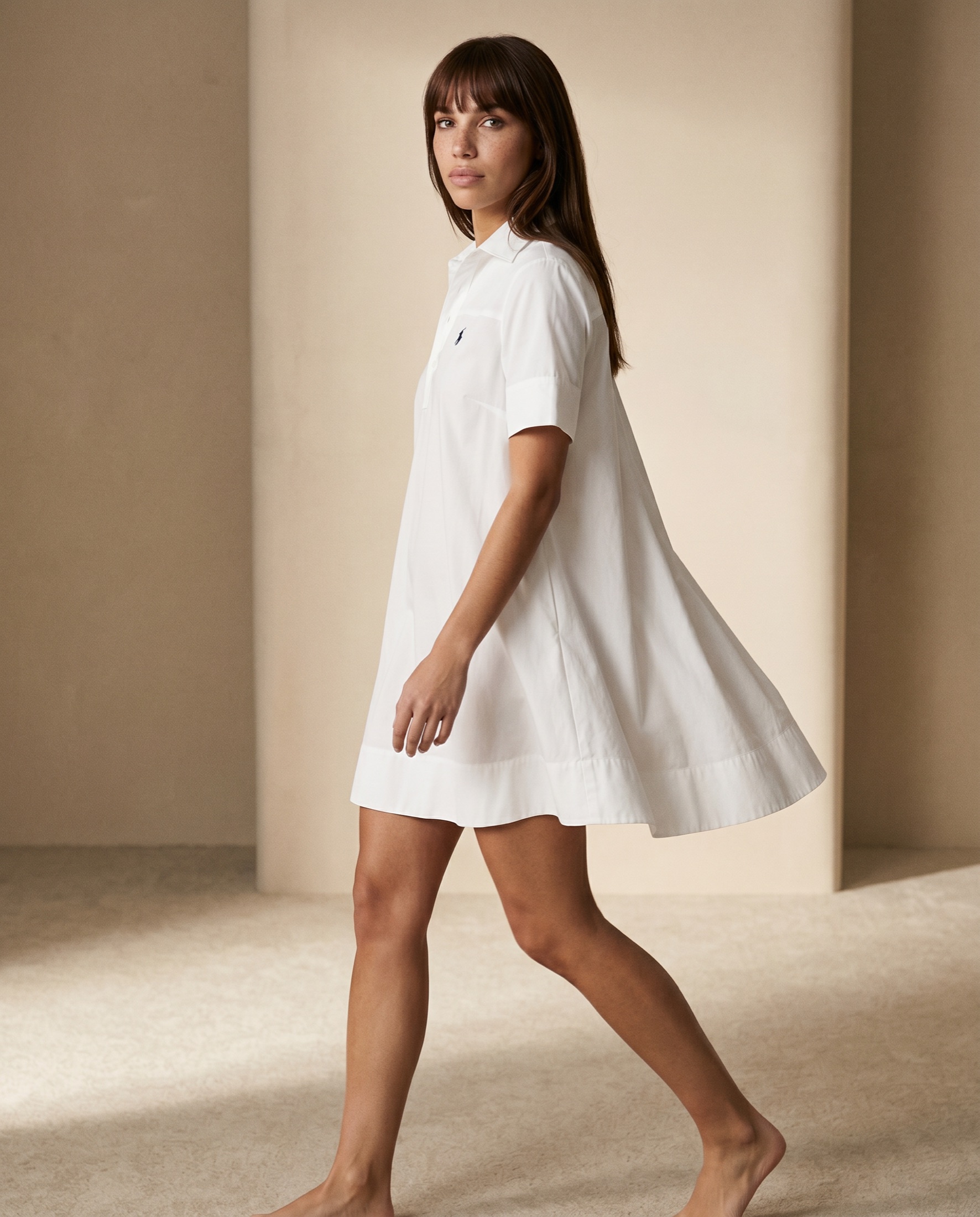
The collar is the first spec

Heritage American tailoring register applied as reference to the collar-and-hem compliance macro, produced as golf apparel campaign photography.

Early November at a $12M golf apparel brand ten weeks from the PGA Show floor

It is the first week of November at a twelve-million-dollar golf apparel brand sitting in the Devereux and Holderness & Bourne adjacency tier, seventy percent of it sold through roughly four hundred green-grass pro shop accounts at private clubs and resorts, the rest direct online. The founder has ten weeks until the PGA Show floor opens in Orlando, the single week each January where most of the brand's spring and summer wholesale orders get written. Last year's booth ran a beautiful fairway-at-golden-hour hero that a dozen buyers stopped to admire, and a linesheet behind it that three separate buyers pushed back on because the colorway swatches didn't photograph consistently enough to order eight SKUs sight-unseen with confidence.

The founder also has a reorder that got declined this fall from a private club pro shop in the Carolinas, the buyer's note reading almost exactly like the one from a similar account the year before: the collar photographed soft and resort-casual, not the structured, tour-style collar the club's own dress code requires for clubhouse dining. Nobody on the brand's team had noticed, because the collar looked fine in the lifestyle shot it shipped with. A pro shop buyer trained to enforce a written dress code looks at a collar differently than a customer scrolling Instagram does, and the brand's imagery had never been built to survive that specific scrutiny.

If you are reading this from inside a three-to-twenty-five-million-dollar golf, tennis or country club apparel brand carrying a green-grass wholesale channel into the PGA Show, and last year's photography budget bought a beautiful hero and a linesheet buyers still had questions about, this is what the three-spec shot list looks like in production. The compliance macro, the swing-motion sequence, and the wholesale linesheet are the reference document. The math, the ten-to-twelve-week sprint, and what changed in the buyer feedback are below.
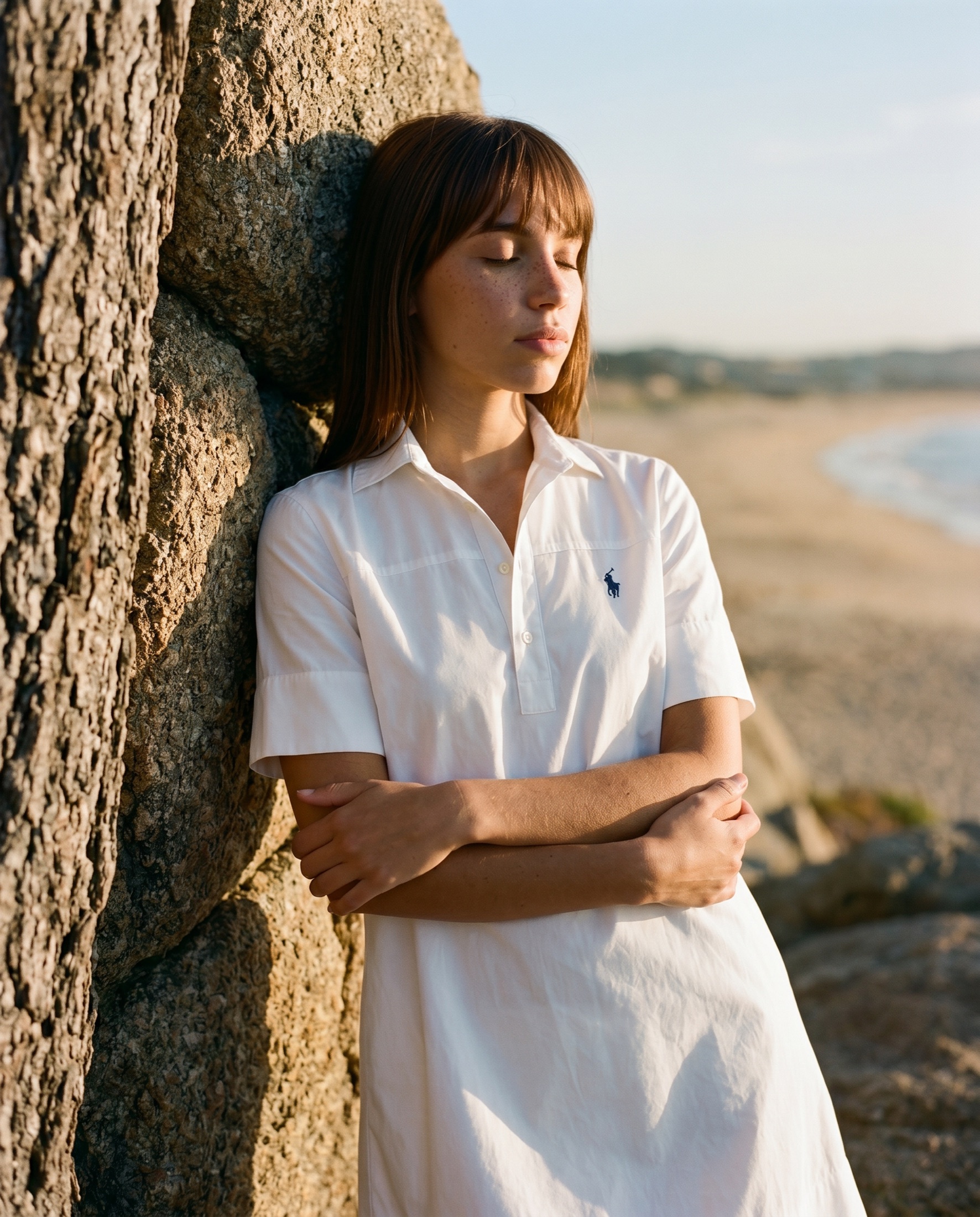
Golf apparel is sold on three specs at once. A fairway lifestyle shot proves none of them.

The structural problem in golf apparel photography is that most brands default to the shot every golf brand runs: a model mid-follow-through on a fairway at golden hour, backdrop softly blurred, the polo reading crisp and aspirational. It is a genuinely good hero frame, and it answers none of the three questions deciding whether the brand's imagery does its job. The first question belongs to a private club or resort pro shop buyer enforcing a written dress code: does the collar read as structured and tour-appropriate rather than soft and resort-casual, does the hem length clear the club's own minimum, and does any logo placement respect an exclusive-colorway agreement the club may already have with another brand. A flattering fairway angle answers none of it, which is exactly how a reorder gets declined months after the hero photograph shipped and performed well.

The second question belongs to the golfer swinging the club, and it is the one golf apparel photography answers worst. A four-way stretch panel placed across the shoulder blades exists to do one specific job: extend cleanly at the top of a backswing and return to its resting drape at follow-through, without bunching at the seam or riding up at the collar. A static on-model shot or a flat-lay shows what the polo looks like at rest. It says nothing about what happens to the fabric at the one moment in a round of golf that actually stresses the garment, and it is precisely the gap behind the review complaint golf brands see most often, some version of the shirt looked great on the hanger and restricted at the top of the backswing.

The third question belongs to the wholesale buyer at the PGA Show floor, working from a linesheet rather than a lookbook. A green-grass pro shop ordering an eight-colorway polo program for four hundred accounts needs every colorway lit identically against the same background, ghost-mannequin or flat, so the buyer can compare them side by side and order with confidence sight-unseen. The same motion-capture discipline we brought to the Ford Bronco outdoor campaign, shooting a vehicle mid-action rather than parked and posed, is the closer analogue to what a swing sequence actually requires than anything a standard apparel lifestyle shoot is built to deliver. Golf apparel needs all three specs from one production, not one flattering fairway frame asked to stand in for all three.

The destination shoot buys a magazine spread. The three-spec contract buys the order.

The named destination golf and resort photographer route quotes $48,000 to $95,000 for two to three days at a destination course, a hero and ten to fifteen lifestyle frames against a fairway or clubhouse backdrop, plus travel, location fees and a model booking. It reliably delivers imagery that performs on Instagram and reads well in a printed lookbook. It does not reliably deliver a dress-code compliance macro, a swing-motion sequence shot with genuine action discipline, or a wholesale linesheet across sixty-to-a-hundred-plus SKUs and colorways, because none of that sat inside the ten-to-fifteen-frame scope to begin with.

The volume DTC apparel studio route extended into golf covers the full wholesale linesheet, every SKU and colorway, at $20,000 to $42,000, shot flat and fast against a consistent background. The linesheet ships on schedule and buyers can compare colorways cleanly. The swing-motion proof and the dress-code compliance macro are absent entirely, because a volume studio's flat-lighting setup was never built to answer either question, and Common Thread Collective's research into DTC apparel returns behavior has repeatedly flagged fit-and-performance expectation mismatch, a garment that photographs one way and performs another, as a leading driver of first-order returns and reorder hesitation in performance apparel categories golf sits inside.

The three-spec contract covers the full production, hero through wholesale linesheet, at $16,000 to $34,000. The brand-spine document is the first deliverable: the dress-code compliance standard named per SKU family against the club-facing collar-and-hem language pro shop buyers actually enforce, the swing-motion shot list at address, top of backswing and follow-through, and the colorway grid locked before a single linesheet frame is shot. Per-frame economics land at $70 to $160 against named-photographer $2,800 to $5,800 per usable frame. The broader per-frame walk across apparel categories lives in our AI photoshoot vs studio cost piece; the golf overlay is the compliance-and-motion layer a generic studio comparison prices at zero.

Named destination shoot vs volume DTC studio vs the three-spec contract

Tier 1

Named destination golf photographer

$48k-$95k for a hero and ten to fifteen lifestyle frames at a destination course. The hero performs on social and in a printed lookbook. The dress-code compliance macro, the swing-motion sequence, and the wholesale linesheet across every SKU and colorway all fall outside the frame count onto whatever the in-house team produces before the show.

Tier 2

Volume DTC studio extended into golf

$20k-$42k for the full wholesale linesheet, flat and consistent across every colorway. Buyers can compare SKUs cleanly and the linesheet ships on schedule, but the swing-motion proof and the collar-and-hem compliance macro never get shot, and the fit-and-performance expectation gap Common Thread Collective ties to returns never gets closed.

Tier 3

The three-spec contract (us)

$16k-$34k for the full production, hero through wholesale linesheet, with the brand-spine document naming the dress-code compliance standard, the three-frame swing-motion sequence, and the flat or ghost-mannequin linesheet locked across every colorway. Per-frame economics land at $70-$160 against named-photographer $2,800-$5,800. Ten-to-twelve-week sprint from line list to PGA Show floor.

The linesheet, not the lookbook

The wholesale-grade register a green-grass buyer actually orders from, held across every colorway.

What the three-spec contract looks like across the golf and club landscape

Quiet-luxury heritage golf sits at Peter Millar and Fairway & Greene, where Pima cotton and merino blends carry a tour-structured collar built to survive clubhouse dining as easily as eighteen holes. The dress-code compliance macro matters most acutely here, because the brand's entire premium positioning rests on a collar and hem that read correctly to the exact buyer trained to reject a softer, resort-casual version of the same silhouette. Revenue tier well above our target band, but the register every founder-led brand below it is implicitly measured against.

Founder-led modern golf sits at G/FORE, Devereux, Malbon Golf, Bogey Boys and Holderness & Bourne, where a streetwear-adjacent silhouette meets a technical four-way stretch fabric, and the brand's own DTC channel and green-grass wholesale grow in parallel. The swing-motion sequence matters most here, since the pitch to a golfer used to a stiffer heritage polo is explicitly about mobility, and a static shot cannot prove the one claim the brand is making. Revenue band five to thirty million, DTC-led with a fast-growing pro shop account list.

Performance-first golf sold heavily off-course sits at TravisMathew, Johnnie-O and Rhoback, distributed through Golf Galaxy, Dick's and PGA Tour Superstore alongside their own green-grass accounts. The wholesale linesheet carries the most weight here, because off-course retail buyers order at volume from a catalog rather than a boutique sell-in meeting, and colorway consistency across a twelve-SKU program directly affects how many units a big-box buyer commits to. Revenue tier fifty million and above, useful as the reference standard for linesheet consistency at scale.

Tennis and racquet-adjacent apparel sits at Lucky In Love, EleVen by Venus Williams and Original Penguin, where a serve motion stresses a shoulder panel the same way a backswing does and the same green-grass and resort pro shop channel does the ordering. The three-spec framework transfers directly rather than needing a separate one, which is the detail that makes this contract useful to a racquet-sport brand reading an article that otherwise reads as golf-specific. Revenue band two to fifteen million, DTC-first with a growing club and resort pro shop presence, closer in production complexity to the performance-proof discipline documented in our activewear campaign imagery piece than to a standard apparel lookbook.

Six rules that make the wholesale order hold against the pro shop buyer's own dress-code checklist

01

The collar and hem get their own compliance macro

Before a single lifestyle frame is composed, the collar stand, the hem finish and any logo placement are photographed at a crop tight enough for a pro shop buyer to verify dress-code compliance from the image alone. This is the frame most directly tied to a reorder getting approved instead of declined.

02

The swing sequence is shot in motion, not implied by a flat-lay

Three frames, address, top of backswing and follow-through, show the four-way stretch panel extending across the shoulder and returning to its resting drape rather than asking a static shot to imply performance it never demonstrates. This is the single frame set most tied to closing the fit-and-performance gap behind returns.

03

The wholesale linesheet is lit identically across every colorway

Ghost-mannequin or flat, against the same background and the same lighting setup, so a buyer ordering an eight-colorway program at the PGA Show floor compares SKUs against a consistent reference rather than eight separately styled photographs shot on different days.

04

On-course and clubhouse registers are shot as two different jobs

An on-course swing frame and a clubhouse or nineteenth-hole lifestyle frame serve two different funnel moments and two different buyers, and composing them from the same setup produces a hero that photographs well and a wholesale asset that photographs generically.

05

Logo placement is checked against exclusivity clauses before the shoot

Private-label or club-exclusive colorway agreements need logo and branding placement verified in-frame before a SKU ships to that specific account, since a placement error photographed and approved internally is far more expensive to catch after four hundred accounts have seen the linesheet.

06

The PGA Show floor sets the production calendar backward

The January PGA Show floor is where most of a season's wholesale ordering happens in a single week, and the printed and digital buyer catalog needs to exist weeks ahead of it. The production sprint is scheduled backward from the show floor date, not forward from whenever the shoot gets booked.

Ten to twelve weeks from line list lock to the PGA Show floor

Weeks one and two lock the brand-spine document. The dress-code compliance standard is named per SKU family against the club-facing collar-and-hem language pro shop buyers actually enforce, the colorway grid is locked, and the swing-motion shot list is agreed at address, top of backswing and follow-through. The founder or wholesale lead signs off before a single frame is composed, the same discipline that keeps the hero, the compliance macro and the linesheet reading as one coherent spec set through the rest of the sprint.

Weeks three through five shoot the dress-code compliance macro and the swing-motion sequence across the season's hero SKUs, with the motion frames composed at the same action-photography discipline used for outdoor motion campaign work rather than a static on-model approach.

Weeks six through nine shoot the full wholesale linesheet across every remaining SKU and colorway, flat or ghost-mannequin, lit identically against a consistent background so the printed and digital buyer catalog reads as one program rather than a patchwork of shoot days.

The final two to three weeks close retoucher QC and deliver the finished catalog ahead of the PGA Show floor, with the DTC hero, email and Klaviyo assets shipped from the same production in parallel so the consumer-facing launch and the wholesale sell-in run off one shared spec document instead of two disconnected shoots.

The destination shoot is the legacy unit. The three-spec contract is the modern one.

Golf apparel brands default to the destination shoot because it is the cleanest line item to defend in a fall planning meeting: book a photographer with a genuine golf-and-resort portfolio, land a hero that performs the week it ships, and walk into the PGA Show with imagery that looks like it belongs on the cover of a golf magazine. The unit economics break at the two layers a buyer cares about, because ten to fifteen frames cover the hero and a short lifestyle set against a sixty-to-a-hundred-plus-SKU wholesale need, and neither the dress-code compliance nor the swing-motion performance claim, the two things a pro shop buyer and a golfer are each independently deciding on, gets proven at all.

The three-spec contract works from what a buyer and a golfer are each checking at the point of decision: does the collar and hem clear the club's own dress code, and does the fabric perform through an actual swing rather than just looking good hanging still. The brand-spine document writes both standards down once, and every subsequent frame, hero, linesheet, email, composes against that same compliance-and-motion reference instead of whatever the in-house team can produce between the destination shoot and the show floor.

The contract also replaces the volume DTC studio route, which ships a clean linesheet on schedule but never proves the two claims a destination shoot was supposed to make in the first place. The wholesale positioning this contract sits inside is documented further in our wholesale lookbook and linesheet imagery piece, and the site-wide anchor for how this fits against every other apparel contract we run is in our best AI product photography agency for DTC brands piece. Brands weighing a destination photographer against an in-house team or a freelancer should also read our creative agency vs freelancer piece alongside this one.

Golf and country club apparel, questions the fall planning meeting leaves open

What is golf apparel campaign photography?

Golf apparel campaign photography is the production discipline a DTC golf, tennis or country club apparel brand uses to ship three separate proof points a single fairway lifestyle shot cannot carry on its own: the collar-and-hem dress-code compliance macro a private club pro shop buyer checks before reordering, the swing-motion sequence that proves the four-way stretch panel holds through a backswing, and the wholesale-grade flat or ghost-mannequin linesheet a green-grass buyer orders from at the PGA Show. A brand-spine document locks all three specs before a single frame is composed. The contract replaces a $48,000-to-$95,000 destination golf shoot with the full three-spec set, hero through linesheet, at $16,000 to $34,000.

Which golf and country club apparel brands fit this contract?

Quiet-luxury heritage golf at Peter Millar and Fairway & Greene. Founder-led modern golf at G/FORE, Devereux, Malbon Golf, Bogey Boys and Holderness & Bourne. Performance-first golf sold heavily off-course at TravisMathew, Johnnie-O and Rhoback. Tennis and racquet-adjacent apparel at Lucky In Love, EleVen by Venus Williams and Original Penguin. Revenue band three-to-twenty-five million where the brand sells DTC alongside a green-grass wholesale channel of private-club and resort pro shops, and books floor meetings at the annual PGA Show in Orlando.

Why does a destination golf photoshoot fail the unit economics?

A named golf and resort lifestyle photographer quotes $48,000 to $95,000 for a two-to-three-day shoot at a destination course, covering a hero and ten to fifteen lifestyle frames against a fairway or clubhouse backdrop. That budget buys imagery that performs on Instagram and in a lookbook. It does not buy a swing-motion sequence shot with the discipline motion photography actually requires, a dress-code compliance macro at the collar and hem, or a wholesale-grade linesheet across sixty-to-a-hundred-plus SKUs and colorways that a green-grass pro shop buyer can order from sight-unseen. The hero looks like a golf magazine spread. The linesheet a buyer actually orders from still has to get built separately, usually under deadline, usually flat and inconsistent.

How does dress-code compliance actually get proven in a photograph?

Most private clubs publish a written dress code that a pro shop buyer enforces before stocking a SKU: a structured, tour-style collar rather than a soft resort-casual collar, a hem length that reads as clubhouse-appropriate rather than beach-casual, no visible mesh venting that reads as gym wear, and logo placement that respects any club-exclusive colorway agreement. The compliance macro photographs the collar stand, the hem finish and the logo placement at a close enough crop that a buyer can verify all three from the image alone, before the physical sample ever reaches their desk. A soft floppy collar photographed at a flattering angle still reads as resort-casual to a buyer trained to spot the difference, which is the single most common reason a reorder gets declined.

What does the swing-motion sequence actually show?

Three frames at address, top of backswing and follow-through, shot with the same motion-capture discipline used in outdoor action campaign work, showing the four-way stretch panel extending across the shoulder blades at the top of the swing and returning to its resting drape at follow-through. A flat-lay or a static on-model shot answers what the polo looks like. It says nothing about what happens to the fabric at the one moment in a round of golf that actually stresses the garment, which is exactly the gap behind the review complaint golf brands see most often: the shirt looked great on the hanger and restricted at the top of the backswing.

What does the wholesale pro-shop linesheet require that a lifestyle shoot doesn't?

A green-grass pro shop buyer ordering for a private club or resort shop works from a linesheet, not a lifestyle lookbook: ghost-mannequin or flat product shots lit identically across every colorway, so an eight-colorway polo program reads as one consistent reference set rather than eight separately styled photos. The PGA Show floor meeting in January is where most of this ordering happens, and a buyer who cannot compare colorways side by side on a consistent background moves to the next brand's booth. The linesheet is a specification document that happens to be a photograph, and it is built to a completely different lighting standard than the on-course hero.

What does the golf contract cost against the named-photographer route?

The named destination golf photographer route covers a hero and ten to fifteen lifestyle frames at $48,000 to $95,000. The volume DTC apparel studio extended into golf covers the full wholesale linesheet at $20,000 to $42,000 but skips the swing-motion sequence and the dress-code macro entirely. The three-spec contract covers the full production, hero through wholesale linesheet, at $16,000 to $34,000, with the collar-and-hem compliance macro, the three-frame swing sequence, and the flat or ghost-mannequin linesheet across every SKU and colorway. Per-frame economics land at $70 to $160 against named-photographer $2,800 to $5,800 per usable frame.

How long does the pre-season sprint take from line list to the PGA Show floor?

Roughly ten to twelve weeks from line list lock to the PGA Show floor in January. The first two weeks lock the brand-spine document: the dress-code compliance standard named per SKU family, the colorway grid, and the swing-motion shot list. Weeks three through five shoot the compliance macro and the swing-motion sequence across the hero SKUs. Weeks six through nine shoot the full wholesale linesheet across every remaining SKU and colorway. The final two to three weeks close retoucher QC and deliver the printed and digital buyer catalog ahead of the show floor, with DTC and email assets shipped from the same production in parallel.

Does this work for tennis and racquet-adjacent apparel brands too?

Yes, and the underlying mechanic barely changes. A country club dress code governs tennis whites and racquet-sport apparel with the same specificity it applies to golf, a serve motion stresses a stretch panel at the shoulder the same way a backswing does, and a tennis pro shop buyer works from the identical flat linesheet format a golf buyer does. Brands like Lucky In Love and EleVen by Venus Williams sell through the same green-grass and resort pro shop channel golf brands do, which is why the three-spec shot list, compliance macro, motion sequence, wholesale linesheet, transfers directly rather than needing a separate framework.

Bring the line list

Bring the line list and the show date to a pre-season photography call.

A thirty-minute conversation on the dress-code compliance standard named per SKU family, the swing-motion shot list at address, top of backswing and follow-through, the wholesale linesheet locked across every colorway, and the ten-to-twelve-week sprint from line list to the PGA Show floor. Bring the line list. We will read it the way a green-grass pro shop buyer will.

Book a pre-season photography call