Capsule · the campaign at the cross

Collab and capsule campaign imagery: the campaign your brand world has to hold inside someone else's world.

Collab and capsule campaign imagery for apparel brands is the photography surface a co-branded capsule ships against — hero campaign frame, six-to-twelve-piece lookbook, partner-portal deck for the drop retailer, dot-com PDP across both brand sites, drop-day reveal pack for Instagram and email, and OOH adaptation for the launch city. The discipline is dual-spine because the capsule has to read as both brand worlds at once without flattening either. This page is what the production playbook looks like for the in-house creative director at a fifty-to-two-hundred-million-dollar apparel label who has the CEO greenlight on a six-to-twelve-piece capsule with a named partner, the partner CD on a Friday call, a ten-week sprint to the partner-portal launch window, and the main-collection cadence still running underneath — the dual-spine document the CDs sign on day one, the locked casting frame held across the capsule, the named-environment register at the cross of both locality lineages, the ten-week sprint calendar from brief to drop day, the partner-portal deck against Mr Porter and SSENSE and END. and Dover Street Market house specs, and the per-frame economics against the named-photographer collab campaign quote on the desk.

By Abhi Chawla, founder · Last updated: 2026-06-25

The capsule at the cross

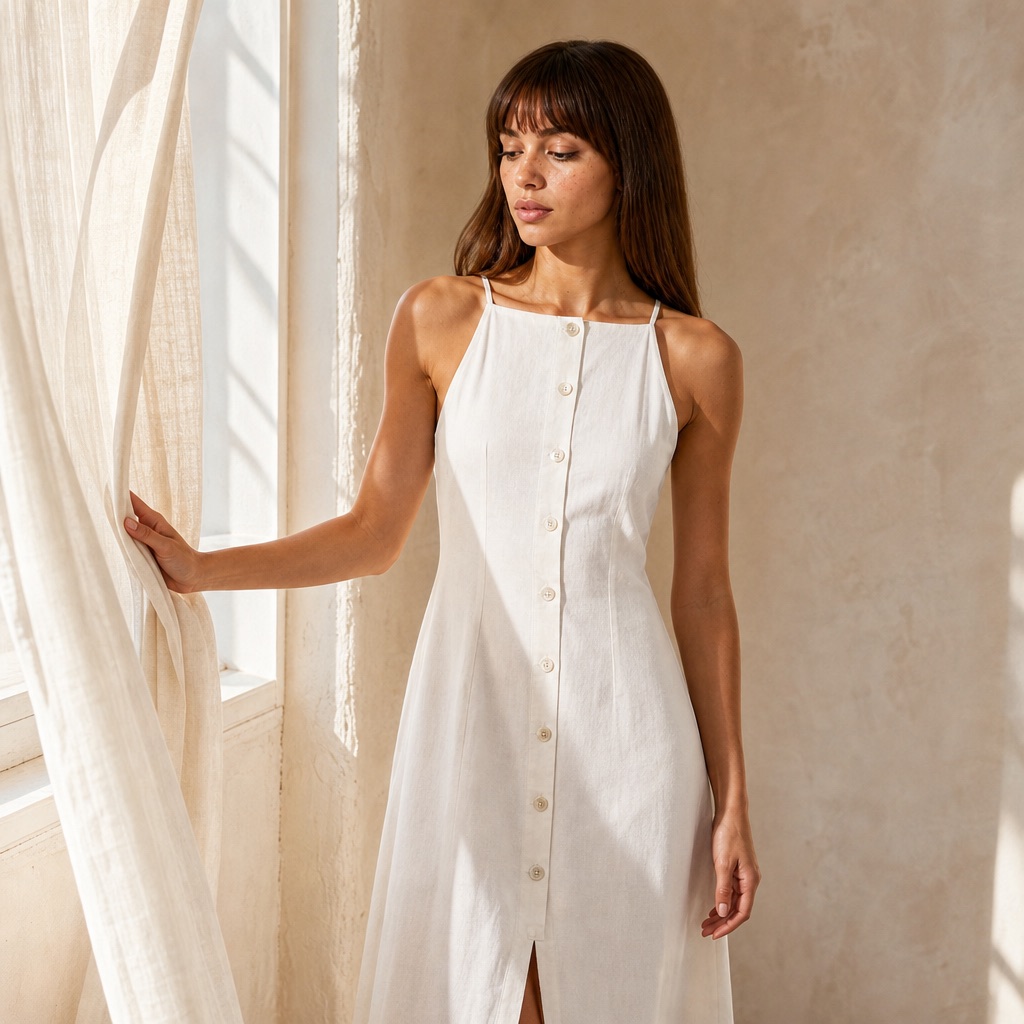
An editorial-American capsule frame at the cross of two brand worlds — produced as collab campaign photography apparel.

The Wednesday morning the CEO greenlights the capsule with the partner

It is the second Wednesday of January at the in-house creative director's office at an eighty-six-million-dollar American contemporary apparel label sitting between Madewell at the J.Crew Group and Vince at the contemporary luxury tier in scale and between AYR and Reformation in editorial register. The CEO walks out of the eight-thirty Monday strategy meeting having signed off on a six-to-twelve-piece SS27 capsule with a named partner — a contemporary footwear-and-outerwear brand at the cross of streetwear and heritage Americana that occupies the cultural-credibility slot the in-house label has been priced out of for three seasons. The partner CD is on a Friday call. The capsule launches in ten weeks. The launch fences against a co-marketing window the partner side controls — a partner-portal exclusive at SSENSE the first seventy-two hours, then a wider drop at Dover Street Market London and New York, Mr Porter Menswear's editorial spotlight, END. Clothing's drop day, and the in-house brand's own dot-com plus the partner's own dot-com sequenced against the SSENSE window closing. The capsule line list locks Friday at the brief call. The campaign brief lands the following Monday.

The named-photographer collab campaign bid lands at nine-fourteen that Friday morning at three-hundred-eighty thousand dollars all-in for the partner-portal hero, the editorial cover and twelve to eighteen tentpole frames — Tyler Mitchell's representation, two shoot days at a Brooklyn warehouse plus a half-day in the Catskills for the outdoor lifestyle register, the named-photographer pedigree both brands' boards signed at v1.0 of the partnership memo. The bid covers the hero. It does not cover the ninety to one-hundred-eighty supporting frames the capsule launch needs against the partner-portal deck for SSENSE plus Mr Porter Menswear plus END. plus Dover Street Market plus Browns plus Bergdorf and Saks plus the dot-com PDP at five angles per silhouette across both brand sites plus the drop-day reveal pack for Instagram and email across both brand handles plus the Klaviyo bridal and the partner's email flow plus the OOH adaptation for the launch city plus the press kit for Hypebeast and Highsnobiety and the Business of Fashion drop coverage. The remaining frames fall on a two-designer in-house creative team and a CD already running the SS27 main-collection brief calendar at full load.

If you are reading this from inside the in-house CD's office at the eighty-six-million-dollar contemporary apparel label on the Wednesday after the CEO greenlight, this page is the dual-spine production playbook the in-house team runs against the capsule between the Friday brief call and the partner-portal launch window opening ten weeks later. The dual-spine document the CDs sign on the brief call. The casting lock that holds across the capsule at the cross of both brands' editorial registers. The named-environment register at the bridge of both locality lineages. The ten-week sprint calendar from brief to drop day. The partner-portal deck against the SSENSE house spec, the Mr Porter house spec, the END. house spec, the Dover Street Market house spec. The three-tier comparison between the named-photographer-only campaign at one-hundred-eighty to five-hundred-twenty thousand, the volume DTC studio model at fifty to one-hundred-twenty thousand that breaks both brand registers, and the dual-spine AI production studio at twenty-eight to seventy-two thousand for the full capsule surface across the ten-week sprint.

The capsule breaks the in-house stack because the dual-spine document does not exist yet

The diagnosis is that the in-house creative team's production stack breaks against the collab capsule not because of budget or talent but because the dual-spine document for this specific pairing does not exist on day one. The team has a brand-spine document for the in-house label — typography hierarchy, palette in Pantone solid coated with sRGB hex and Delta E tolerance under three, named-photographer reference set drawn from the brand's editorial history, named-environment register at the brand's locality lineage, casting-lock mechanic at LoRA or named-AI-talent license, brand-world test sentence at v1.0. The partner has the same document for their world. Neither document codifies how the two brands compose into one capsule register at the cross. The CDs have to write that document on the Friday brief call before any frame composes against the cycle, and the document has to sign with both boards' approval inside week one or the ten-week sprint loses its first week to a dual approval loop that pushes wave one against the drop-day deadline.

The failure mode the in-house team falls into without the dual-spine document is named in the operator literature. Vogue Business and Business of Fashion collab-side reporting through 2025 and 2026 names the same pattern across nine of the highest-grossing capsule drops of the last twenty-four months: the campaign hero reads as one brand world fully realised, the partner-portal deck reads as the partner's world fully realised, and the cross-surface coherence between hero and deck breaks at the buyer's first read at SSENSE or Mr Porter Menswear. The buyer reads two campaigns stitched together against one capsule rather than one capsule composed across two surfaces. The order writes at sixty to seventy percent of plan because the buyer cannot read which brand the consumer is being asked to identify with at the launch. The Highsnobiety and Hypebeast drop coverage compounds the read — the headline names one brand, the body copy names the other, and the lead image reads as one brand's editorial signature rather than the cross both brands signed on the partnership memo.

The dual-spine document the in-house CD writes against the partner CD on the Friday brief call has to specify six things the single-spine document does not. First, the typography hierarchy at the cross — wordmark coexistence, lockup, secondary lockup for partner-portal contexts, exclusion zones. Second, the palette overlap in Pantone solid coated — which colours sit in the in-house brand's locked palette, which sit in the partner's, which sit at the cross as new capsule-only swatches. Third, the casting reference at locked identity at the cross of both brands' editorial registers. Fourth, the named-photographer pedigree set drawn from both brands' editorial histories — Tyler Mitchell at the contemporary American cross, Alasdair McLellan at the British-shop-floor cross, Daniel Riera at the Mediterranean-Italian cross, Glen Luchford at the Parisian-Italian cross. Fifth, the named-environment register at the bridge of both locality lineages. Sixth, the brand-world test sentence both CDs sign at v1.0 — the declarative the frame either holds against or fails. The discipline upstream of the frame is what makes the ten-week sprint possible. The apparel brand identity and campaign system sits underneath the dual-spine document at the in-house side.

Six rules of the dual-spine production contract that hold the capsule against the partner

01

The dual-spine document signs in week one

The Friday brief call ends with both CDs countersigning the dual-spine document — typography lockup, palette overlap in Pantone solid coated with sRGB hex and Delta E tolerance under three, casting reference at locked identity, named-photographer pedigree set at the cross, named-environment register at the bridge of both locality lineages, cloth library at mill and weave for the capsule pieces, brand-world test sentence at v1.0. The document is the production contract. Every frame in the cycle benchmarks against it. No frame composes against the brief until both CDs and both boards sign the document. The first week of the ten-week sprint is the document, not the first dailies.

02

Casting locks at the cross, not at either default

The casting frame on a collab capsule holds at the cross of both brand worlds, not at either brand's house casting extended into the capsule. The brief specifies the bridge — the locked identity reads as the consumer the capsule is built for, not as the consumer the in-house label already has or the consumer the partner already has. The mechanic is named explicitly in the SOW at LoRA, named-AI-talent license, prompt-locked seed or named-human-talent likeness rights. Both CDs sign the casting board at the cross of both editorial registers before any frame composes. The lock holds across hero, lookbook, partner-portal deck, drop-day pack and PDP.

03

Named-environment register at the bridge of locality

The named-environment register on a collab capsule sits at the bridge between both brands' locality lineages. A heritage Americana brand paired with a streetwear contemporary partner reads against a Brooklyn loft at forty-eight-hundred Kelvin Friday afternoon plus a Catskills overlook at forty-two-hundred Kelvin morning rather than against either brand's default. A quiet-luxury contemporary brand paired with a sportswear partner reads against a Soho House Babington House at forty-five-hundred Kelvin late afternoon plus a Hampstead Heath trail at forty-one-hundred Kelvin morning. The register sits in the dual-spine document at named locality plus named Kelvin plus named light angle. Every frame composes against the named registers, not against a stock backdrop the vendor's house style defaults to.

04

The cloth library names every capsule piece at mill and weave

Every silhouette in the capsule names its cloth at mill and weave inside the dual-spine document. A heritage Americana outerwear collab names the wool tier — Loro Piana Pecora Nera for the cashmere lining, Holland and Sherry Crispaire for the suiting cloth, Vitale Barberis Canonico for the worsted, Drago for the flannel, Dormeuil Tonik for the mohair. A contemporary womenswear capsule names the silk weights and weaves at named-weight grams per square metre, the denim mills at the bottom-weight tier, the cashmere loft at the knitwear pieces. The dyed reference ships to production in week one. The construction-detail close-up benchmarks against the reference at three-hundred-percent zoom at the QC stage. Generic cloth is the slop signature — named cloth is the contract.

05

The partner-portal deck composes against the retailer's house spec

The partner-portal deck for a collab drop composes against the retailer's house spec at the asset layer, not against the in-house label's standard deck format. SSENSE reads at one-by-one square plus long-form editorial brand-page. Mr Porter Menswear reads at three-by-four editorial cover plus carousel close-up at slot two plus drape-on-form at slot three. END. Clothing reads at vertical drop-day editorial plus product carousel. Dover Street Market reads at the cultural-credibility editorial register against the store-curator voice. Browns reads at British editorial. The deck ships against each retailer's spec from the same composition set against the dual-spine document — one casting frame, one named-environment register, multiple house-spec crops.

06

The brand-world test runs on every frame before delivery

Both CDs sign one declarative sentence at v1.0 of the dual-spine document — the brand-world test sentence. The sentence reads as the answer to the question "what does this capsule look like when it works." Every frame in the production cycle benchmarks against the sentence at the dailies review. Frames that hold the sentence ship. Frames that fail the sentence route into the named rework cycle and re-render within the turnaround window. The fifteen-percent failure ceiling sits in the SOW. The test is binary — the frame either reads against the dual-spine document or it does not. The discipline turns the collab capsule from an art-direction loop into a production contract.

Across the capsule

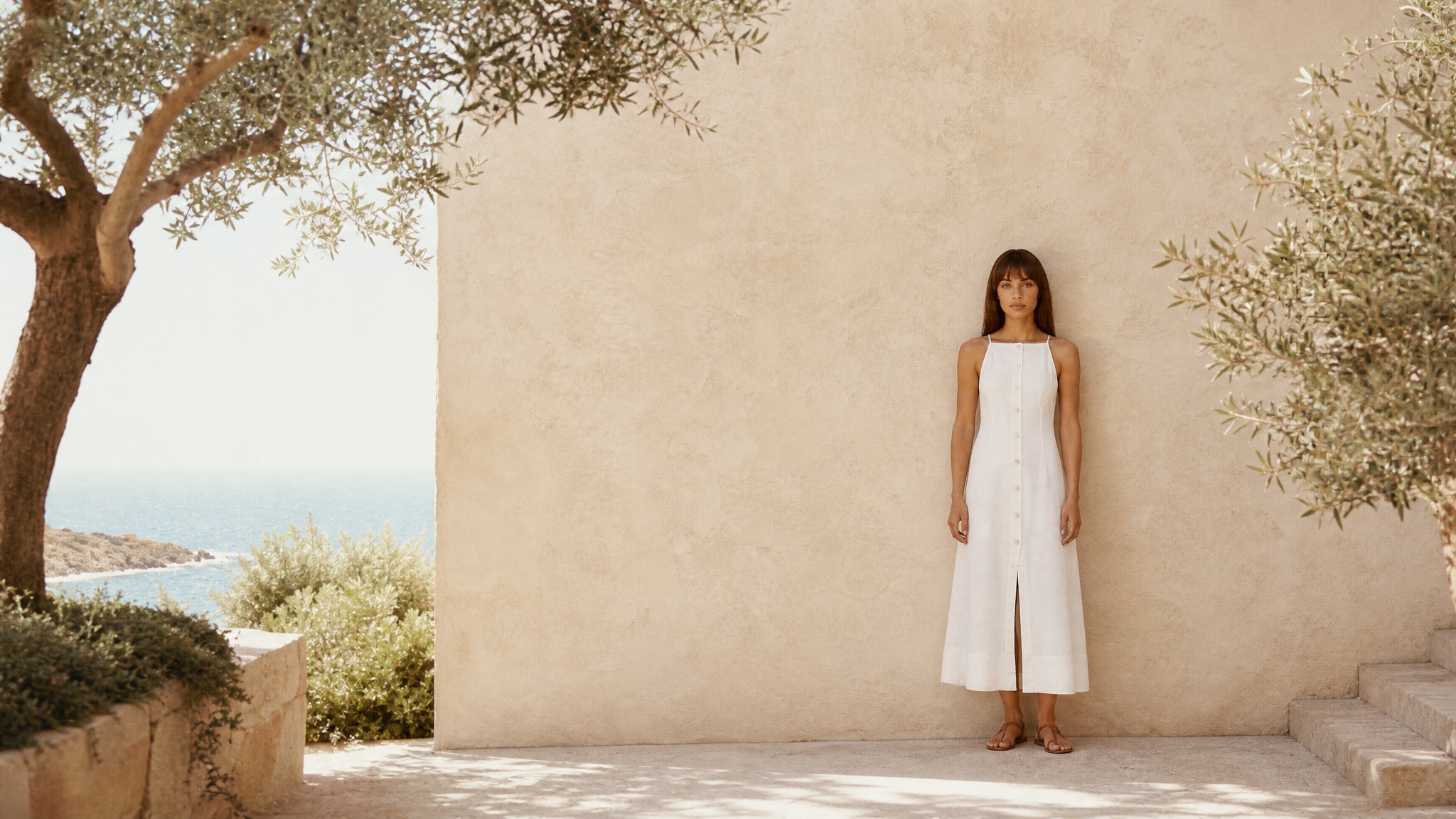
Casting lock and named-environment register across the lookbook spread — produced as collab campaign photography apparel.

The three options

Named-photographer collab campaign, volume DTC studio extended into the capsule, or dual-spine AI production studio.

Tier 1

Named-photographer collab campaign

One-hundred-eighty to five-hundred-twenty thousand dollars all-in for a Tyler Mitchell / Alasdair McLellan / Daniel Riera / Glen Luchford-tier campaign covering hero, editorial cover and twelve to eighteen tentpole frames across one to two shoot days per Vogue Business and Business of Fashion collab-side reporting through 2026. The named-photographer pedigree carries the editorial credibility both brands' boards signed at v1.0 of the partnership memo. The capsule still needs another sixty to one-hundred-twenty supporting frames against partner-portal deck, dot-com PDP, drop-day pack, OOH, email and press kit that fall outside the named-photographer engagement onto the in-house team. The campaign covers the campaign. It does not cover the capsule launch surface.

Tier 2

Volume DTC studio extended into the capsule

Fifty to one-hundred-twenty thousand dollars at the volume DTC studio model extended into the collab capsule surface. The studio ships one-hundred-twenty to one-hundred-eighty frames across the deck and PDP surface at the wrong register — the casting frame drifts between the in-house brand's house casting and the partner's, the named-environment register defaults to a stock backdrop the studio's house style favours, the cloth renders generic against the dyed reference, the wholesale-deck cover at Mr Porter Menswear reads off-register against the campaign hero on Instagram. The buyer at SSENSE reads the deck as two campaigns stitched together. The Highsnobiety drop coverage runs at a flattened editorial register. The order writes at sixty to seventy percent of plan.

Tier 3

Dual-spine AI production studio (us)

Twenty-eight to seventy-two thousand dollars for the full capsule surface across a ten-week sprint at one-hundred-eighty to four-hundred-eighty dollars per frame depending on the editorial tier. Built against the dual-spine document both CDs countersign on the Friday brief call — typography lockup, palette overlap in Pantone solid coated with Delta E under three, casting reference at locked identity at the cross of both editorial registers, named-photographer pedigree set drawn from both brands' editorial histories, named-environment register at the bridge of both locality lineages, cloth library at mill and weave for the capsule pieces, brand-world test sentence at v1.0. The first-look pass rate sits at eighty to ninety-two percent against the test across the delivery, per 100 Creatives engagement data through 2026.

The ten-week sprint from brief call to partner-portal launch window

The ten-week sprint runs back from the partner-portal launch window. Week one is the dual-spine document — the Friday brief call between both CDs ends with the document countersigned, both boards sign by Tuesday of week two, and no frame composes against the brief until the document is locked. The discipline matters because the Vogue Business operator interviews with collab-side CDs through 2026 name the dual approval loop as the most common reason capsule drops slip — when the document does not sign in week one, the loop pushes into week two and consumes the slack the sprint built in. Week one ships the document, the cloth library at mill and weave, the dyed reference order to the studio, and the casting board both CDs sign at the cross of both editorial registers. The brand-world campaign for in-house apparel creative teams walks the upstream brand-world discipline the in-house side ingests against.

Weeks two and three lock casting at the named-talent or named-AI-talent layer, name the editorial reference set drawn from both brands' histories — Tyler Mitchell's Calvin Klein run, Alasdair McLellan's i-D editorial book, Daniel Riera's Loro Piana lineage, Glen Luchford's Parisian-Italian editorial archive — and lock the named-environment register at the bridge of both locality lineages. Brooklyn loft at forty-eight-hundred Kelvin Friday afternoon for the urban register. Catskills overlook at forty-two-hundred Kelvin Saturday morning for the heritage Americana cross. Hudson Valley porch at four pm low-sun for the contemporary lifestyle. Soho House Babington House at forty-five-hundred Kelvin late afternoon for the British editorial cross. Hampstead Heath trail at forty-one-hundred Kelvin morning for the outdoor lifestyle. The named-environment list signs at the dual-spine document v1.1 by the end of week three.

Weeks four through six ship wave one — the partner-portal hero campaign frame, the editorial cover at the named-photographer reference register, six to ten tentpole lookbook frames at the editorial tier, the partner-portal deck cover for SSENSE plus Mr Porter Menswear plus END. plus Dover Street Market plus Browns, and the drop-day reveal hero for Instagram and email across both brand handles. The wave-one set is the editorial proof — the frames against which the press kit ships into Hypebeast plus Highsnobiety plus Vogue Business drop coverage plus Business of Fashion plus Complex plus Permanent Style for the menswear cross plus i-D for the cultural-credibility tier. The press kit lands in week six. Wave one passes the brand-world test at both CDs' v1.0 sign at the end of week six.

Weeks seven and eight ship wave two — the full lookbook spread across six to twelve silhouettes at hero plus three-quarter plus close-up across the construction details, the dot-com PDP at five angles per silhouette across both brand sites, the OOH adaptation for the launch city, the Klaviyo and Postscript pack against the email and SMS pre-launch sequence, the Drops App and Aimé Leon Dore-style drop-day notification pack if the partner runs a drop app, and the supplementary editorial frames the partner-portal deck calls for at SSENSE's long-form brand-page and Mr Porter Menswear's editorial spotlight. Wave two passes the brand-world test on the second Friday of week eight. Weeks nine and ten run partner-portal deck QC against each retailer's house spec, Frame.io and Bynder DAM ingestion with locked per-spine metadata, drop-day asset handoff to the partner-side team, and the in-house brand's own dot-com integration. The partner-portal launch window opens on the Tuesday of week ten.

The math against the named-photographer bid plus the supporting surface

The economics on the dual-spine production engagement run against the named-photographer collab campaign quote plus the supporting capsule surface the named-photographer engagement does not cover. Tyler Mitchell at the contemporary American cross, Alasdair McLellan at the British editorial cross, Daniel Riera at the Mediterranean-Italian cross or Glen Luchford at the Parisian-Italian cross run at one-hundred-eighty to five-hundred-twenty thousand dollars all-in for a hero campaign day plus twelve to eighteen editorial frames per Vogue Business and Business of Fashion collab-side reporting through 2026 — the bid the CEO and the partner CD are weighing the Friday morning the campaign brief lands. The capsule still needs ninety to one-hundred-eighty supporting frames against partner-portal deck for SSENSE plus Mr Porter Menswear plus END. Clothing plus Dover Street Market plus Browns plus Bergdorf and Saks plus the dot-com PDP at five angles per silhouette across both brand sites plus the drop-day reveal pack plus Klaviyo and Postscript plus OOH plus the press kit at Hypebeast and Highsnobiety.

The volume DTC studio model extended into the capsule ships those one-hundred-twenty to one-hundred-eighty supporting frames at fifty to one-hundred-twenty thousand dollars in the wrong editorial register — casting drift between the in-house brand's house frame and the partner's, named-environment defaulting to a stock backdrop, cloth rendering generic against the dyed reference. Common Thread Collective operator panels through the 2026 apparel-vertical sessions name the cross-surface coherence break as the most common reason capsule drops underperform their pre-launch retail order plan — the buyer reads the deck and the campaign as two campaigns stitched together rather than one capsule composed across two surfaces, and the order writes at sixty to seventy percent of plan against the partner-portal launch window. The named-photographer hero saved the campaign and the volume studio supporting surface gave away the launch.

The dual-spine AI production studio ships the full capsule surface across the ten-week sprint at twenty-eight to seventy-two thousand dollars all-in. The volume tier at the deck and PDP surface runs one-hundred-twenty to two-hundred dollars per frame. The editorial tier at the hero, lookbook and partner-portal cover runs two-hundred to four-hundred-eighty dollars per frame. The total surface lands at one-hundred-twenty to two-hundred-forty frames across hero plus lookbook plus partner-portal deck plus PDP plus drop-day plus OOH plus press kit. The first-look pass rate against the brand-world test sits at eighty to ninety-two percent across the delivery, per 100 Creatives engagement data through 2026, with the dual-CD sign at the wave-one and wave-two end-of-cycle review. The math against the AI photoshoot versus studio cost frame at the per-usable-frame layer ships at one-hundred-thirty to four-hundred dollars per frame for the dual-spine studio against eight-hundred to twenty-six-hundred dollars per usable campaign-day frame at the named-photographer-only tier. The cash line drops by sixty to seventy-five percent at the same editorial register because the production discipline upstream of the frame is the discipline the editorial register holds against. The frame against the AI fashion photography vs traditional model holds at the collab tier the way it holds at the main-collection tier.

Partner-portal deck against SSENSE, Mr Porter, END., Dover Street Market and Browns

The partner-portal deck on a contemporary apparel collab composes against six house specs the buyer reads on her Tuesday-morning order review. SSENSE reads at one-by-one square plus long-form editorial brand-page — the editorial register sits at the contemporary tier with the cultural-credibility frame the buyer cross-references against Aimé Leon Dore's New Balance run, Wales Bonner's adidas Originals capsules, and the Loewe On Running pack on the same shelf. Mr Porter Menswear reads at three-by-four editorial cover plus carousel close-up at slot two plus drape-on-form at slot three — the editorial register sits at the menswear-tailoring tier with the named-photographer pedigree the buyer reads against Bruce Weber's Polo lineage and Glen Luchford's Loro Piana lineage. END. Clothing reads at vertical drop-day editorial plus product carousel — the editorial register sits at the streetwear adjacency with the drop-day urgency the buyer reads against Stüssy's Birkenstock pack and Sacai's Nike runs.

Dover Street Market reads at the cultural-credibility editorial register — the store-curator voice at the London and New York doors reads against the Comme des Garçons editorial register and the cross of Rei Kawakubo's house with the rotating guest editorial. The capsule deck for Dover Street Market composes against the cultural-credibility frame rather than the volume retail frame — fewer frames at higher editorial register, the named-photographer pedigree foregrounded, the named-environment register cited at the dual-spine document v1.0. Browns reads at the British editorial tier — the editorial register sits between Mr Porter's menswear-tailoring frame and SSENSE's contemporary cultural-credibility frame, with the Caroline Issa-era curated buy read still the spine the buyer composes against in 2026. Bergdorf Goodman and Saks Fifth Avenue read at the New York luxury tier — the capsule reads against the editorial register Bergdorf's contemporary buy and Saks Wedding and Contemporary departments compose against in their Vogue and Bazaar adjacencies.

The deck composes against each retailer's house spec from the same dual-spine document — one casting frame, one named-environment register, one cloth library at mill and weave, multiple house-spec crops. The wholesale-deck production discipline in the wholesale lookbook and linesheet practice holds at the capsule tier the way it holds at the main-collection tier — the deck reads as the order, and the order writes at plan when the deck holds the brand-world test at the buyer's first read. The partner-side team ships its deck against the same dual-spine document on the partner's side of the launch — both brands compose against the same v1.0 sign, and the cross-surface coherence between the in-house deck and the partner deck reads as one capsule rather than two stitched campaigns at the retailer's order review on the Tuesday before the partner-portal launch window opens.

What the second collab cycle looks like when the dual-spine discipline holds

What the second collab cycle looks like when the dual-spine discipline holds: the in-house CD at the eighty-six-million-dollar contemporary American apparel label ships the SS27 capsule with the streetwear-and-heritage partner on the Tuesday of week ten against the partner-portal launch window at SSENSE. The wave-one editorial cover lands at Hypebeast plus Highsnobiety plus Vogue Business plus Business of Fashion plus Complex plus Permanent Style plus i-D the morning of the launch. The Mr Porter Menswear editorial spotlight runs that Thursday. The Dover Street Market drop opens at the London and New York doors on the Saturday. The END. Clothing drop-day editorial holds at the same casting register the SSENSE long-form brand-page composed against. The dot-com PDP at five angles per silhouette across both brand sites reads as on-register against the partner-portal deck against the campaign hero against the OOH adaptation at Crosby Street in SoHo and Lafayette Street in Noho. The buyer at SSENSE writes the order at plan plus eight percent on the wave-two reorder window. The partner's CEO sends the email at the end of the second week of in-market sell-through that opens the conversation on FW27.

The full surface ships across one-hundred-eighty frames at the dual-spine production engagement at fifty-eight thousand dollars all-in across the ten-week sprint — sixty editorial frames at the hero plus partner-portal cover plus lookbook tier, eighty supporting frames at the lookbook spread plus drop-day pack plus Klaviyo tier, twenty-four wholesale-deck construction-detail frames at the wholesale tier, sixteen PDP frames at the volume tier. The first-look pass rate runs at eighty-nine percent at the wave-one review against the brand-world test sentence both CDs signed on the Friday brief call, and at ninety-two percent at the wave-two review after one rework cycle. The partner-side dual-spine document signs at the same v1.0 and the cross-surface coherence between both decks holds at the retailer's order review on the Tuesday before launch. The luxury apparel brand world and campaign walks the upstream brand-world discipline that holds against quiet-luxury and contemporary luxury collabs. The fashion lifestyle campaign imagery practice walks the lifestyle layer at the named-environment cross.

What the dual-spine engagement does not do: replace the named-photographer collab campaign at the cultural-tentpole tier. The Tyler Mitchell hero at the contemporary American cross, the Alasdair McLellan hero at the British editorial cross or the Glen Luchford hero at the Parisian-Italian cross is the editorial credibility the partnership memo signs against, and the bid the CEO is weighing the Friday morning. The dual-spine engagement composes against the named-photographer hero in the same wave-one cycle — the editorial cover from the named-photographer day ships into the press kit, the dual-spine production ships the ninety to one-hundred-eighty supporting frames against the partner-portal deck and the PDP at the editorial register the named-photographer hero established. The hero and the surface compose as one capsule. The math against the seasonal capsule cadence at the in-house side compounds — the brand ships two to four collab capsules per year against the same dual-spine production engagement structure, and the per-frame economics compound against the main-collection cadence the brand already runs against the apparel rebrand campaign relaunch structure and the seasonal-drop rhythm. The framework sits inside the broader AI product photography agency selection framework and holds across contemporary women's, contemporary menswear, heritage Americana, quiet luxury and streetwear-cross capsule pairings.

Collab and capsule campaign imagery for apparel · frequent questions

What is collab and capsule campaign imagery for apparel brands?

Collab and capsule campaign imagery for apparel brands is the photography surface a co-branded capsule ships against — hero campaign frame, six-to-twelve-piece lookbook, partner-portal deck for the drop retailer, dot-com PDP across both brand sites, drop-day reveal pack for Instagram and email, and OOH adaptation for the launch city. The discipline is dual-spine because the capsule has to read as both brand worlds at once. Production runs against a single dual-spine document the in-house CD signs with the partner CD on the brief call, a locked casting frame held across the capsule, and a named-environment register that sits at the cross of both brands' locality lineages.

Why does a collab capsule break the in-house creative team's normal production stack?

A collab capsule breaks the normal production stack because the team has to compose against two brand worlds at the same time on a ten-week sprint that ships partner-portal deck, drop-day pack and OOH inside a co-marketing window the partner side controls. Casting decisions need partner CD signoff. Named-environment registers have to bridge both locality lineages without defaulting to either. The dual-spine document does not exist on day one because nobody has written one for this pairing yet. Vendor briefs that work for the main collection collapse against the dual approval loop and the calendar.

What does a dual-spine document specify for a collab capsule shoot?

A dual-spine document specifies how the two brand worlds compose into one capsule register without flattening either. It names the typography hierarchy at the cross, the palette overlap in Pantone solid coated with sRGB hex and Delta E tolerance, the casting reference at locked identity, the named-photographer pedigree set drawn from both brands' editorial histories, the named-environment register at the cross of both locality lineages, the cloth library at mill and weave for the capsule pieces, and the brand-world test sentence both CDs sign at v1.0. The document signs on the brief call and every frame benchmarks against it.

How long does a collab capsule campaign production cycle take?

A ten-week sprint is the standard cycle for a six-to-twelve-piece collab capsule shipping into a partner-portal launch window. Week one ingests the dual-spine document and the brand-world test signs with both CDs. Weeks two and three lock casting, named-environment register and the editorial reference set. Weeks four through six ship wave one — hero campaign frame, six to ten tentpole lookbook frames, partner-portal deck cover, drop-day reveal hero. Weeks seven and eight ship wave two — full lookbook spread, PDP for both brand sites, OOH adaptations, Klaviyo and email pack. Weeks nine and ten run QC, DAM ingestion and drop-day asset handoff to the partner.

What does a collab capsule campaign production cost run at?

A named-photographer collab campaign for a heritage-meets-contemporary apparel pairing runs one-hundred-eighty to five-hundred-twenty thousand dollars all-in for a hero campaign day plus twelve to twenty editorial frames per Vogue Business and Business of Fashion collab-side reporting through 2026. The capsule then needs another sixty to one-hundred-twenty supporting frames against partner-portal deck, dot-com PDP, drop-day pack and OOH that fall on the in-house team. A dual-spine AI production studio engagement runs twenty-eight to seventy-two thousand dollars for the full capsule surface across the ten-week sprint at one-hundred-eighty to four-hundred-eighty dollars per frame, with the editorial register held against the named-photographer reference set both brands signed at v1.0.

How is a collab campaign casting frame different from a main-collection casting frame?

A collab campaign casting frame holds at the cross of both brand worlds rather than at either one's default. The casting reads as the bridge between the two brands' editorial registers, not as either brand's house casting extended into the capsule. The mechanic is the same — fine-tuned LoRA, named-AI-talent license, prompt-locked seed, or named-human-talent likeness rights — but the brief requires sign-off from both CDs at the casting board stage before any frame composes against the cycle. The locked identity then holds across hero, lookbook, partner-portal deck, drop-day pack and PDP at the same casting register on both brand sites.

What named collab references inform the dual-spine production discipline?

The reference set draws on the editorial register both brands are read by the audience against. Heritage Americana meets contemporary streetwear references Aimé Leon Dore's New Balance run, Wales Bonner's adidas Originals capsules, Levi's Vintage Clothing's Filson collaborations and Stüssy's Birkenstock pack. Quiet luxury meets sportswear references Loewe's On Running and the Bottega Veneta archive collaborations. Outerwear meets fashion references The North Face's Gucci pack and Moncler Genius's Pharrell capsule. Each pairing has a documented dual-register that the dual-spine document codifies for the new capsule at hand.

Which retailers does the partner-portal deck have to land at on a collab drop?

The standard partner-portal set for a contemporary apparel collab is Mr Porter or Net-a-Porter at the editorial register, SSENSE at the contemporary editorial tier, END. Clothing at the streetwear adjacency, Dover Street Market at the cultural-credibility tier, Browns at the British editorial tier and Bergdorf Goodman or Saks at the New York luxury tier. The wholesale deck composes against each retailer's house spec, the casting frame holds across all six decks, and the brand-world test sentence runs at QC before the deck ships to the buyer the week before the partner-portal launch window opens.

What apparel brand should run a dual-spine collab production engagement?

In-house creative directors and VP brand owners at apparel labels at roughly fifty to two-hundred-million in revenue running two to four collab or capsule drops per year. Sharpest fit for heritage Americana modernising the catalog through a contemporary partner, contemporary women's mid-market premium shipping a designer capsule, contemporary menswear running a sportswear cross, streetwear extending into heritage, and quiet luxury bridging into a sportswear or outerwear pairing. The framework is built for the CD who owns the brand calendar, has the partner CD on a Friday call and needs the capsule on the partner-portal launch window without breaking the main-collection cadence.

Sign the dual-spine

Send the partnership memo. The dual-spine ships in week one.

If you are the in-house CD, VP brand or creative lead at a fifty-to-two-hundred-million-dollar apparel label looking at the partner CD on a Friday brief call and the partner-portal launch window ten weeks out — send the partnership memo, the in-house brand-spine document at v1.0, the partner-side brand-spine reference if available, the line list at six to twelve silhouettes, the cloth library at mill and weave for the capsule pieces, the named-photographer collab campaign bid that landed on the desk, and the partner-portal retailer set. The dual-spine document drafts on the Friday brief call and signs by Tuesday of week two. The casting board signs at the cross by the end of week three. Wave one ships in week six against the press kit at Hypebeast plus Highsnobiety plus Vogue Business plus Business of Fashion plus i-D plus Complex plus Permanent Style. Wave two ships in week eight against the full capsule surface. The partner-portal launch window opens on the Tuesday of week ten. The capsule reads as the capsule both brands signed for, not as two campaigns stitched together at the buyer's first read.

Book a collab capsule call