The quick answer
Pick 100 Creatives if your styles are already fit-approved and you need on-model and product images for your own store, Google Shopping and paid social across every colorway, faster than a studio calendar allows.
- Apparel imagery starts at $10,000 per 100-SKU programme, quoted in writing as a fixed total, and nothing is charged until you approve the quote.
- Creative batches come back in 48 hours, and revisions within 48 hours.
- A brand intake before production records your visual language, model preferences, colorways and export specs, so the 40th SKU matches the first.
- We make product and campaign images with Overs, an AI image tool also built by our founder (both are brands of 2587689 Alberta Ltd.), and we publish our own render counts below.
Pick something else if most of your revenue runs through Amazon main images, or your product sells on how it moves on a real body, like denim, swim or shapewear. Book a fashion photographer for those. If your best ads are people trying clothes on, hire a UGC creator agency.
An earlier version of this page claimed AI fashion photography costs $10 to $75 an image against $120 to $1,000 for a shoot, that AI produces 500 to 2,000 finished images a week, that 80 to 95 percent of a brand's photography should move to AI, and that a brand spending $200,000 a year would free up $90,000 to $130,000. None of those numbers had a source. This version removes them and compares the two on something you can check: what each channel lets you publish.
AI fashion photography vs a traditional shoot: start with the channel
Most comparisons score AI and a shoot on speed, cost and quality, as if every image ends up in the same place. A clothing brand's images end up in five or six places, and each one has its own rule. Amazon cares whether the main image is a photograph. Google Shopping cares about the file's metadata. New York and the EU care whether a person in an ad is real. Your own product page cares only about whether the customer keeps the item.
So the useful question is narrower: for this image, in this channel, does a generated version pass? Answer it per channel and the split between AI and a shoot mostly decides itself. The sections below go channel by channel, with each rule linked to its source and checked in October 2026.
Amazon main images: the strictest channel
Amazon's product image requirements, as quoted by Jungle Scout, say main images "must be professional photographs of the actual product" and rule out graphics, illustrations and mockups. Main images for women's and men's clothing must show the product on a human model, and all kids' and baby clothing must be shot flat, off-model. The background must be pure white (RGB 255, 255, 255) and the product must fill at least 85 percent of the frame (Jungle Scout, updated October 2024, checked October 2026).
In July 2026 Amazon added a second rule. Sellers must add the metadata keyword contains-synthetic-performer to images showing photorealistic people created entirely by AI and not based on a real person. Images of real people, even edited ones, are excluded (eWeek, July 2026, checked October 2026). Amazon can remove noncompliant images or suppress the listing.
Put those together and the safe plan for an apparel seller on Amazon is a real photograph of the real garment on a real model for the main image. Generated images can fill secondary slots, such as a lifestyle scene or a colorway grid, if they are tagged where required and checked against the sample. Read your category style guide in Seller Central before you commit either way; it controls the listing, and third-party summaries can lag.
Google Shopping: AI is allowed, metadata is not optional
Google Merchant Center accepts AI-generated images in the main image, additional image and lifestyle image attributes. The condition is metadata: every image made with generative AI must carry the IPTC DigitalSourceType tag (TrainedAlgorithmicMedia, CompositeSynthetic or AlgorithmicMedia), and Google tells merchants not to remove it (Google Merchant Center Help, AI-generated content, checked October 2026).
This is where generated fashion images fail without anyone noticing. Image compressors, some Shopify apps and many CDN pipelines strip metadata to save bytes. Export one generated image, run it through your pipeline exactly as a feed image would go, and inspect the output file for the tag before you send 400 SKUs through it. A traditional photo has no tag to lose, which makes it the simpler file for a Shopping feed even when it costs more to make.
Your own product page: the rule is returns
Shopify and your own store don't police how an image was made. The only check is the customer, who decides from your images whether the hem hits the ankle, whether the olive is olive, and whether the rib knit is ribbed. If the image is wrong, the item comes back.
That is where AI fashion photography needs the most care and where it also saves the most time. A real shoot photographs the sample on a body, so the image is proof. A generated image is drawn from your product photos and references, and clothing goes wrong in plausible ways: a pocket that moves between the front and three-quarter view, a hem a size too long, a texture rendered smooth. Our checklist for reviewing AI creative from an agency covers the length, rise, drape and color checks every image needs before it goes live.
Our own numbers show where the effort goes. Before Overs existed, we built four campaigns by hand in 2026 with AI image models: 361 renders for 45 usable images, about eight renders per keeper. Men's trousers on a model took 40 renders for 11 keepers. Surf apparel on one consistent model took 163 renders for 12, because holding the same face and body across a set is harder than getting one good frame. Gummy supplement ads, with no person and no fabric, took 38 renders for 12.
Meta and TikTok ads: disclosure is now law in New York and the EU
New York's synthetic performer law took effect on June 9, 2026. An advertiser that knows an ad uses a synthetic performer, a digitally created person meant to look like a human performer who is not any identifiable real one, must disclose it conspicuously. Penalties are $1,000 for a first violation and $5,000 for each one after (Cooley, January 2026, checked October 2026). A traditional shoot with a real model needs no such label.
In the EU, Article 50 of the AI Act applies from August 2, 2026 and requires disclosure of realistic AI-generated depictions, including synthetic people who resemble no one; an AI-generated person in an ad is one of the European Commission guidance's own examples (Davis+Gilbert summary, checked October 2026). If you buy Meta ads in New York or Europe, design the space for the label into the 4:5 feed and 9:16 story layouts while the campaign is still a brief. Our guide to static ad sizes for Meta shows how much room each placement leaves. None of this is legal advice; have a lawyer read it for your markets.
Ads are also where AI earns its place. A paid social account burns through variations: the same jacket on three backgrounds, four colorways, a sale card, a restock card. Generating those from a style you have already shot is faster than rebooking a studio for each test. For which ad concepts still need a camera, such as demonstrations and testimonials, see when you need a real photo shoot.
Traditional shoot vs AI fashion photography, channel by channel
| Where the image runs | Traditional shoot | AI fashion photography |
|---|---|---|
| Amazon main image (adult clothing) | Yes: a photograph of the real product on a model | Risky: main images must be photographs; AI people need the contains-synthetic-performer tag |
| Amazon secondary images | Yes | Usable if tagged where required and checked against the sample |
| Google Shopping feed | Yes, nothing to tag | Allowed, if the IPTC DigitalSourceType tag survives your pipeline |
| Your product page | Yes, the image is proof of fit | Usable for fit-approved styles, checked against the sample |
| Paid social in New York | Yes, no label | Conspicuous disclosure of synthetic performers since June 9, 2026 |
| Paid social in the EU | Yes, for an unaltered photo | Disclosure of realistic AI people from August 2, 2026 |
| Colorway and angle variants | One shoot day per batch of samples | Strongest use, once the style's fit is confirmed |
Shoot the first style, generate the rest
Most clothing brands that use AI fashion photography well don't pick one side. They shoot what has to be a photograph and generate what can be a variation. In practice that looks like this for a drop of 30 styles in four colorways:
Shoot the Amazon main images, any new fit or block, and the extended sizes on real people. Then generate the colorway, angle and background variants of those same styles for your product page, Shopping feed and ads, each one checked against the physical sample, tagged with the right metadata, and labeled where the ad runs in New York or the EU. The DTC clothing photography playbook has the shot list per style and the schedule backward from a drop date.
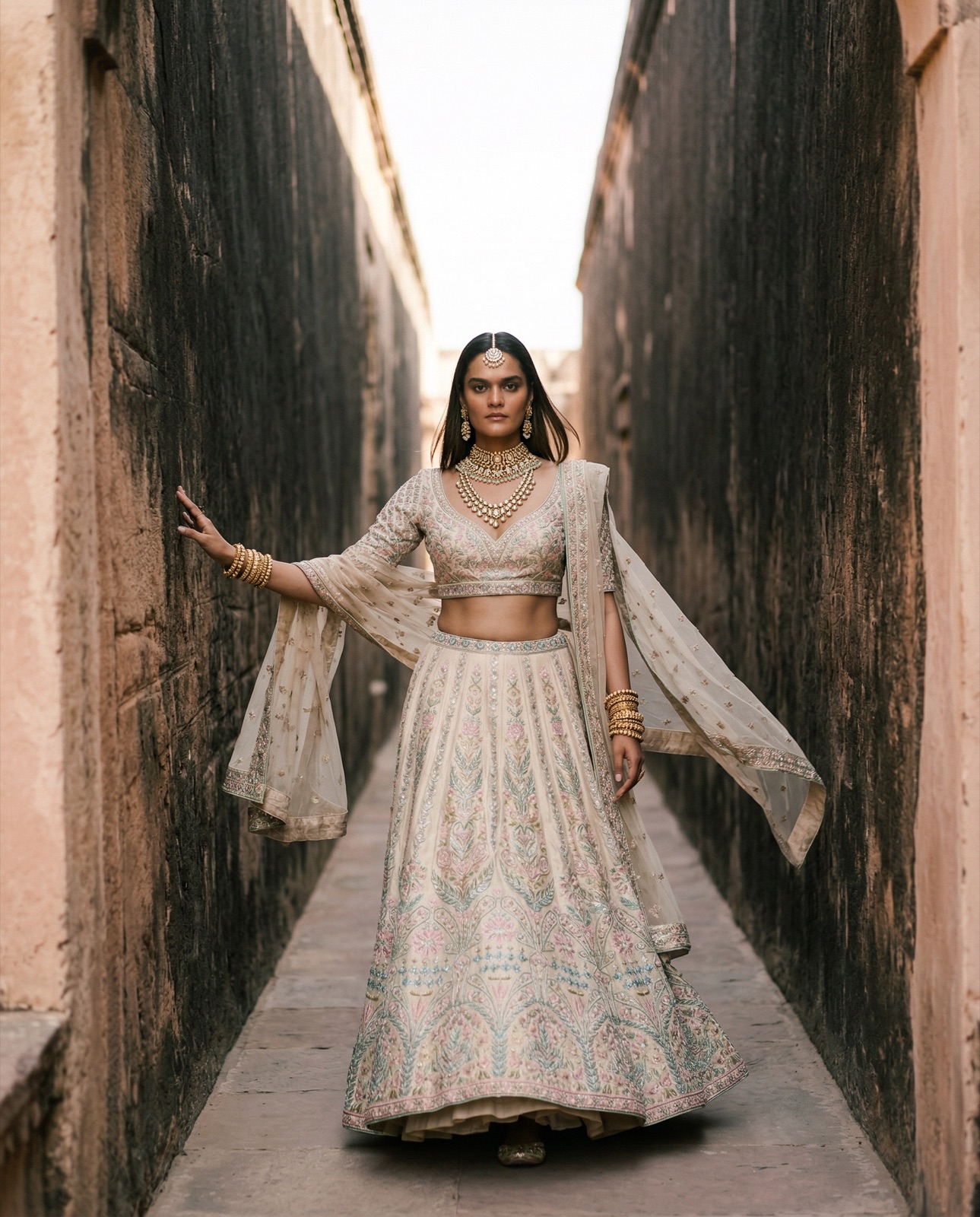
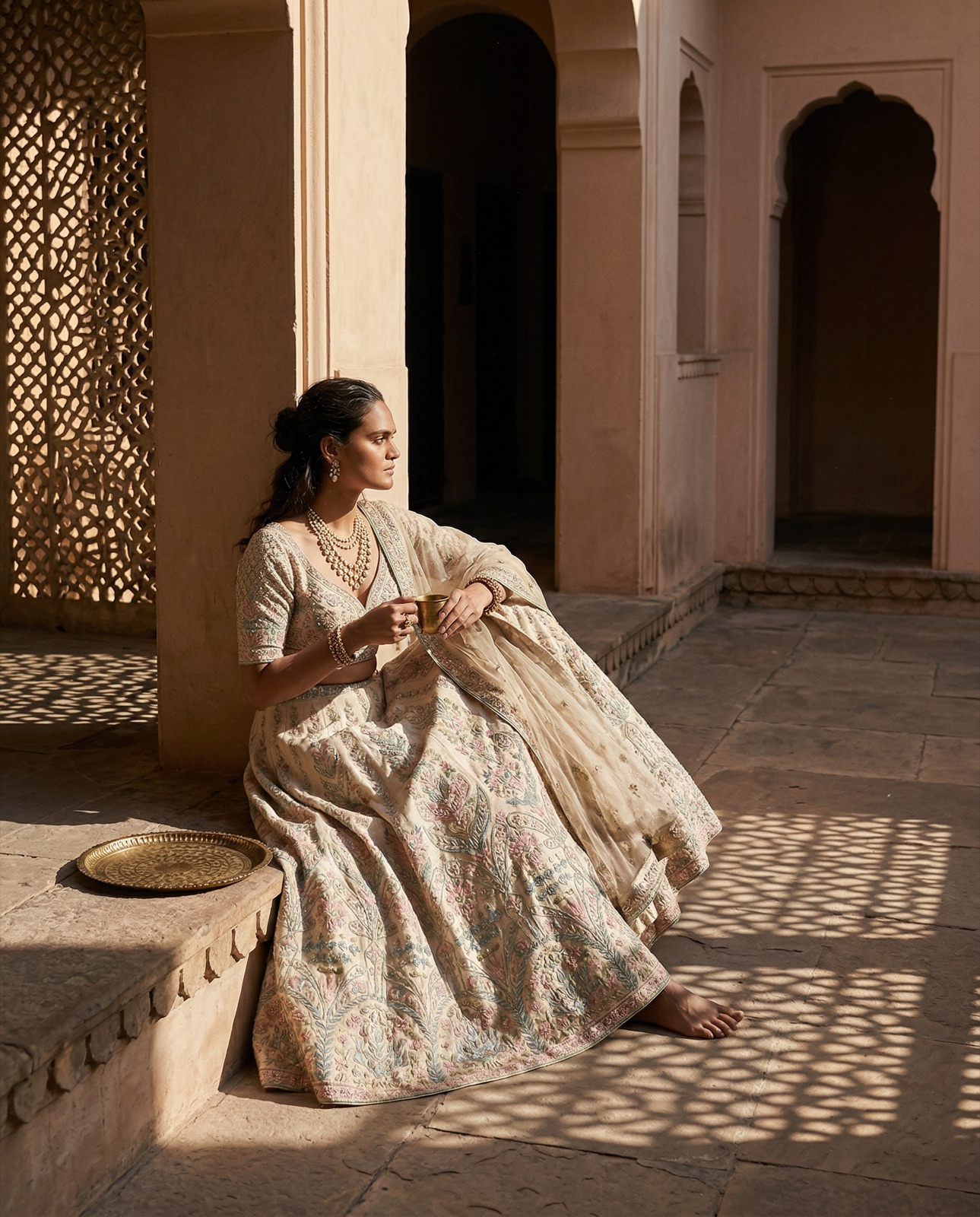
If the question is specifically AI-generated people versus booking a model, including digital replicas of a real model and New York's consent rule for them, our comparison of AI fashion models vs real models covers it.
Which should you buy?
Most of your sales are on Amazon. A traditional shoot for main images, every time. Use generated images only in secondary slots, tagged where Amazon requires it.
You sell through your own store and Google Shopping, and your styles are fit-approved. AI fashion photography for colorways, angles and lifestyle scenes, with a metadata check on your export pipeline. This is the work 100 Creatives does for apparel brands.
You are launching a new fit, extended sizes or a fabric that sells on movement. A fashion photographer and a real model. Generate variations later, from the approved shots.
Your best ads are people trying clothes on. A UGC creator agency. See UGC ad creatives.
You have a designer in-house and want to make variants yourself. An AI image tool. Overs is one, built by our founder, so weigh that disclosure; our comparison of an agency or an AI tool for product photos covers when each fits.
Where 100 Creatives fits
100 Creatives is an AI-powered creative agency in Calgary, Canada, that makes static and video ads, and the product imagery behind them, for DTC and consumer brands advertising on Meta, TikTok and Google. For a clothing brand that means on-model and product images for fit-approved styles, exported to your channel specs, and the ads built from them. Most of our client work is under NDA, so the portfolio shows spec work: concepts made for brands that did not commission them.
Send your style list, which styles are fit-approved, your colorways and the channels each image is for. If a style or a channel needs a real photograph, we will say so before we quote. Pricing lists the starting points.