Apparel · western and ranch wholesale-deck

Western apparel campaign photography that reads at the yoke, the snap and the hat crease, not at a straight-leg jean and a borrowed felt hat.

Western apparel campaign photography is the production discipline a DTC western wear, ranch wear or rodeo apparel brand uses to ship campaign hero, lookbook, lifestyle and wholesale-deck imagery that survives contact with a customer who reads the front yoke shape, the pearl-snap grade and the boot-cut break the way a sommelier reads a label. A brand-spine document names each detail before the first frame is composed: the front and back yoke shape, the snap placement and grade, the boot-cut break engineered to clear a riding heel, and the felt hat crease at cattleman, pinch-front or gambler. The named-photographer ranch and rodeo revival shoot at $95,000 to $175,000 covers a hero and fourteen to eighteen frames against a sixty-to-one-hundred-and-twenty-frame season need. The pattern-spine contract covers the full brand world at $32,000 to $62,000.

By Abhi Chawla, founder · Last updated: 2026-09-11

The code is the spine

Heritage American register composed against the named yoke, the named snap and the named hat crease, produced as western apparel campaign photography.

Monday morning at a $9M ranch and rodeo apparel brand shipping into Boot Barn

It is Monday morning at a nine-million-dollar western apparel brand at the Kimes Ranch and Rock & Roll Denim adjacency tier, forty-one percent direct-to-consumer and fifty-nine percent wholesale across Boot Barn, Cavender's, Sheplers and a Rod's Western Palace regional set. The founder built the brand on the working side of the category: snap-front shirts cut for a saddle, denim with a boot-cut break that actually clears a riding heel, felt hats finished at a real felt grade. The fall line list locks Thursday. The Boot Barn buyer review opens in fifty-one days. A named-photographer quote landed Friday at $138,000 for two days on a working ranch outside Bandera, Texas, one photographer at the Laura Wilson register, fourteen frames.

The founder has watched this exact gap open at two prior brands. A named-photographer hero shipped strong enough that the Cavender's buyer led with it in the fall catalog. The wholesale-deck cover, produced in-house because the named-photographer engagement stopped at the hero, showed a model in a straight-leg jean where the brand's actual product is a boot-cut, and a felt hat photographed flat-on so the crown crease never reads. The Boot Barn merchandising team flagged it in the buyer-review notes as a fit-and-detail miss, the kind of note that costs floor placement the next season regardless of how the hero performed at market.

If you are reading this from inside a three-to-twenty-five-million-dollar western, ranch or rodeo apparel brand with a wholesale obligation at Boot Barn, Cavender's, Sheplers or Rod's Western Palace, and a named-photographer quote already sitting against a season budget that also has to cover the lookbook, the lifestyle pack and the dot-com set, this is what the pattern-spine western contract looks like in production. The yoke, the snap, the boot-cut break and the hat crease are the reference document. The wholesale-deck cover ships reading like the campaign hero because both compose against the same locked frame. The math, the six-to-eight-week sprint, and the buyer-spec for every account the brand ships into are below.

Western is a pattern-code category. A studio that reads it as a mood board gets the code wrong in the first frame.

The structural problem in western apparel is that a volume studio treats the category as an aesthetic, denim plus a plaid shirt plus a hat, and composes toward the aesthetic instead of the construction. Western is not a mood. It is a pattern vocabulary with specific names. The front yoke on a snap shirt is cut at a sawtooth point or a smile curve, and the back yoke carries either contrast piping or a self-fabric seam, both of which exist because the yoke lets a rider's shoulders move inside a fitted shirt without the seam binding at the saddle. The snap is not a styling choice over a button. Rockmount Ranch Wear, the Denver house that put the first pearl snap on a western shirt in 1946, still sells genuine mother-of-pearl at a premium over the faux-pearl and gunmetal grades most volume brands use, and a customer who has owned three snap shirts can tell the difference at a glance. The boot-cut break on western denim, at Wrangler's 13MWZ Cowboy Cut and Cinch's White Label register, is not the same break as a fashion bootcut jean. It is engineered with a specific opening at the ankle to clear a riding-heel boot without bunching, and a straight-leg or a fashion-bootcut photographed over a snip-toe boot shows a break the working customer's eye catches before the caption loads.

The felt hat carries the deepest code of all. Stetson, Resistol and American Hat Co grade felt at 3X, 5X, 10X, 20X and up to 100X beaver felt, and the crease, cattleman, pinch-front (sometimes called the Gus crease after Lonesome Dove), gambler, or the flat-brim open crown, is set by a hatter and reads as a specific regional and occupational signal the way a necktie knot reads in menswear. A stock-photo western shoot defaults to a flat, front-on crown shot that shows none of that crease line, because the photographer is shooting a hat as an accessory rather than a hat as a construction. A named-photographer team with genuine western pedigree, working in the register of Laura Wilson's ranch documentary work, Wyman Meinzer's four decades as the official State Photographer of Texas, or Bryan Schutmaat's high-plains topography series, reads all of this instinctively and composes the three-quarter angle that shows the crease, the raking light that shows the yoke seam, the open-placket frame that proves the snap is a snap. That instinct is exactly what the $138,000 quote is paying for, and exactly what an in-house team producing the other eighty-plus frames of a season has not been given as a written reference.

The gap is not a skill gap. It is a documentation gap. The named photographer carries the pattern-code fluency in their head and applies it to fourteen frames. Nobody wrote the fluency down, so the other frames in the season, the lookbook, the lifestyle pack, the wholesale-deck covers, the dot-com PDP set across forty to ninety SKUs, get produced by whoever is available against whatever reference photo they pulled that morning. Our single-brand apparel identity discipline, documented in our apparel brand identity and campaign system piece, exists for exactly this reason: the western overlay adds the pattern-code layer, named at yoke, snap, boot-cut break and hat crease, that a general brand-identity document does not by default include.

The named-photographer revival is the wrong unit. The pattern-spine contract is the right one.

The named-photographer ranch and rodeo revival shoot at the Laura Wilson, Wyman Meinzer or Bryan Schutmaat register quotes at $95,000 to $175,000 for the hero campaign and fourteen to eighteen supporting frames. The price covers one to two shoot days, the photographer's fee, a working-ranch or arena location at $2,000 to $6,000 a day, casting at $3,000 to $9,000 for three to five faces cast at working posture rather than model-on-set posture, wardrobe styling, catering, per diem at the rural-locality multiplier, and post-production retouch at $1,500 to $3,000 a frame. The brand gets a hero that reads correct at the pattern-code level. The wholesale-deck cover, the lookbook, the lifestyle pack and the dot-com PDP set are not in the package.

The volume DTC studio route extended into western covers the full brand world, hero through dot-com, at $42,000 to $85,000, but composes against the studio's own flat-backdrop house style rather than against the pattern-code reference. The yoke reads as a seam line instead of a named shape. The snap reads as a button because nobody shot the open-placket detail frame. The boot-cut break gets photographed over whatever shoe the model brought that day. The volume frames ship on budget. The code does not. The Boot Barn buyer or the Cavender's merchandiser catches the miss in the first review pass, and the deck reads as a brand that does not actually make the product it is selling.

The pattern-spine western contract covers the full brand world, hero, lookbook, lifestyle, wholesale-deck and dot-com, at $32,000 to $62,000 for the season wave. The brand-spine document is the first deliverable in week one: the yoke shape named, the snap grade and placement named, the boot-cut break locked to the brand's own boot partner, the hat crease named at the brand's actual felt grade, and the named-environment register locked to a working ranch or a rodeo arena rather than a generic western backdrop. The full season surface area, seventy to one hundred and twenty frames against a typical eighty-frame need, ships against that one spine. Per-frame economics land at $85 to $185 against named-photographer $1,100 to $2,200 per usable frame. The broader per-frame walk across apparel categories lives in our AI photoshoot vs studio cost piece; the western overlay is the pattern-code layer that a generic studio comparison does not price in on its own.

Named-photographer revival vs volume DTC studio vs pattern-spine western contract

Tier 1

Named-photographer revival

$95k-$175k for a hero and fourteen to eighteen frames at working-ranch editorial register. The Laura Wilson-tier or Wyman Meinzer-tier photographer reads the pattern code instinctively and the hero holds. The lookbook, lifestyle pack, wholesale-deck covers for Boot Barn, Cavender's, Sheplers and Rod's Western Palace, and the dot-com PDP set across forty to ninety SKUs fall outside the engagement onto a one-to-two-person in-house team with no written pattern-code reference. The hero reads correct. The deck below it does not.

Tier 2

Volume DTC studio extended into western

$42k-$85k for the full brand world at the studio's own flat-backdrop house style. Frames ship on schedule and on budget, but the yoke shape, the snap grade, the boot-cut break and the hat crease all go soft because the studio is composing toward a western mood rather than a documented construction. The Boot Barn or Cavender's buyer catches the miss in the first review pass.

Tier 3

Pattern-spine western contract (us)

$32k-$62k for the full brand world, hero through dot-com, with the brand-spine document naming the yoke shape, the snap grade and placement, the boot-cut break locked to the brand's own boot partner, the hat crease at the brand's felt grade, and the named-environment register at a working ranch or rodeo arena. Per-frame economics land at $85-$185 against named-photographer $1,100-$2,200. Six-to-eight-week sprint from line list to deck-live. The wholesale-deck cover reads like the hero because both compose against the same locked code.

The code across silhouettes

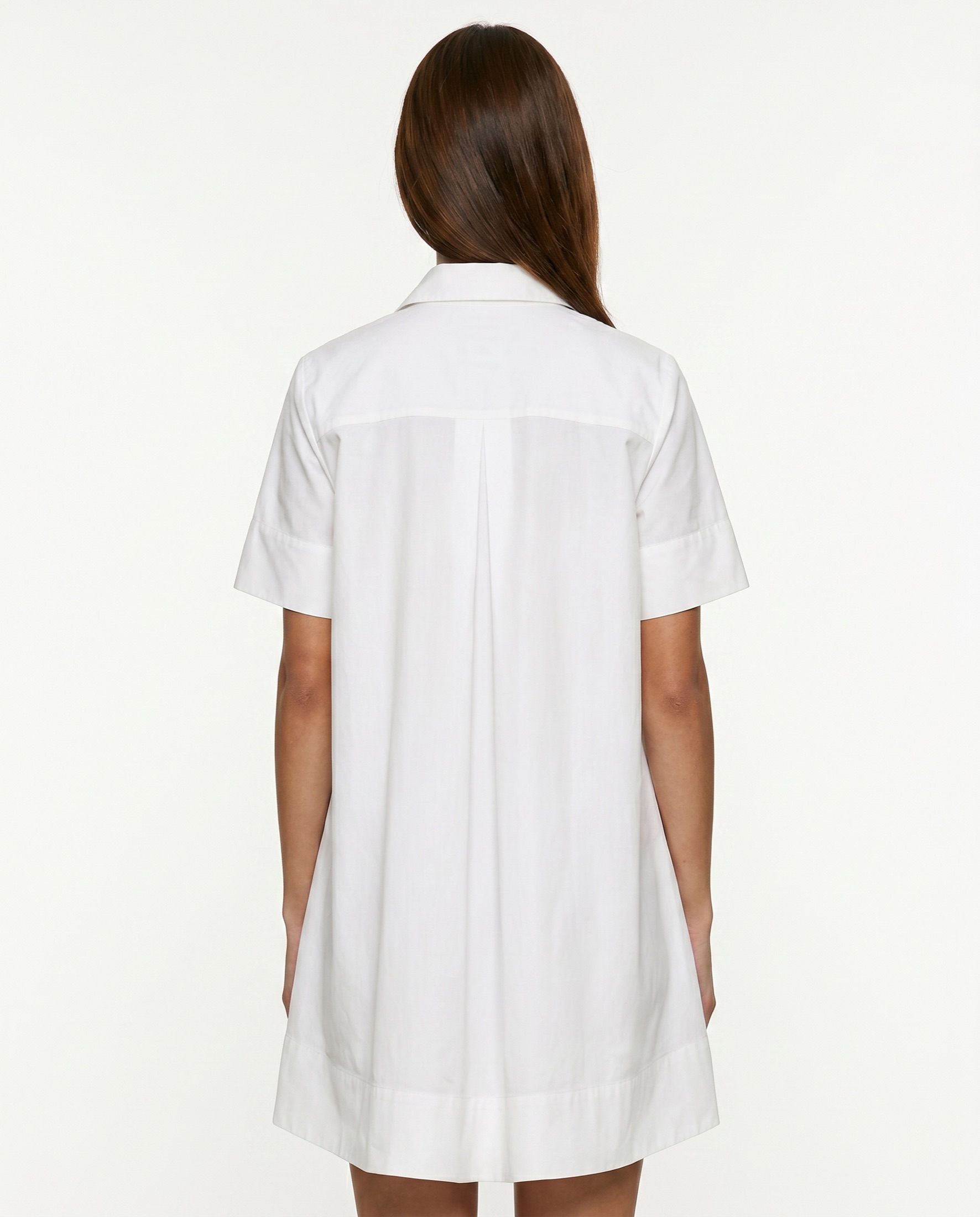
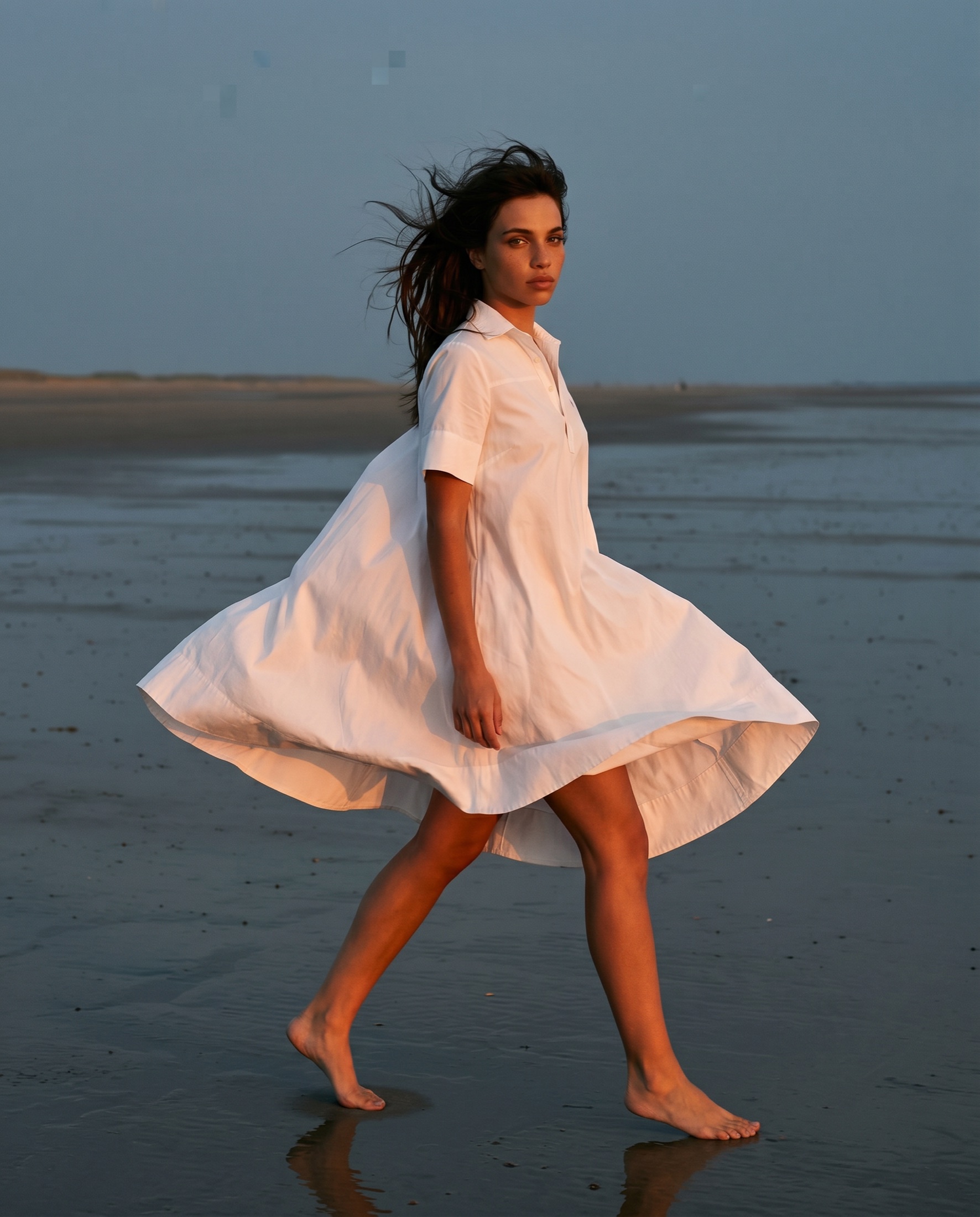
Yoke, snap and boot-cut break composed against the same locked frame, two frames from the same spine.

What the pattern-spine contract looks like across the western and ranch landscape

Working ranch and rodeo circuit brands sit at Wrangler's 20X and Cowboy Cut register, Cinch, Resistol, Rock & Roll Denim, Kimes Ranch, Cripple Creek, Rockmount Ranch Wear, Schaefer Outfitter, Panhandle and Roper. The named-environment register locks to the brand's own working ground: a West Texas ranch at golden hour around 4,700 Kelvin, the Hill Country at dusk around 4,300 Kelvin, an indoor rodeo arena under stadium lighting around 5,600 Kelvin, or a tack room shot warm at tungsten register near 3,200 Kelvin. Revenue band three to eighteen million. Partner-portal set Boot Barn, Cavender's, Rod's Western Palace and the National Finals Rodeo sponsor-apparel channel.

Boot and hat specialists sit at Tecovas, Justin Boots, Lucchese, Twisted X, American Hat Co, Charlie 1 Horse, Stetson and Resistol. The pattern code here shifts from fabric construction to leather and felt construction: shaft height and stitch pattern on the boot, toe shape at round, square, snip or pointed, pull-strap placement, and exotic-skin registers at full-quill ostrich, caiman and lizard for the Lucchese and Tecovas premium tier. The hat side names felt grade explicitly, 3X through 100X beaver felt, and the crease at cattleman, pinch-front or gambler, photographed from the angle that actually shows the crease line rather than the flat crown-on default. Revenue band five to twenty-five million. Partner-portal set Boot Barn, Sheplers and the direct-dealer network each brand runs alongside wholesale.

Western-fashion crossover brands sit at Idyllwind, Understated Leather, Shyanne, Double D Ranch, and the luxury-western tier at Pinto Ranch and Kemo Sabe. This tier carries the customer arriving from the Yellowstone and Cowboy Carter trend wave, a buyer who has not necessarily grown up around a working ranch but responds to the same correct silhouette because that silhouette is what every reference image driving the trend is built from. The named-environment register widens here to include a styled arena, a ranch-adjacent studio set, or a location that reads western without being a literal working ranch, but the pattern code, the yoke, the snap, the boot-cut break, the hat crease, holds exactly the same as it does for the working-circuit tier. Revenue band four to twenty million, weighted more heavily DTC, with wholesale into Revolve's western edit and Free People's western capsule alongside Boot Barn's fashion-forward floor sets.

Rodeo performance and competition apparel sits at Cruel Girl, Cowgirl Tuff, and the sponsor-apparel tier that ships alongside the National Finals Rodeo and regional circuit events. This tier's pattern code adds performance construction, four-way stretch denim at the competition cut, moisture-managing base layers under the western shirt silhouette, and reinforced seat and knee panels for saddle and chute work, all of which still has to read western at the surface pattern even while the construction underneath is technical. Revenue band three to fifteen million. Partner-portal set the sponsor-apparel channel at rodeo events, plus Boot Barn and Cavender's competition-wear sections. The wholesale-deck production discipline that runs across all four tiers at single-brand scale is documented in our wholesale lookbook and linesheet imagery piece.

Six rules that make the western wholesale wave hold against the buyer review at Boot Barn, Cavender's and Sheplers

01

The yoke is named at shape, not shot as a seam

The brand-spine document names the front yoke at sawtooth point or smile curve and the back yoke at contrast piping or self-fabric, before a single frame is composed. Composition holds a close, raking-light angle that shows the seam line and the point, not a flat front-on frame that reduces the yoke to a printed pattern. This is the single detail a working customer clocks fastest, because the yoke is what lets the shirt move with a rider's shoulders, and a brand that shows it correctly is a brand that customer trusts made the shirt for the job.

02

The snap is proven open, not implied

At least one frame per silhouette shows the placket open with the snap visible and disengaged, proving to the camera that it is a snap and not a button sewn to look like one. The grade is named, genuine mother-of-pearl, faux-pearl or gunmetal, so the retouch pass does not accidentally brighten a faux-pearl snap into looking like a premium grade the product does not carry. Rockmount Ranch Wear's original 1946 pearl-snap spec is the reference point the pattern-code document cites when a brand's own snap grade needs a benchmark.

03

The boot-cut break is shown on the brand's own boot

Denim is never photographed over a sneaker, a flat shoe, or a borrowed boot at the wrong heel height. The model wears the brand's actual boot partner, or a boot at the same heel height the product is designed against, so the break at the ankle reads the way it reads on the working customer's own leg. A boot-cut photographed over the wrong shoe is the fastest way to lose a category customer's trust in the first three seconds of looking at the image.

04

The hat crease is shot from the angle that shows it

The felt grade is named, 3X through 100X beaver felt at the Stetson, Resistol or American Hat Co register, and the crease is named at cattleman, pinch-front or gambler. Composition holds a three-quarter angle with side light that reveals the crown crease line, never the flat, front-on crown shot every stock western photo defaults to. The band, horsehair, leather or silver concho, is named and shown at a close detail frame at least once per hero silhouette.

05

Casting holds working posture, not model-on-set posture

The casting frame is composed at working posture: weight settled the way it sits in a saddle, hands positioned the way they hold reins or a rope rather than posed at the hip, boots planted rather than crossed at the ankle. The casting director works from a register close to Laura Wilson's documentary ranch photography rather than a fashion-editorial stance library, so the frame reads as a person who works cattle rather than a model wearing a costume.

06

The wholesale-deck cover composes inside the hero's own frame

The Boot Barn, Cavender's, Sheplers and Rod's Western Palace deck covers are cropped from the same locked composition that ships the campaign hero, at each partner's own spec ratio, rather than produced as a separate in-house afterthought. The buyer who compares the hero against the deck cover sees one brand world, not a strong hero and a soft deck. The market-week production discipline this scales into at multi-brand wholesale is documented in our market-week production sprint piece.

Six to eight weeks from line list lock to wholesale-deck live

Week one is the brand-spine document. The yoke shape is named at sawtooth or smile curve. The snap grade and placement are named and benchmarked against the Rockmount Ranch Wear reference where useful. The boot-cut break is locked to the brand's own boot partner or the correct heel-height standard. The hat crease is named at the brand's actual felt grade and crease style. The named-environment register is locked to a working ranch, a rodeo arena, or a styled crossover set depending on which tier of the category the brand sits inside. The founder or CMO signs off on the document before any frame is composed, the same discipline that keeps the hero and the deck cover reading as one brand world through the rest of the sprint.

Weeks two and three lock casting and location. The casting frame is set at working posture across three to five faces held through the wave. The cloth, hardware and felt libraries are ratified against the actual line list, not against a generic western reference set, so a brand selling a specific pearl-snap grade or a specific felt weight sees that exact detail in the final frames rather than a close approximation.

Weeks three and four ship wave one, the campaign hero plus six to ten tentpole frames against the named-environment register. These are the frames that carry the season's press and paid-social push, composed at editorial register against the pattern-code spine locked in week one.

Weeks five and six ship wave two, the full lookbook, the lifestyle pack, and the wholesale-deck against Boot Barn, Cavender's, Sheplers and Rod's Western Palace composition spec. Weeks seven and eight close the dot-com PDP set across the full SKU range, the email and Klaviyo refresh, and partner-portal QC ahead of the buyer-review window. The deck goes live reading as one brand world with the hero that opened the season, at the pattern-code level the working customer checks first and the crossover customer responds to without knowing why.

The named-photographer revival is the legacy unit. The pattern-spine contract is the modern one.

Western brands default to the named-photographer revival shoot because it is the cleanest line item in a season-planning meeting: book a photographer with real ranch or rodeo pedigree, land a hero the trade press and the buyer both respond to, and walk away with a number the founder can defend to a board or an investor. The unit economics break at the brand-world layer, because the engagement covers fourteen to eighteen frames against a sixty-to-one-hundred-and-twenty-frame season need. The hero holds. The wholesale-deck cover, produced without a written pattern-code reference, does not, and the Boot Barn or Cavender's buyer reads the mismatch as evidence the brand does not fully own its own product.

The pattern-spine contract works from an inheritance the brand has already earned rather than a green-field production. A working ranch brand's fifteen seasons of snap-shirt and boot-cut denim is the inheritance. A boot and hat specialist's decades of felt-grading and leather-stitch tradition is the inheritance. The brand-spine document writes it down once, and every subsequent frame composes against it instead of against whatever reference photo happened to be open that morning. The wholesale-deck cover reads like the hero because both are built from the same document, and the relaunch or the season refresh reads as continuity rather than as a brand relearning its own pattern code every six months.

The contract also replaces the volume DTC studio route, which ships the full frame count on schedule but composes against its own flat-backdrop house style instead of the pattern code. The category positioning this contract sits inside, alongside the broader heritage-Americana register, is documented in our workwear and heritage Americana campaign imagery piece, and the site-wide anchor for how this fits against every other apparel contract we run is in our best AI product photography agency for DTC brands piece. Brands that have already been burned by a vendor who got the code wrong once should start with our vetting an AI photography vendor for apparel brands piece before committing to a second attempt, and brands scaling past their first fifty SKUs should read our scale ecommerce apparel photography piece alongside this one.

Western and ranch wholesale-deck, questions the fall line-list meeting leaves open

What is western apparel campaign photography?

Western apparel campaign photography is the production discipline a DTC western wear, ranch wear or rodeo apparel brand uses to ship campaign hero, lookbook, lifestyle and wholesale-deck imagery that reads correctly against a hundred years of pattern code, the front and back yoke shape, the pearl-snap placement at the cuff and placket, the boot-cut break engineered to clear a riding heel, and the felt hat crease at a named grade. A brand-spine document names each detail before a single frame is composed, so the deck holds for the working ranch and rodeo customer who reads the code in under a second and for the western-fashion crossover customer arriving from the Yellowstone and Cowboy Carter trend wave. The contract replaces a $95,000-to-$175,000 named-photographer ranch revival shoot with the full brand world, hero, lookbook, lifestyle, wholesale-deck and dot-com, produced against the same locked code at $32,000-to-$62,000 all in.

Which western and ranch apparel brands fit this contract?

Working ranch and rodeo circuit brands at the Wrangler 20X and Cowboy Cut register, Cinch, Resistol, Rock & Roll Denim, Kimes Ranch, Cripple Creek, Rockmount Ranch Wear, Schaefer Outfitter, Panhandle and Roper. Boot and hat specialists at Tecovas, Justin Boots, Lucchese, Twisted X, American Hat Co, Charlie 1 Horse, Stetson and Resistol. Western-fashion crossover brands at Idyllwind, Understated Leather, Shyanne, Double D Ranch and the luxury-western tier at Pinto Ranch and Kemo Sabe. Rodeo performance and competition apparel at Cruel Girl, Cowgirl Tuff and the National Finals Rodeo sponsor-apparel tier. Revenue band three-to-twenty-five million where the brand carries a wholesale obligation into Boot Barn, Cavender's, Sheplers, Rod's Western Palace or Corral Western Wear, or is building direct-to-consumer volume against that same working-and-crossover dual buyer.

Why does a named-photographer western revival shoot fail the unit economics?

A Laura Wilson-tier, Wyman Meinzer-tier or Bryan Schutmaat-tier ranch and rodeo revival shoot quotes at $95,000 to $175,000 for two shoot days, one location, and fourteen to eighteen usable frames at editorial register. The remaining sixty to one hundred and twenty frames a western season needs, the full lookbook, the lifestyle pack, the wholesale-deck covers for Boot Barn, Cavender's, Sheplers and Rod's Western Palace, and the dot-com PDP set across forty to ninety SKUs, fall to a one-to-two-person in-house team working from a brand world nobody wrote down as a pattern-code spine. The hero reads correct. The wholesale-deck cover ships a straight-leg jean where the brand sells a boot-cut, or a plain baseball-cap crease where the brand sells a felt hat, and the Boot Barn buyer catches it in the first pass.

How does the code get photographed correctly, the yoke, the snap, the boot-cut break and the hat crease?

The brand-spine document names each detail before production starts. The front yoke is named at sawtooth or smile-point shape and the back yoke at contrast piping or self-fabric, both shot at a close, raking angle that shows the seam line, not a flat front-on frame that flattens it to a printed pattern. The snap is named at genuine pearl, faux-pearl or gunmetal, photographed open on one placket frame so the buyer sees it is a snap and not a button. The boot-cut break is shown on a model wearing the brand's own boot at the correct heel height, because a boot-cut denim photographed over a sneaker or a flat shoe shows the wrong break and reads as a brand that does not own boots. The hat crease is named at cattleman, pinch-front or gambler and shot from the three-quarter angle that shows the crown crease line, not the flat crown-on shot every stock western photo defaults to.

What does the western contract cost against the named-photographer revival route?

The named-photographer revival route at Laura Wilson-tier, Wyman Meinzer-tier or Bryan Schutmaat-tier register covers the hero plus fourteen to eighteen frames at $95,000 to $175,000. The volume DTC studio extended into western covers the full brand world at $42,000 to $85,000 but composes against the studio's own flat-backdrop house style, and the pattern code goes soft, the yoke reads as a seam rather than a shape, the snap reads as a button. The pattern-spine western contract covers the full brand world, hero, lookbook, lifestyle, wholesale-deck and dot-com, at $32,000 to $62,000 for the season wave, with the brand-spine document, the pattern code named at yoke, snap, boot-cut break and hat crease, and the named-environment register locked at the working ranch or the rodeo arena. Per-frame economics land at $85 to $185 against named-photographer $1,100 to $2,200 per usable frame. The per-frame walk lives in our AI photoshoot vs studio cost piece.

Will the deck hold against the buyer spec at Boot Barn, Cavender's and Sheplers?

Yes. The brand-spine document includes the partner-portal composition spec for each wholesale account the western brand ships into. Boot Barn takes the editorial 4x5 hero plus the construction-detail close-up on the yoke and snap at slot two plus the on-foot lifestyle frame showing the boot-cut break at slot three. Cavender's takes the front-and-back product pair at 1x1 plus the styled lifestyle frame at the Cavender's Western Life register. Sheplers takes the four-angle e-commerce set per SKU at the online-catalog spec. Rod's Western Palace and Corral Western Wear take the dealer-spec construction close-up at three hundred percent on the pocket embroidery and the snap placement. Each frame ships cropped at every partner-spec ratio from one locked composition, so the wholesale deck does not require a separate shoot.

How long does the season wave take from line list to deck-live?

Six to eight weeks from line list lock to wholesale-deck-live. Week one is the brand-spine document, the pattern code named at yoke, snap, boot-cut break and hat crease, the named-environment register locked at the brand's own ranch or arena, and the casting frame set at working posture rather than model-on-set posture. Weeks two and three lock casting and location and ratify the cloth, hardware and felt library against the line list. Weeks three and four ship wave one, the campaign hero plus six to ten tentpole frames. Weeks five and six ship wave two, the full lookbook, the lifestyle pack, and the wholesale-deck against Boot Barn, Cavender's, Sheplers and Rod's Western Palace spec. Weeks seven and eight close the dot-com PDP set, the email refresh and partner-portal QC ahead of the buyer-review window.

How does the contract serve both the working ranch buyer and the western-fashion crossover buyer without alienating either?

The pattern code is the shared language both buyers read, just at different fluency. The working ranch and rodeo customer reads the yoke shape, the snap grade and the boot-cut break in under a second and treats a wrong detail as proof the brand does not know the category. The crossover customer arriving from the Yellowstone and Cowboy Carter trend wave does not consciously clock the yoke shape but responds to the same correct silhouette because it is what every reference image in that trend cycle is built from. One locked, correct composition serves both reads at once. A brand-spine document that gets the code right for the working buyer is, by construction, also the more credible and more photogenic image for the crossover buyer. Getting the code wrong to chase the trend customer loses the working buyer without gaining the crossover one, because the crossover buyer's reference images are themselves built on the correct code.

Read the code

Bring the fall line list and the wholesale obligation to a western wholesale-deck call.

A thirty-minute conversation on the pattern-code spine, the yoke, the snap, the boot-cut break and the hat crease named against your own line list, the named-environment register at your working ranch or arena, and the six-to-eight-week sprint from line list lock to wholesale-deck-live at Boot Barn, Cavender's, Sheplers and Rod's Western Palace. Bring the line list. We will read it the way the Boot Barn buyer will at the review window.

Book a western wholesale-deck call