Spec work · 25 static ad concepts
These are 25 DTC static ad examples for a Greek yogurt, a colostrum supplement and a wine brand, each set with notes on why the layout works. For live DTC ads that brands are paying to run today, search the Meta Ad Library, TikTok's Top Ads or Google's Ads Transparency Center; how to use each one is further down. Most of our client work is under NDA, so every example here is a spec concept: work made for a brand that did not commission it. New to the format? Start with what a static ad is.
DTC static ads are single-image ads that direct-to-consumer brands run on Meta, TikTok and Google to send people straight to their own store. Most carry four things: the product, a headline, one piece of proof and a call to action. There is no footage to shoot, so a brand can make a new static for every angle it wants to test, and a losing angle costs a layout instead of a production day.
Every example on this page is a static. If you are choosing between formats, static vs video ads covers when video earns its higher cost, and UGC-style ad creatives covers the creator-led format.
A static ad is one still image, usually the product, a headline and a call to action. A new angle only needs a new layout, which makes statics a practical way to test many angles on Meta, and the layout decisions below carry over to almost any product.
The 25 concepts cover three categories: 10 for a Greek yogurt, 9 for a colostrum supplement and 6 for a wine brand. Each set comes with notes on what the layout does, from type hierarchy and product placement to color, proof and the CTA. The principles behind the notes are in what makes a good static ad.
100 Creatives made these concepts. None of the three brands commissioned them, and none of the concepts ran as paid ads, so they show layout and copy structure and say nothing about results. Some include proof lines, such as customer counts or superiority claims, that a real brand would need to substantiate before running them.
| Spec set | Concepts | Product | Background | What the set sells | Proof device |
|---|---|---|---|---|---|
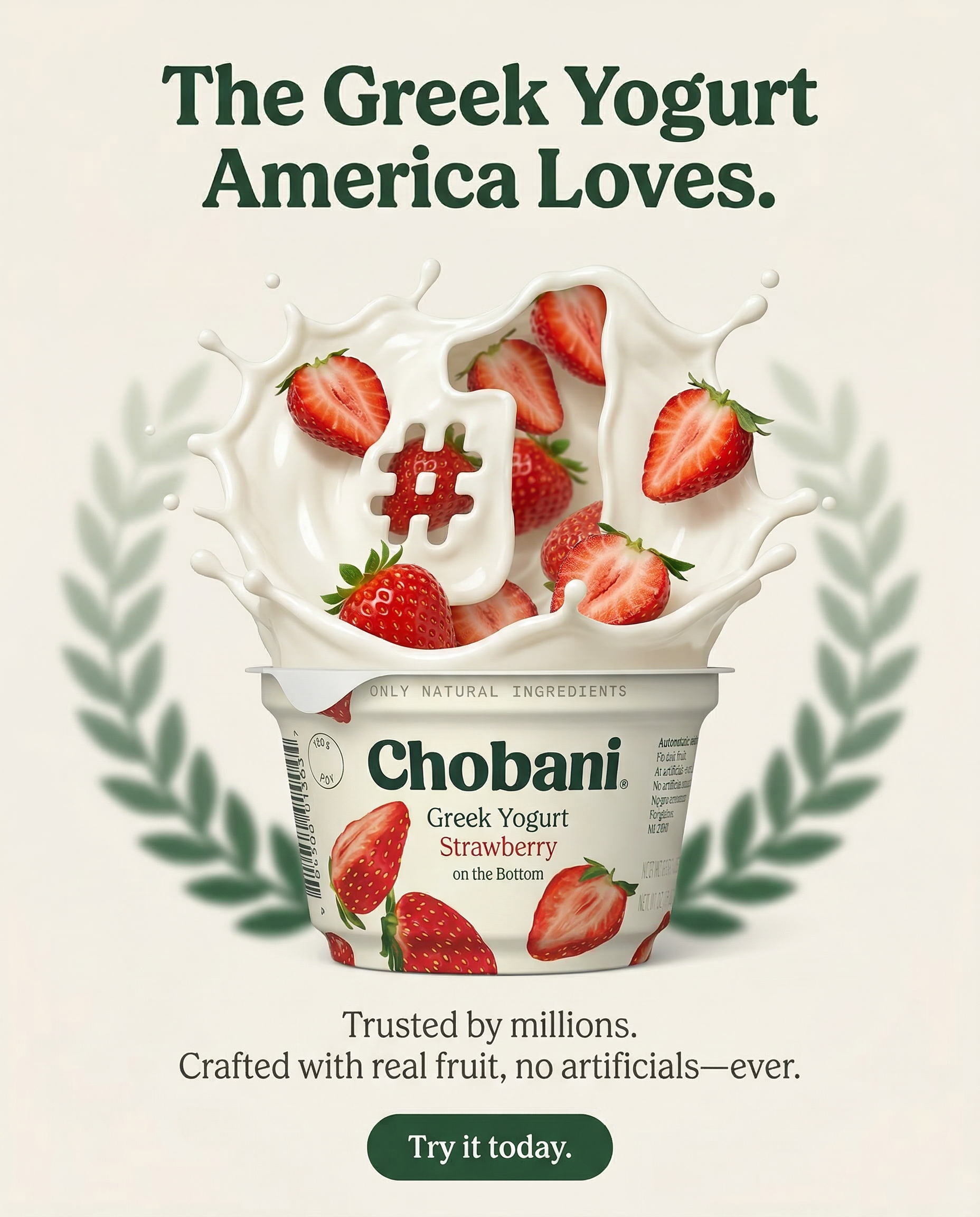
| Chobani (yogurt) | 10 | Strawberry Greek yogurt cup | Pink or cream; an oversized word behind the cup in 4 | Taste and protein | Review stars as yogurt speech bubbles; a laurel wreath |
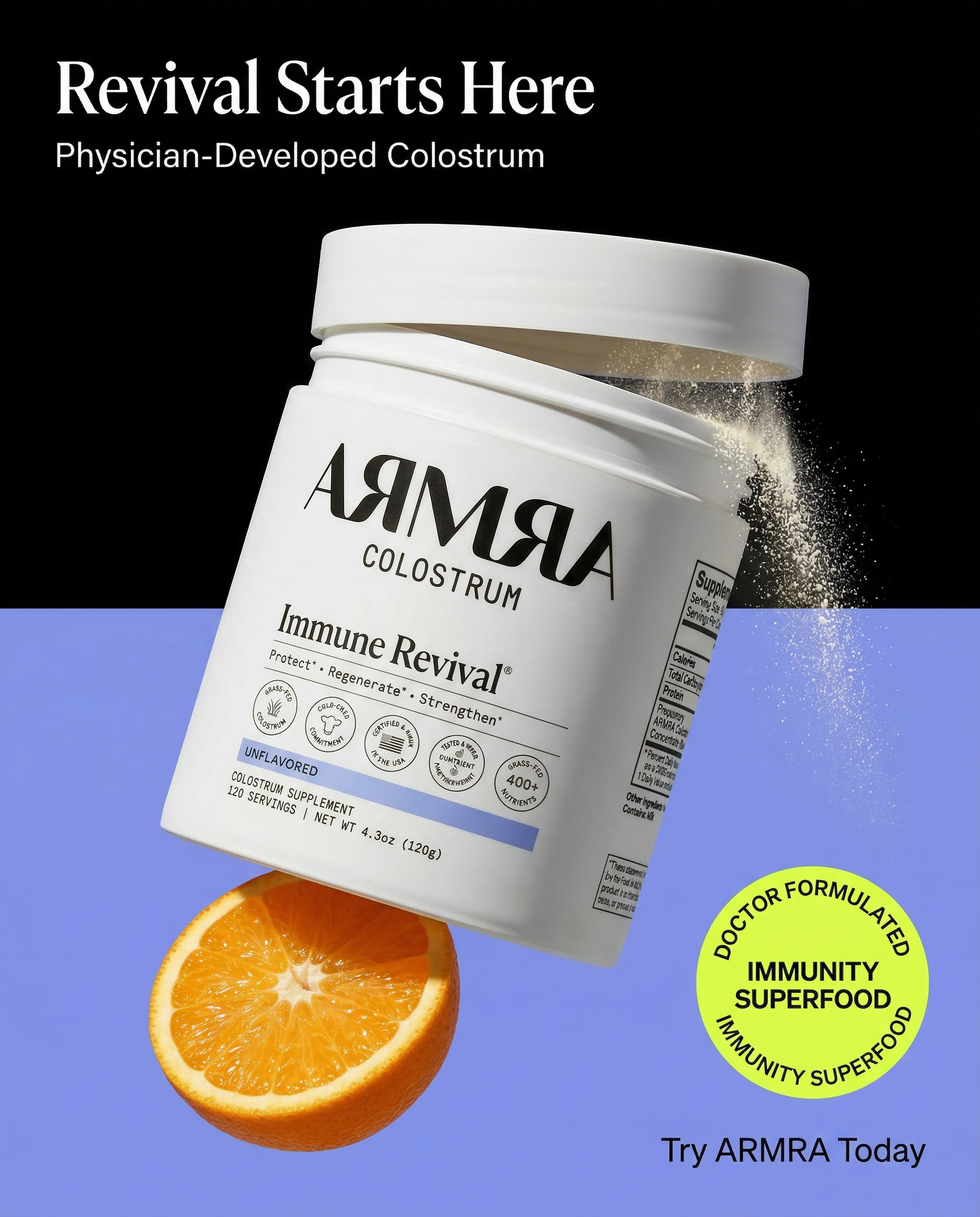
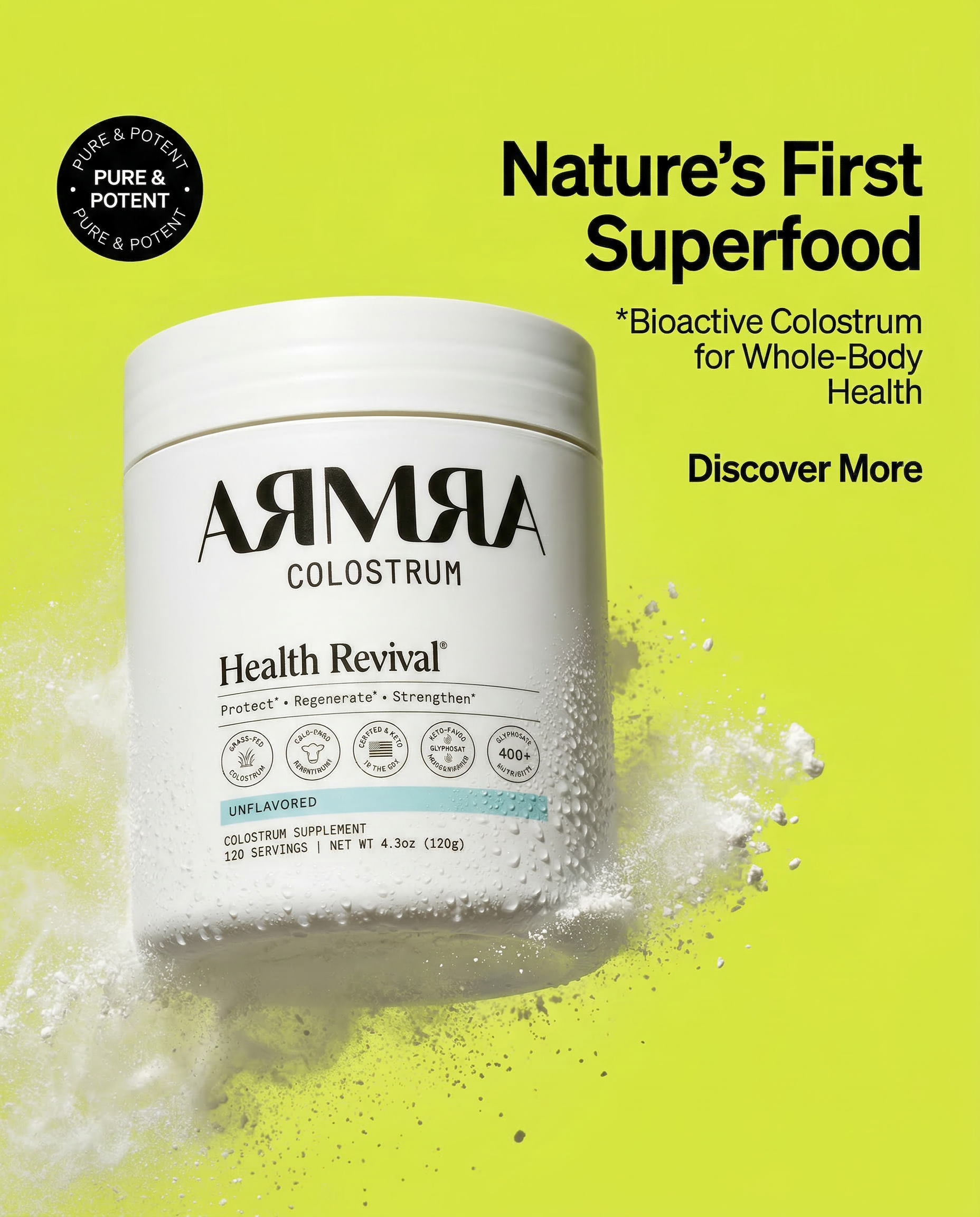
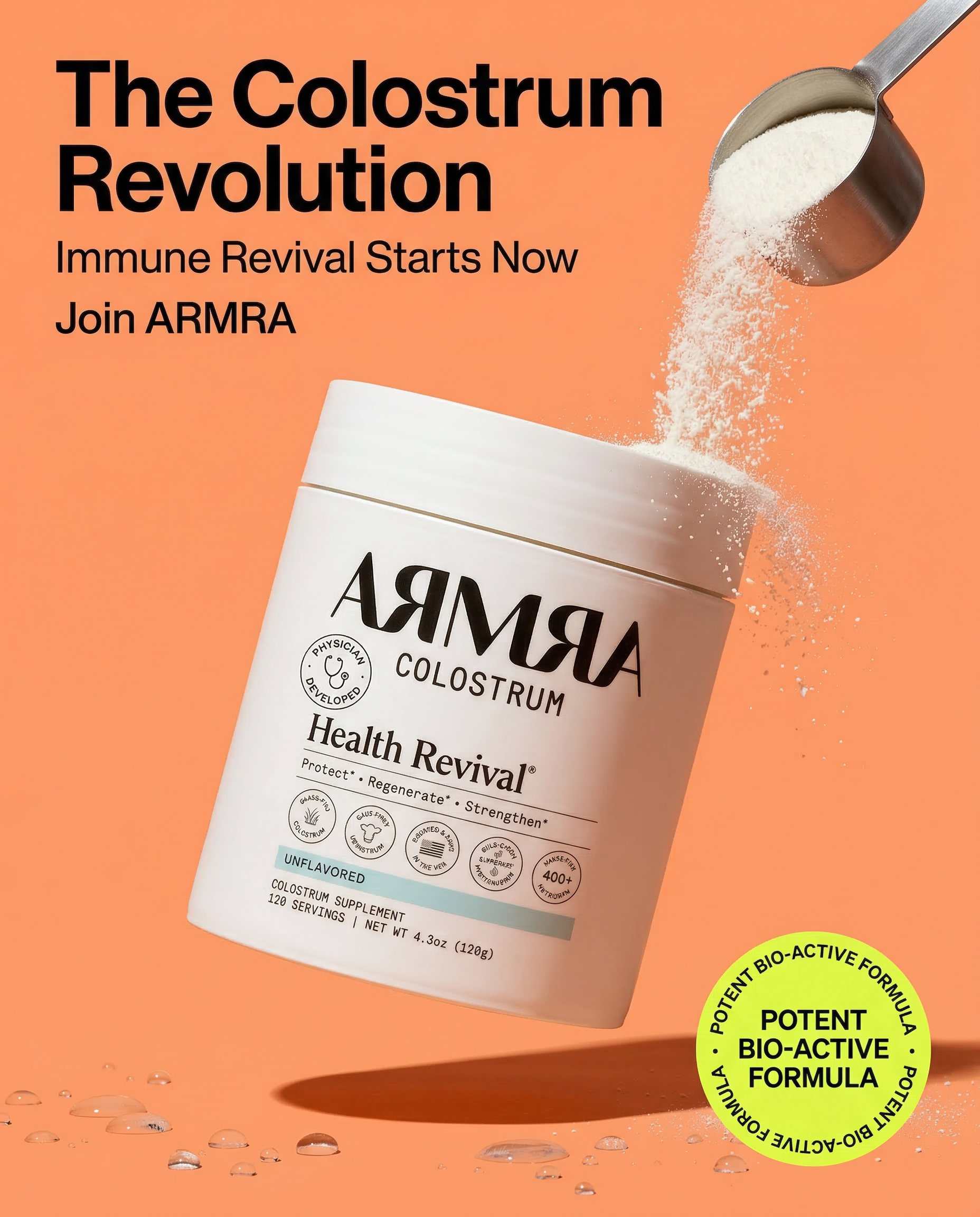
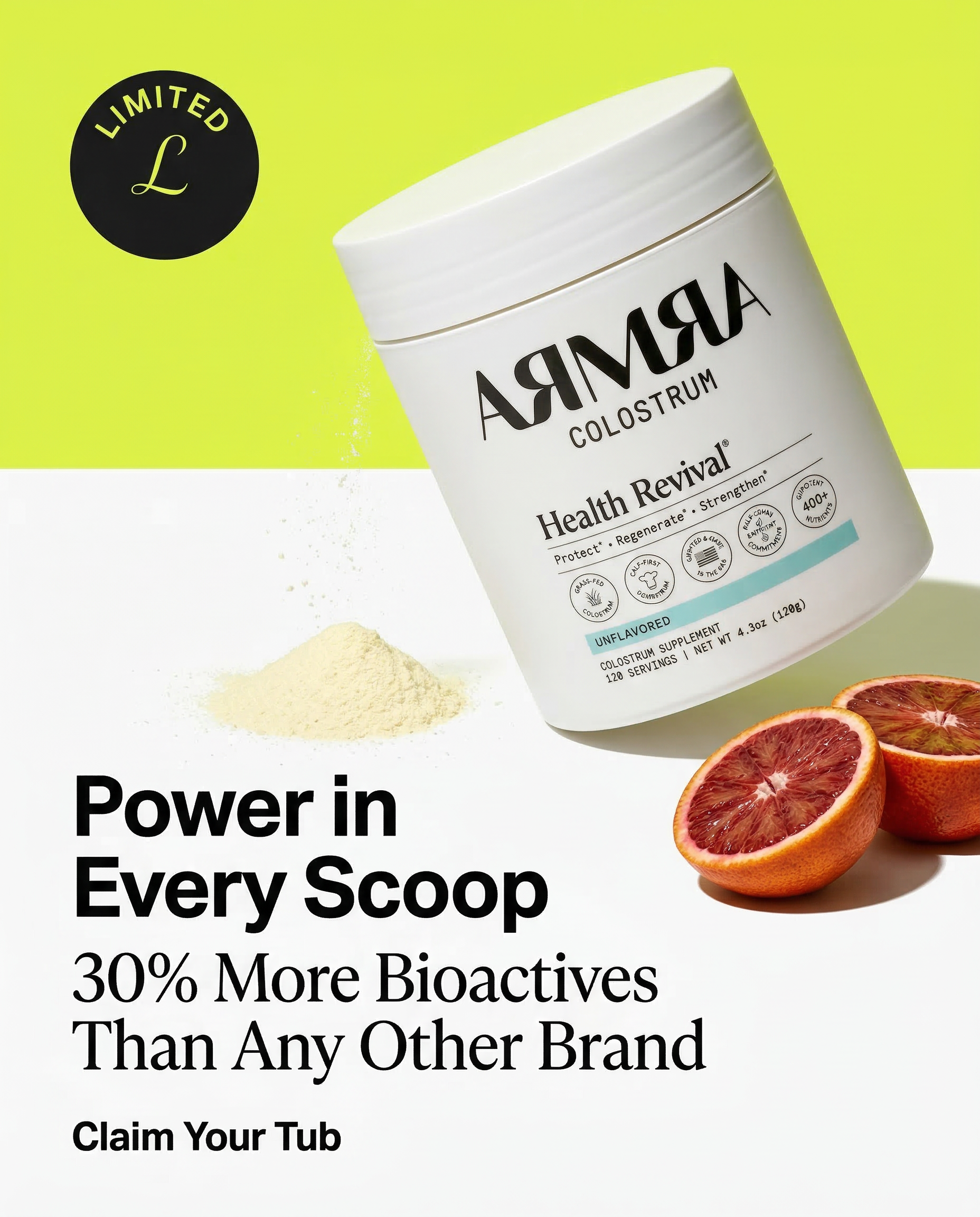
| ARMRA (supplement) | 9 | Plain white colostrum tub | Flat saturated color in 8 of 9 | Trust and a daily routine | Round badges such as "Doctor Formulated" |
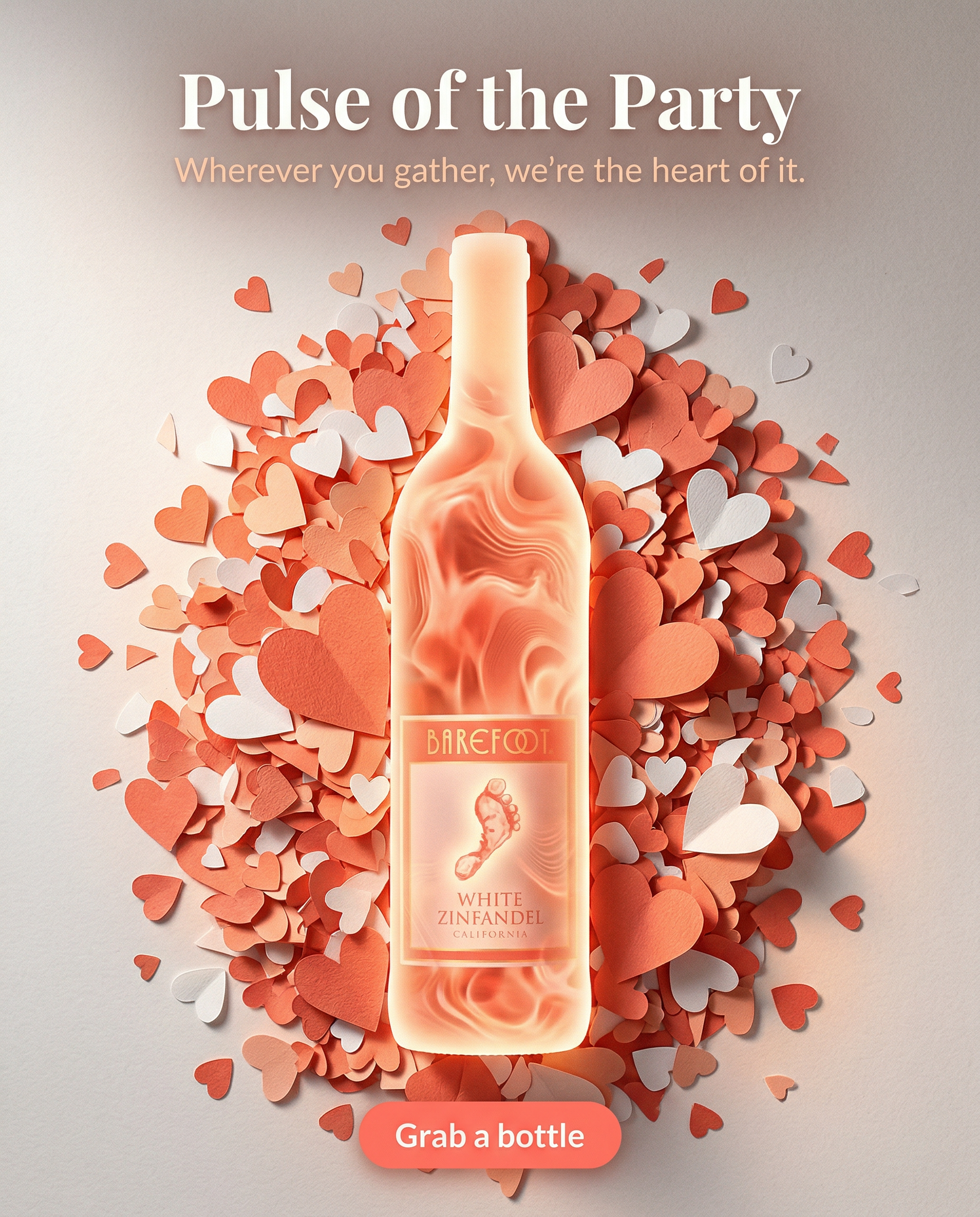
| Barefoot (wine) | 6 | White Zinfandel or rosé bottle | Crafted scenes: cut paper, foil, halftone, water | An occasion | One award line a live ad would need to source |
Food & Beverage
Spec work, not commissioned by Chobani
Ten spec concepts for Chobani Strawberry Greek Yogurt, built around one product: the cup, fresh strawberries and a swirl of yogurt. Most concepts pair a short serif headline in dark green with a pink or cream background and a pill-shaped CTA. The hook changes from ad to ad while the product stays constant.



Supplements & Wellness
Spec work, not commissioned by ARMRA
Nine spec concepts for ARMRA Colostrum, a powdered supplement sold in a plain white tub. The set tests how far a white package can carry an ad when the background color, a round badge and a bold headline do the rest.





Beverage & Lifestyle
Spec work, not commissioned by Barefoot
Six spec concepts for Barefoot, a wine brand with a casual, playful voice. Each one puts a bottle of White Zinfandel or rosé at the center of a crafted scene and sells an occasion, from a party to a hot afternoon.


Patterns across the spec concepts
01
None of the 25 concepts tries to carry more than one idea. The Chobani spec concepts sell taste and protein, the ARMRA spec concepts sell trust and a daily routine, and the Barefoot spec concepts sell a good time, one idea per ad. Meta's research found people spend 1.7 seconds on average with a piece of mobile feed content (Facebook IQ, 2016), and one idea is about as much as that time allows.
02
Every concept has a clear reading order: headline, product, CTA. The headline is the largest text in almost every concept, the product carries the most visual weight, and the CTA sits where the reading order ends. Treat a static ad like a billboard: a few words, one image, one instruction.
03
Before anyone reads a word, color sets the tone. The Chobani spec concepts use pink and cream with dark green type and read as fresh and sweet. The ARMRA spec concepts put a white tub on saturated flat color and read as clean and clinical. The Barefoot spec concepts use bright, crafted scenes and read as festive. Choose the palette as early as the headline, because it decides whether the ad feels like the brand.
04
In all 25 concepts the product is visible and large, and in most of them the label is readable. Lifestyle imagery, dense copy or an overly clever idea can bury a product, and if a viewer can't picture what they would be buying, the headline and the offer have nothing to attach to.
05
Ratings, badges, customer counts and quote bubbles get their own shapes and space instead of sitting in small print. The ARMRA spec concepts use round badges, and the Chobani spec concepts use a laurel wreath and speech bubbles. Every proof element in a live ad has to be true and documented before it runs.
A swipe file of spec work shows layout. To see what DTC brands are paying to run this week, use the three free libraries the platforms publish. We opened each one on October 15, 2026; a US search of the Meta Ad Library for "greek yogurt", active image ads only, returned about 99 results that day.
| Library | What you can search | What each ad shows | What it leaves out |
|---|---|---|---|
| Meta Ad Library | All ads currently running across Meta's apps, by keyword or advertiser, filtered by country and media type. A new ad appears within 24 hours of its first impression. | "Started running on" date, platforms, and a note when the ad has multiple versions | Spend and results on ordinary commercial ads (none on the US cards we opened) |
| TikTok Creative Center, Top Ads | Auction ads TikTok rates as high-performing, filtered by region, objective, period, language and format | Likes, a CTR percentile band (e.g. "Top 90% CTR") and a budget band (Low, Medium, High) | Ads the advertiser hasn't authorized for display; the full list needs a login |
| Google Ads Transparency Center | Ads from verified advertisers, by advertiser name or website, by region | Where an ad ran, when it last ran and its format (Google, March 2023) | Anything about how the ad performed |
None of these libraries tells you whether an ad made money. Meta's start date is the closest thing to a signal: an image ad that is still active 60 days after it started means the brand kept paying for it, which is more than a new ad can say, and still nothing about its cost per purchase. When Meta notes that an ad has multiple versions, the advertiser set up variations of one ad, so open them and write down what changed between versions. TikTok's CTR band is a percentile against other ads in TikTok's data, so it says nothing about how the same idea would do in your account.
Take the structure from an example and change everything a viewer would recognize: the product, the palette and the words. If every brand in a category works from the same swipe file, the ads converge, which is the problem behind why AI ads look the same.
An example only helps once you can say what you want copied. Use this table when you hand a designer or an agency a screenshot and say "like this". The one-third size rule is our practice, not a platform requirement.
| What you noticed | What to write in the brief | How to check the result |
|---|---|---|
| The product sits in the center, label readable | The pack angle, and that the product fills at least a third of the frame | View it at phone size. Can you read the brand name? |
| One headline sells one idea | The single angle for this ad: a benefit, a review, a comparison or an occasion | After a two-second look, can someone say the idea back? |
| The palette repeats across the set | Brand hex codes, and which color carries the background and which carries the type | Line the batch up side by side. Does it read as one campaign? |
| Proof gets its own shape | The exact claim and the document that backs it | Can someone point to the evidence for every claim? (FTC guide) |
| The headline sells a moment, as in the Barefoot set | The occasion the product is for | Does the scene show that moment before anyone reads the copy? |
Send the export sizes with the brief. On Meta that is 4:5 at 1440 x 1800 pixels for feeds and 9:16 at 1440 x 2560 for Stories and Reels (Meta Ads Guide, checked September 2026). Our guides on how to brief an agency for AI creative and static ads for Meta go further, and the ad creative testing framework covers which angle to test first.
Frequently Asked Questions
A good DTC static ad makes one point at a glance. It leads with a benefit headline, shows the product large enough to recognize, adds one piece of proof the brand can document, and ends with a single clear call to action. Meta's research found people spend 1.7 seconds on average with a piece of mobile feed content, so the whole ad has to read in about that time.
There is no universal number. How many new creatives you need depends on your spend, the number of audiences you run and how quickly ads fatigue in your account. Test different angles, such as a benefit, a review or a comparison, before testing colors and fonts, and treat testing as a weekly routine. Our ad creative testing framework walks through the process.
On Meta, Facebook and Instagram feeds take a 4:5 image, and Meta recommends 1440 x 1800 pixels. Stories and Reels take 9:16 at 1440 x 2560 pixels, with roughly the top 14%, the bottom 35% and 6% of each side kept free of text and logos. Carousel cards on Facebook Feed are 1:1 and at least 1080 x 1080 pixels. Specs checked September 2026 in Meta's Ads Guide.
Neither format wins by default. Static ads are faster and cheaper to produce and easier to test in volume, which suits offers, launches, reviews and comparisons. Video suits demonstrations, texture and people talking to camera. Which format performs better depends on the product and the angle, so test the same idea in both and compare cost per purchase in your own account.
100 Creatives makes static and video ads for DTC and consumer brands advertising on Meta, TikTok and Google. Creative batches turn around in 48 hours, revisions come back within 48 hours, and every engagement is quoted, from $4,000, with a fixed total in writing before work starts. Book a call to get a quote.
Use the free libraries the ad platforms publish. The Meta Ad Library shows every ad currently running across Meta's apps, searchable by keyword or advertiser, with each ad's start date. TikTok's Creative Center Top Ads filters auction ads by region, objective and period and shows a CTR band. Google's Ads Transparency Center shows ads from verified advertisers by name or website. None of them shows whether an ad was profitable.
100 Creatives makes static and video ads for DTC and consumer brands. Creative batches turn around in 48 hours, and engagements are quoted, from $4,000, with a fixed total before work starts.
Book a call