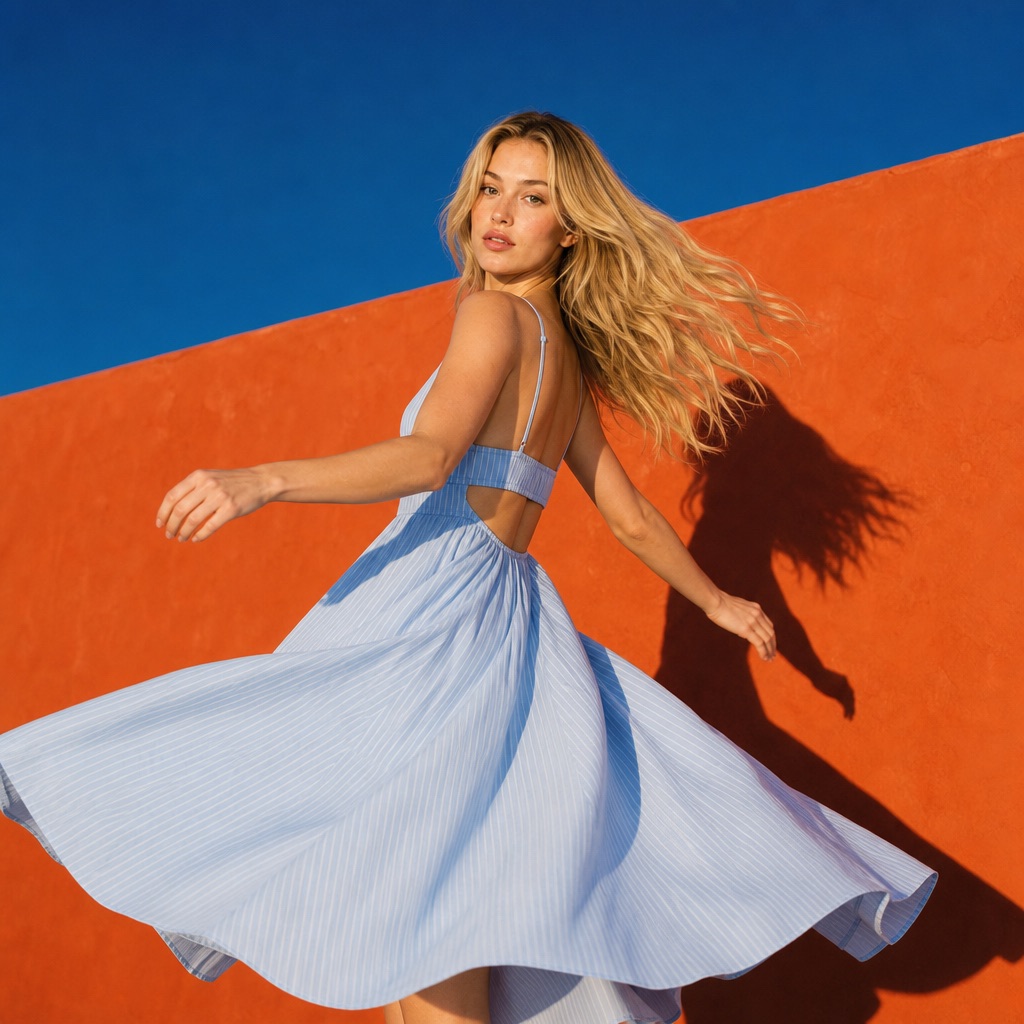

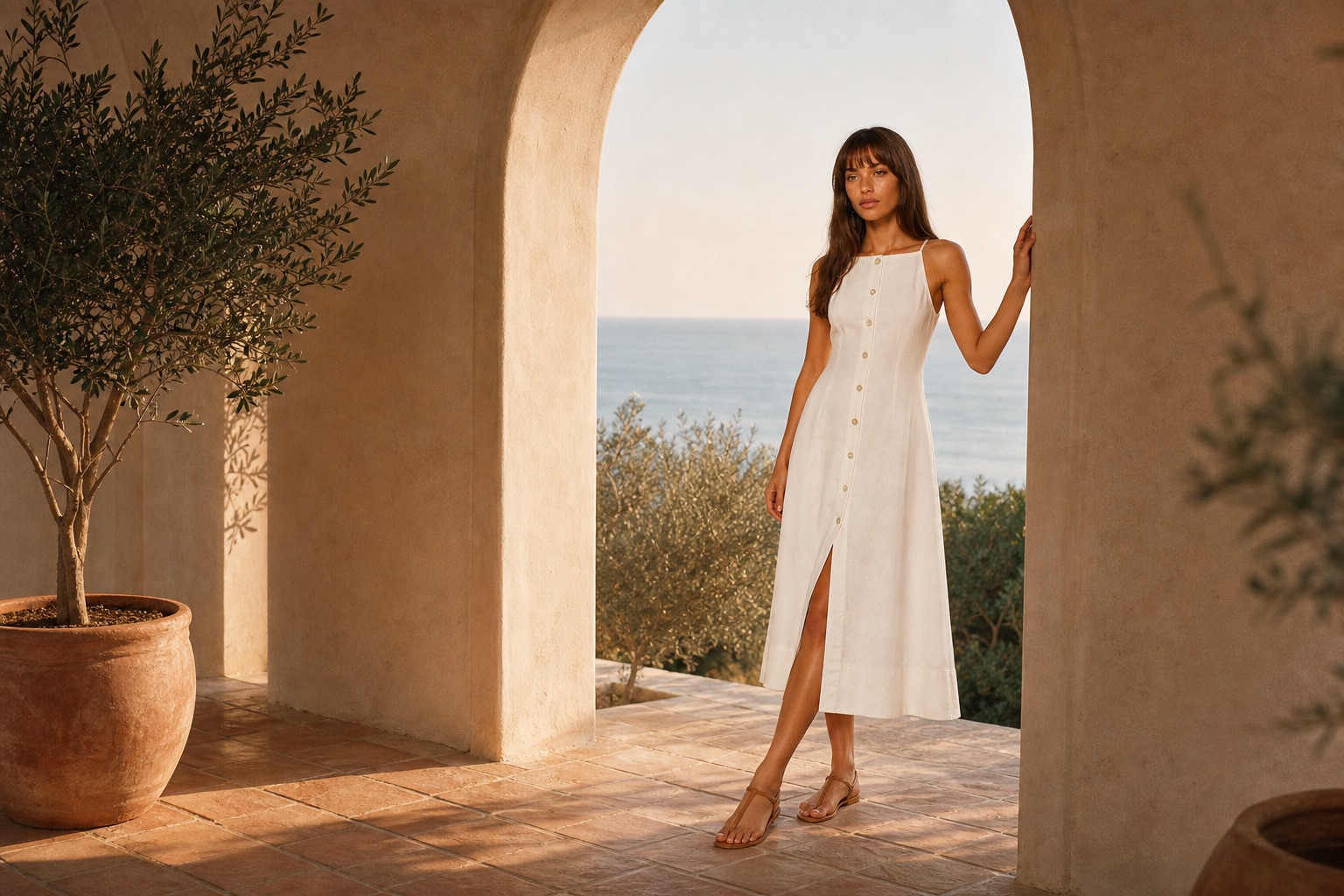
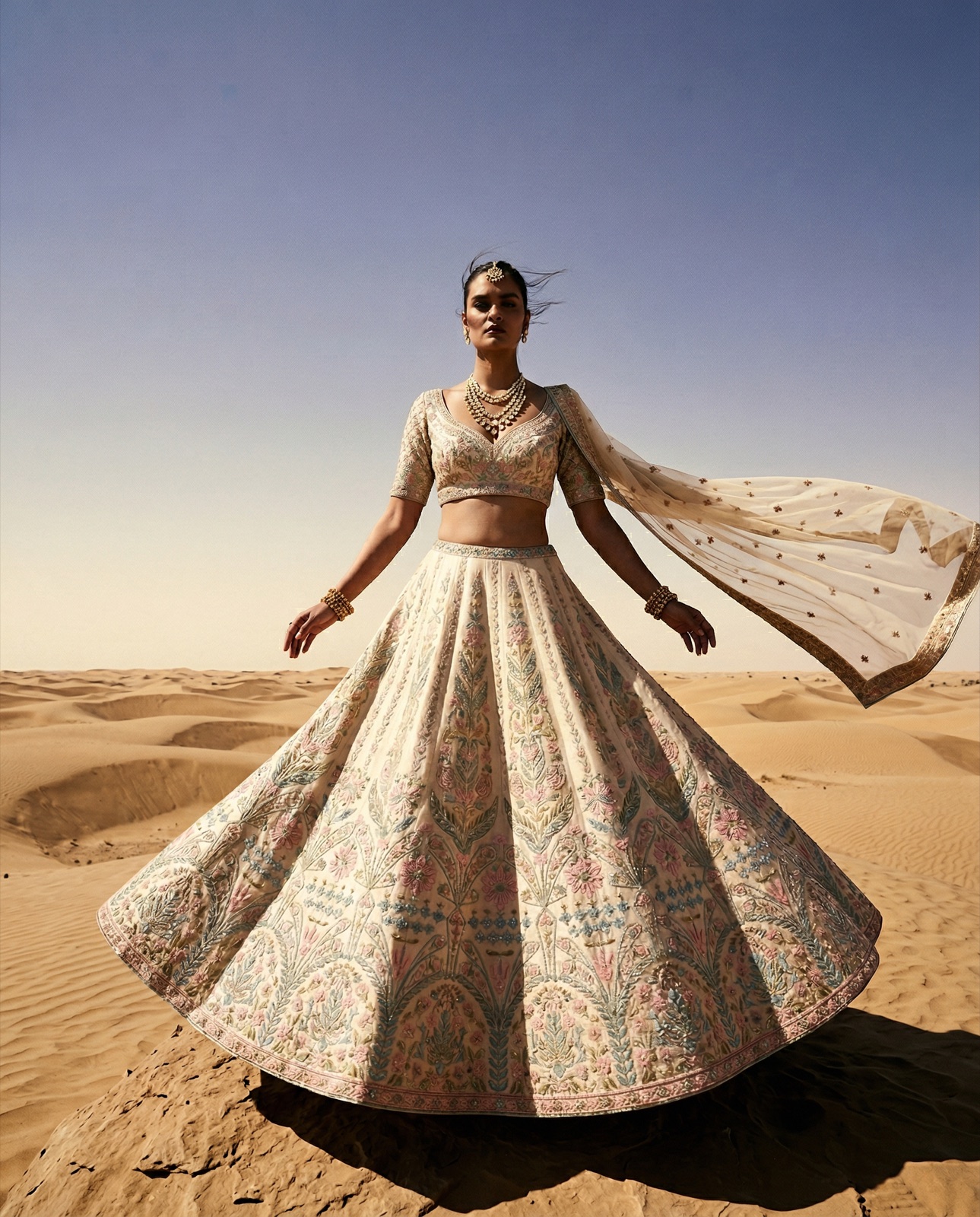
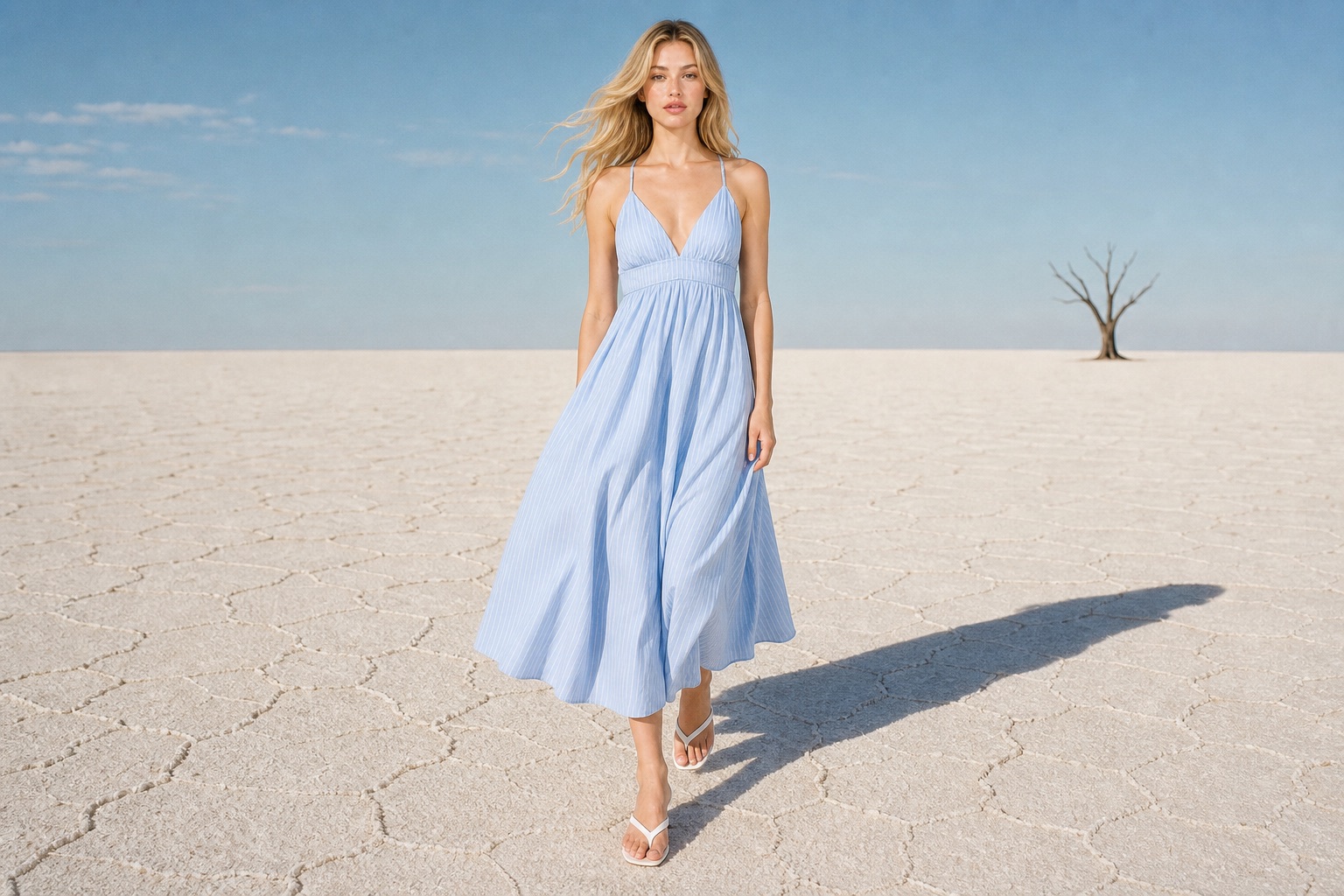
It is the Monday the studio quote came back. You run an independent American label — six seasons in, mid-seven-figures, DTC plus a handful of wholesale doors. The spring campaign needs a hero, a fifteen-look lookbook the Shopbop merchandiser is already asking for, on-figure e-commerce for the new fits, and enough feed to keep the paid engine fed through April. You sent the brief to a photographer in NYC you have used before. The quote is back: two days, eighteen thousand a day for the package, plus model usage, plus a stylist you are paying separately, plus three weeks of retouch. Forty-two thousand and change for the hero and the e-commerce. The lookbook is a second shoot. You have not even priced the feed.
This is the structural problem at the heart of the US independent fashion market, and it is not a creative problem. Day-rate studio production was built for the brand that runs one big campaign a year and has a budget line to match. It was not built for the founder running two-to-four drops a year against a Revolve calendar and a wholesale linesheet date, who is also the person approving the quote, briefing the photographer, sourcing the model, and chasing the retoucher. The campaign studio model exists to take the whole surface off that one person's desk — and to do it at a number that does not require you to choose between the hero and the feed.
The fix is not a cheaper photographer. The fix is a different unit of production. A US apparel creative agency built around the brand world ships the season as one job, composed against one spine, rather than as four shoots booked against four day-rates. The economics close because the spine does the coordination work a producer used to do by hand.