Diligence · after the slop

How to vet an AI photography vendor for an apparel brand — after vendor one shipped slop.

Vetting an AI photography vendor for apparel brands is the diligence sequence an apparel founder, brand director or creative lead runs before signing a second AI photography contract after the first vendor shipped unusable assets. It is a brand-spine ingestion check, a named-fabric pilot, a casting-lock test, a Pantone and Delta E rendering benchmark, a revision-rights and IP clause review, and a paid three-frame pilot that prices in advance of the campaign engagement. The framework exists because the apparel founder who has already paid eight to twenty-two thousand dollars to vendor one and received back hand-artifact frames, off-register fabric drape and a model who changes faces between hero and gallery cannot afford to burn the next season's photography budget on a second slop run. This page is what the diligence looks like in practice — the five tells of a bad AI apparel vendor, the six questions to ask before paying, the three-frame pilot rubric, and the brand-world test that makes the vendor-two decision a binary read rather than a hope.

By Abhi Chawla, founder · Last updated: 2026-06-22

A pilot that holds the brand

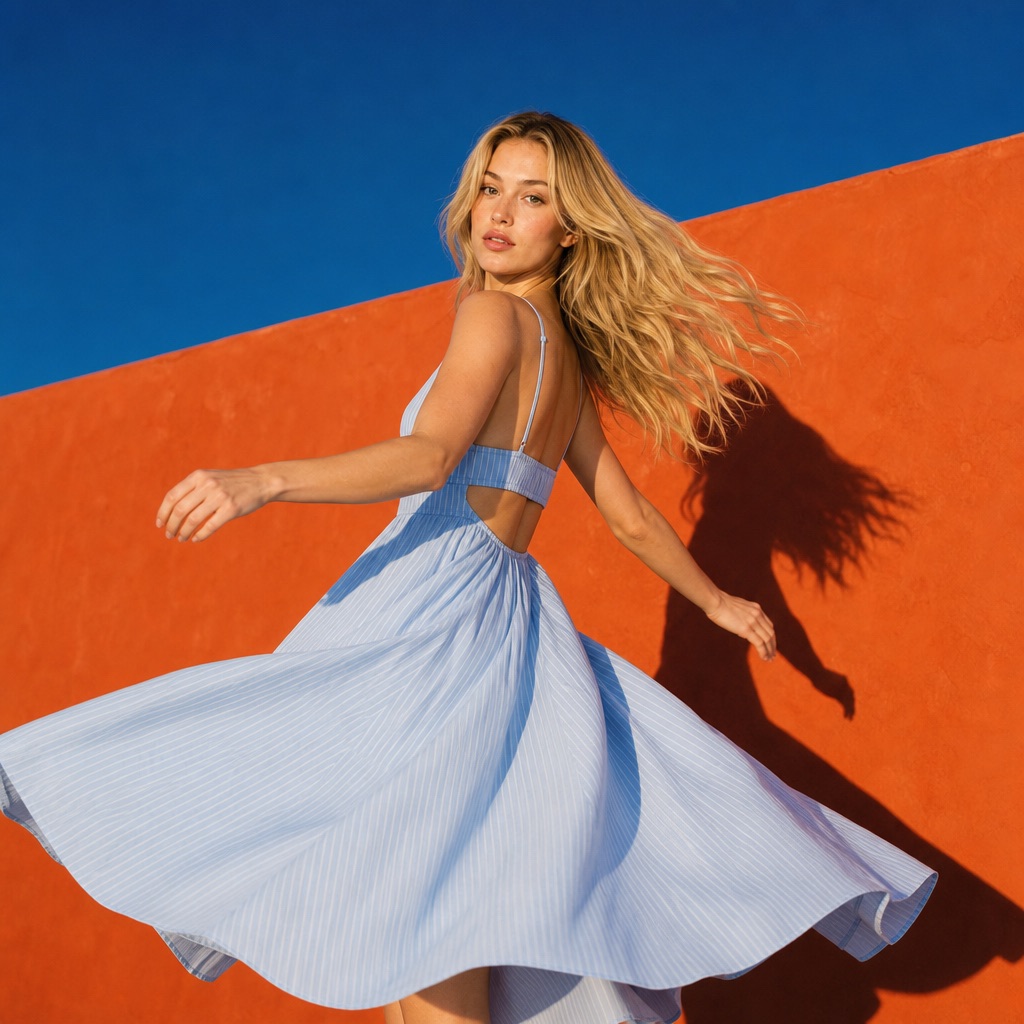
A first-look frame on contemporary women's apparel against a locked casting frame and a named environment — produced as vetting an AI photography vendor for apparel brands.

The Monday the founder opens the vendor-one delivery folder

It is the Monday morning the founder of a seven-million contemporary women's apparel label opens the Google Drive folder vendor one delivered against the SS27 capsule. The contract was twenty-two thousand dollars all-in for sixty campaign frames. Forty-eight frames landed. The founder opens frame seventeen and the model's right hand has six fingers. She opens frame twenty-two and the silk crêpe drape on the wrap dress breaks at the shoulder seam against gravity in a way silk does not break. She opens frame thirty-one and the model's face has drifted into a different person between hero and gallery. The cashmere swatch reference she sent in the brief has come back rendering as a fleece in three frames and as a felted wool in four. Thirteen of the forty-eight frames pass the founder's first-look review. The campaign was supposed to launch on Friday. The wholesale buyer at SSENSE has the lookbook on her desk in nine days.

The pattern is consistent enough at the three to thirty-million apparel tier to plan against. Vendor one is usually a generative AI reseller — Bangalore or Manila based, often a single-founder operation with three to six freelance prompt engineers, working off Midjourney or FLUX or a fine-tuned diffusion pipeline against a Pinterest moodboard the brand sent on day one. The vendor priced at sixty to one-hundred-eighty dollars per frame, which read as a ninety-percent discount against the four-hundred-to-twelve-hundred-dollar traditional studio rate per Common Thread Collective operator data through 2026, and the founder signed because the budget closed at that rate. The output looks like the vendor's house style applied to the brand's silhouette — uniform soft-light register that does not match the brand's locality lineage, generic-model casting with face drift across the frame set, fabric drape that breaks at the construction-detail close-up, hand artifacts that survive the retouch pass, and a wholesale-deck-against-campaign register the buyer at SSENSE reads as off-register against the brand's Instagram.

If you are reading this from inside an apparel founder's office on the Monday after the vendor-one delivery folder landed, this page is what the diligence framework looks like for vendor two. The five tells of a bad AI apparel vendor — visible inside the first dailies on a paid pilot. The six questions that separate a production studio from a generative reseller. The paid three-frame pilot rubric that costs four to ten thousand dollars and saves the season's photography budget against a second slop run. The brand-world test mechanic that converts the vendor-two decision from a hope into a binary read. And the three-tier comparison between the generative reseller, the off-the-shelf generative tool, and the production studio model running against a documented brand spine.
Vendor one shipped slop because the production process never started

The autopsy on vendor one is the diligence step the founder did not run on vendor one because the price point read as too good to interrogate at the contract-signature stage. The vendor's portfolio on the sales call showed eight frames that looked like the brand — quiet-luxury contemporary, soft natural light, locked casting on a generic-model frame, fabric drape that read as silk on the hero. The founder signed at sixty-five dollars per frame and assumed the eight-frame portfolio was the floor. The forty-eight delivered frames revealed the portfolio was the ceiling — the eight frames were the only eight the vendor had ever shipped at that register. The other forty had a different vendor's house style applied to the brand's silhouette because the production process never started. There was no brand-spine ingestion. There was no named-fabric reference. There was no casting lock. There was no Pantone and Delta E benchmark against the dyed cloth. There was a Midjourney prompt against a Pinterest board and a retouch pass to clean visible hands.

The diagnosis is that vendor one is not a production studio. Vendor one is a generative AI reseller running an off-the-shelf pipeline against a moodboard, priced to compete against the volume DTC product photography brief at sixty to one-hundred-eighty dollars per frame, not against the apparel campaign and lookbook brief at two-hundred to four-hundred-eighty dollars per frame. According to Business of Fashion's operator interviews with apparel brand directors through 2025 and 2026, the failure mode is consistent enough to be the median outcome — three out of four founders who engaged a sub-one-hundred-eighty-dollar-per-frame AI vendor on the first run reported that less than thirty percent of delivered frames passed the founder's first-look review. The cost was not the price per frame. The cost was the season's photography budget consumed against a re-shoot the brand now needed at the traditional studio rate the AI vendor had been hired to replace.

The discipline a production studio runs against the campaign and lookbook brief is specific and operable. Production-grade fashion photography requires a brand-spine document the studio ingests on day one. The named-fabric reference comes from the brand's actual cloth library — Loro Piana Pecora Nera at the cashmere tier, Holland and Sherry Crispaire at the wool worsted tier, Vitale Barberis Canonico Revenge at the suiting tier, named silk weights and weaves at the womenswear tier, named denim mills at the bottom-weight tier. The casting frame holds across the season at named-talent or named-AI-model level. The Pantone solid coated palette gets benchmarked against the dyed cloth with Delta E tolerance under three. The named-environment register matches the brand's locality lineage rather than the vendor's default reference set. The named-photographer reference set is cited at photographer-and-editorial-title level. If the vendor cannot answer where the brand-spine document sits in the production sequence, vendor one is being replicated with a different invoice.

The five tells of a bad AI apparel vendor — visible in the first dailies

01

Fabric drift at the close-up

The first tell is the construction-detail close-up at three hundred percent zoom. Silk crêpe should render with the weave structure visible, the drape weight reading at thirty to seventy grams per square meter, and the surface light catching the warp at the directional source. Cashmere should render with the loft visible and the surface light diffusing rather than catching. Cotton poplin should render with the warp-faced weave reading at the gutter and the surface light reading flatter than silk. If the close-up renders one fabric as another — silk as polyester, cashmere as fleece, wool as felt — the vendor never ingested the named-fabric reference. Run the close-up on every pilot.

02

Model identity drift

The second tell is casting drift across the frame set. The locked casting frame on a contemporary women's apparel drop holds the same one to four model identities across hero, gallery, lookbook spread, wholesale deck and dot-com PDP. If frame seventeen and frame thirty-one render two different faces against the same casting brief, the vendor never built a casting lock — every frame regenerates from scratch against the same prompt. The wholesale buyer at MATCHESFASHION reads frame seventeen and frame thirty-one as two different models against the same look and the brand reads as off-register. Casting lock is the production discipline that distinguishes the studio from the generator.

03

Drape against gravity

The third tell is fabric drape against gravity. A silk crêpe wrap dress drapes against the shoulder seam at the bias, falls against the rib cage, gathers at the waist tie, and falls again at the hip. If the drape breaks at the seam — fabric reading as suspended rather than falling, gathering reading as printed rather than dimensional, silhouette reading as flat against a body that should have depth — the vendor never composed against the drape physics. The drape failure is the most visible tell on the dailies because the eye reads it before any other failure mode. The drape has to hold against the dyed reference and the silhouette has to read as the silhouette the patternmaker drafted.

04

Hand and finger artifacts

The fourth tell is the hand. Generative pipelines that have not been hand-corrected at the production layer ship hand artifacts — six fingers, fused knuckles, palms reading as gloves, fingertips drifting into the cuff at the closure. The artifact survives the retouch pass on a vendor running a minimum-effort pipeline because the retouch pass is a final-frame review rather than a per-frame production discipline. A production studio either composes the hand at the per-frame layer with a named retoucher running the cleanup, or composes the frame at three-quarter crop above the wrist on poses where the hand reads as load-bearing. The hand artifact is the slop signature visible on the dailies that confirms vendor one was running a generator, not a studio.

05

House style applied to your silhouette

The fifth tell is portfolio coherence. A bad AI vendor's portfolio reads as one consistent house style — same soft-light register, same generic-model casting, same default reference set — applied to ten different brands' silhouettes. The portfolio looks coherent because the brand spine is the vendor's, not the client's. A production studio's portfolio reads as ten different brand worlds, each composed against the client's brand-spine document — different light, different casting, different fabric library, different locality lineage. Walk the vendor's three most recent apparel clients on the sales call and ask the founder which brand-spine document the vendor ingested for each. If the answer is "we worked off the moodboard," vendor one is being replicated.

06

The wholesale-deck-against-campaign off-register

The sixth tell is the cross-surface register check. A production studio ships the campaign hero, the lookbook spread, the wholesale-deck cover, the wholesale-deck construction-detail page and the dot-com PDP hero against the same brand spine and the same casting frame, and the buyer at SSENSE reads them as one brand. A bad AI vendor ships the same set against the same prompt and the cross-surface register breaks — the campaign reads as quiet luxury, the wholesale deck reads as a Shopify product page, the PDP hero reads as a Tuesday afternoon supplemental frame. Run the cross-surface check on every pilot — if vendor two cannot hold the register across hero, lookbook, deck and PDP, vendor two is vendor one with a different name on the invoice.

Six questions that separate the studio from the generator

The six questions are the diligence sequence the founder runs on the vendor-two sales call before signing the pilot contract. The answers separate the production studio from the generative reseller in the first thirty minutes of conversation. The questions are not a checklist the brand reads down a list — they are the diligence conversation the brand should have run on vendor one and did not because the price point closed the conversation early. The questions are how the brand makes sure the second engagement is not the first engagement with a different invoice. The brand-spine document the brand builds against the apparel brand identity and campaign system is the document the vendor ingests on day one — and the first question is whether the vendor knows what to do with it.

Question one is the brand-spine ingestion question. Ask the vendor what the day-one ingestion looks like. The right answer names a brand-spine document, a typography and palette block in Pantone solid coated with sRGB hex and Delta E tolerance, a photography reference set named at photographer-and-editorial-title level, a named-environment register and a casting-lock mechanic. The wrong answer is "send us the Pinterest board and the brand guidelines PDF." A vendor who cannot describe the ingestion sequence has no production discipline upstream of the generator. Question two is the named-fabric question. Ask for three frames at construction-detail close-up on a fabric the brand has in production, named at mill and weave. The right answer is a paid pilot on a named cloth from the brand's actual library. The wrong answer is a stock-fabric demo from the vendor's reel.

Question three is the casting-lock question. Ask the vendor how many frames the brand can ship at locked casting across a drop, and what the technical mechanic is — fine-tuned LoRA, named-AI-talent license, prompt-locked seed, or named-human-talent likeness rights. The right answer names a specific mechanic and a specific frame ceiling against a known production cycle. The wrong answer is "we can match the model across the set" without a named technical sequence. Question four is the Pantone and Delta E question. Ask the vendor how the palette gets benchmarked against the dyed cloth and what the Delta E tolerance is on the final frame. The right answer is Pantone solid coated against the dyed reference with Delta E under three, benchmarked at the retouch stage and again at the QC stage. The wrong answer is the swatch panel on the Figma moodboard.

Question five is the rights-and-revisions question. Ask the vendor what the revision-rights structure is — how many rework cycles are included, who owns the IP on delivered frames, what the takedown clause looks like if a frame ships against a third-party reference that turns out to be a copyright issue, and how the indemnification language reads. The right answer is a contract clause with a revision allowance per frame, an IP transfer at delivery, a takedown protocol, and indemnification capped at the contract value. The wrong answer is "we deliver and you own the frames" with no clause on the third-party-reference risk. Question six is the failure-mode question. Ask the vendor what happens when a frame does not hold the brand-world test on the first dailies review. The right answer is a named QC mechanic and a re-render protocol with a turnaround time. The wrong answer is "we'll iterate."

Across the pilot

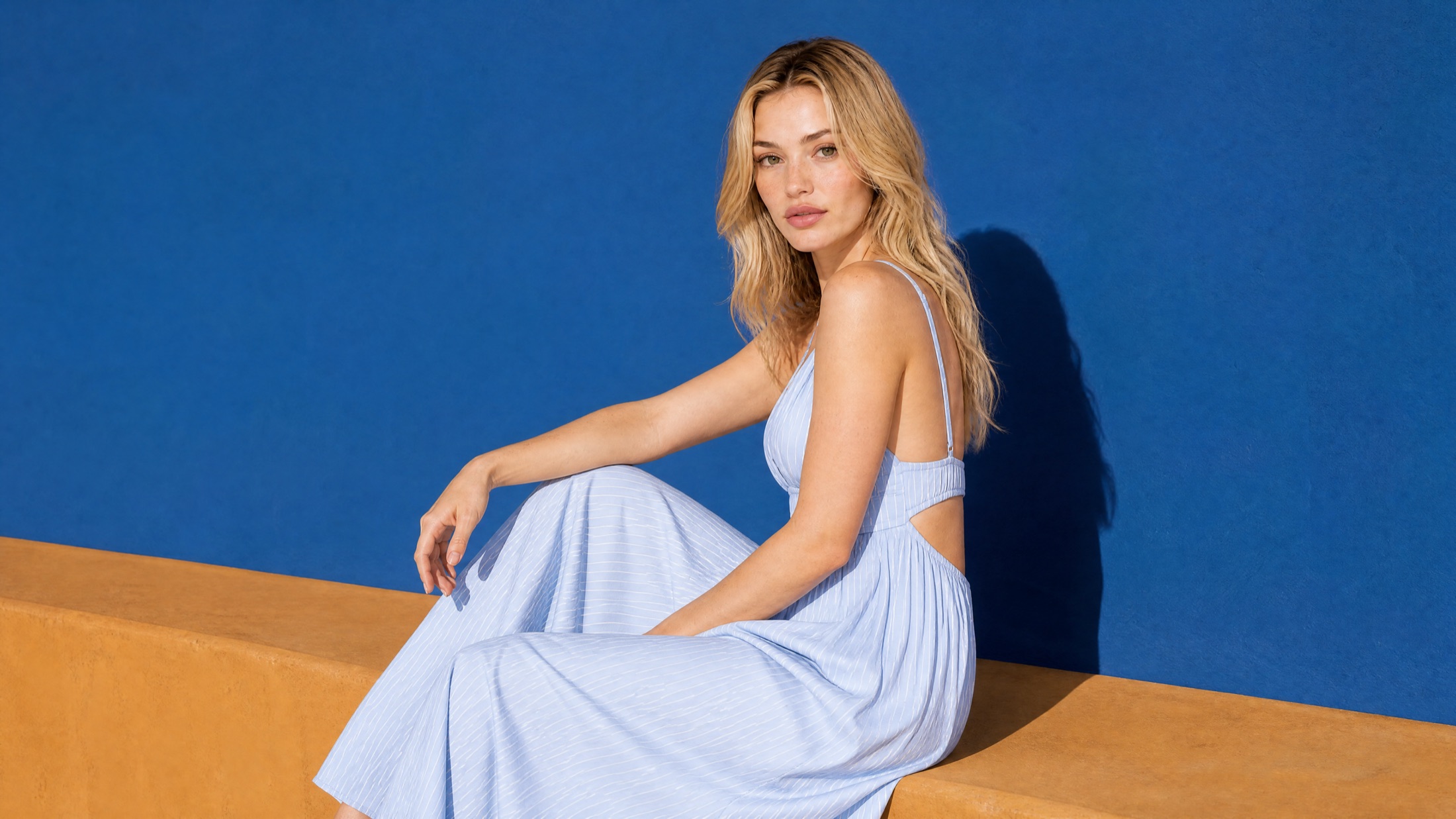
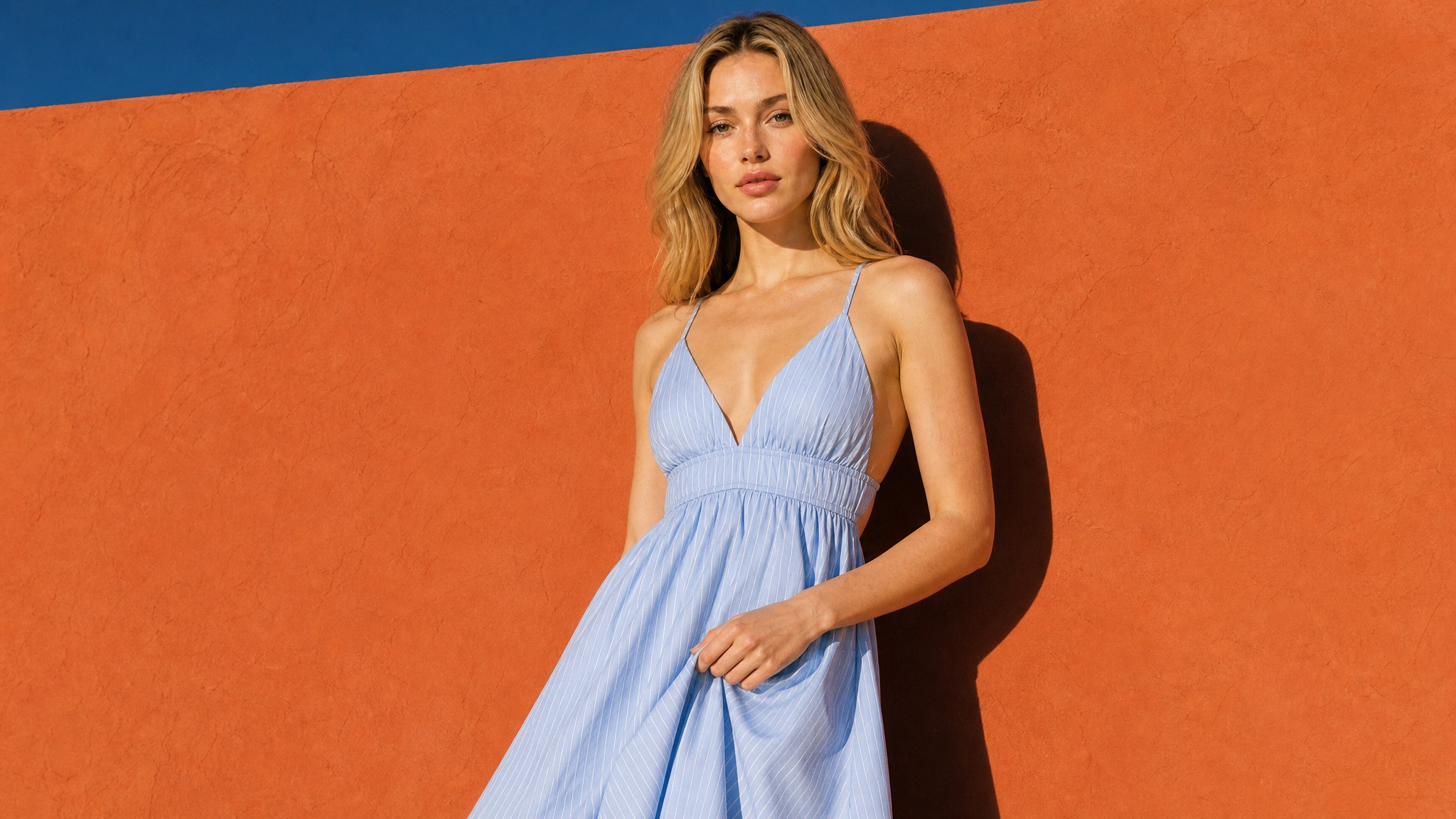
Cross-surface coherence across silhouette, casting and named environment — produced as vetting an AI photography vendor for apparel brands.

The three options

Off-the-shelf generative tool, sub-one-eighty-dollar generative reseller, or brand-spine AI production studio.

Tier 1

Off-the-shelf generative tool

Twenty to two-hundred dollars per month at Midjourney, FLUX Pro, Stable Diffusion subscriptions, or comparable in-browser generators. Run by the brand designer or the founder herself against a Pinterest moodboard and a text prompt. Output ships at the prompt-engineering ceiling of the operator — usually one to four passable frames per session at the campaign register, with no casting lock, no fabric-fidelity discipline and no Pantone benchmark. Fine for moodboard exploration, comp work and pre-brief reference building. Not a production substitute for the campaign hero, the lookbook spread, the wholesale deck or the dot-com PDP. The tool is a generator, not a studio.

Tier 2

Sub-one-eighty-dollar generative reseller

Sixty to one-hundred-eighty dollars per frame at the offshore generative-AI reseller tier, often Bangalore or Manila based, single-founder shop with three to six freelance prompt engineers running an off-the-shelf pipeline. Ships against a Pinterest moodboard with no brand-spine ingestion. Output reads as the vendor's house style applied to the client's silhouette — uniform light, generic casting with face drift across the frame set, fabric drape that breaks at the close-up, hand artifacts that survive the retouch pass. Three out of four founders report sub-thirty-percent first-look pass rate per Business of Fashion 2025-2026 operator interviews. The cost shows up twice — once in the invoice, again in the re-shoot the brand pays to replace the unusable frames.

Tier 3

Brand-spine AI production studio (us)

Eighty to two-hundred-eighty dollars per frame at the volume campaign tier and two-hundred to four-hundred-eighty dollars per frame at the editorial campaign and lookbook tier, all-in. A full seasonal pack of one-hundred-twenty to two-hundred frames at twenty-four to fifty-eight thousand dollars across a four-to-six-week cycle. Built against a documented brand-spine document the studio ingests on day one — typography, palette in Pantone solid coated with sRGB hex and Delta E under three, named-photographer reference set, named-fabric library, locked casting frame at LoRA or named-talent license level, named-environment register at the brand's locality lineage, and the brand-world test sentence that runs on every frame before it leaves the studio. The first-look pass rate is the brand's metric, not the vendor's claim.

The paid three-frame pilot that prices the diligence

The paid three-frame pilot is the diligence mechanic the founder runs against vendor two before signing the campaign contract. It is a two-week engagement priced between four and ten thousand dollars where the vendor ships three frames against the brand-spine document, a named fabric from the brand's library, a casting reference and the brand-world test sentence. The pilot is a paid diligence cost — not a free sample — because vendors who refuse a paid pilot fail the diligence on the conversation. The free-sample request is the founder's tell that the founder has not understood the production discipline yet; the paid-pilot offer is the founder's signal that she is willing to compensate the studio for the production time the pilot represents. A studio running real production discipline against a brief invests two days of named-photographer or art-director time plus three days of production at the pilot tier; that is not a free demo, that is the smallest billable unit of a real engagement.

Frame one is the construction-detail close-up on the named fabric. The brand sends the dyed reference from the production lot, names the mill and the weave, and the studio ships a frame at three-hundred-percent zoom on the construction detail — seam allowance, stitch density, edge finish, fabric weight, surface light catching the warp at the directional source. The founder reads the frame against the dyed reference and the patternmaker's draft. If the weave is visible, the drape is correct against the weight, and the surface light reads at the directional source — frame one passes. If the fabric renders one cloth as another, frame one fails. The fabric-fidelity test is the floor — a vendor that fails frame one fails the diligence on day one.

Frame two is the full silhouette on the locked casting frame. The brand sends the casting reference — a LoRA, a named AI-talent license, a moodboard at the casting-talent register, or a brief description of the locked identity — and the studio ships a frame at full silhouette against the patternmaker's draft. The frame holds the casting at the same identity it held at the brief. The silhouette reads against the cut. The drape holds against gravity. The hand reads at the wrist position the pose specifies. The founder runs the brand-world test sentence — the single declarative the founder signed at v1.0 of the brand spine — against the frame. The frame either passes the test or fails it. Pass means the casting is operable across the season. Fail means the casting lock is not real.

Frame three is the lifestyle register against a named environment from the brand's locality lineage. The brand sends the named-environment list — Brooklyn loft at four-thousand-eight-hundred Kelvin Friday afternoon, Île de Ré beach at four-thousand-two-hundred Kelvin morning, Soho House Babington House at four-thousand-five-hundred Kelvin late afternoon, or whatever the brand's reference set is — and the studio ships a frame against the named environment. The frame reads as the brand's world, not the vendor's reference. The casting holds against frame two. The fabric holds against frame one. The cross-surface coherence across all three frames is the third diligence read. If the three frames ship at the same brand register, vendor two has held the spine and the campaign engagement is signable. If the three frames read as three different brands, vendor two is vendor one with a different invoice and the founder walks away with three sample frames at the pilot cost.

What the production contract specifies that vendor one's contract did not

The production contract for vendor two specifies six things vendor one's contract did not, because vendor one's contract was a generative AI reseller's terms-of-service document with a milestone and a delivery date and nothing about the production discipline upstream of the frame. The first specification is the brand-spine ingestion milestone — day one of the production cycle is the ingestion call, the brand-spine document signs at the end of the call, and no frame composes against the brief until the document is countersigned. The second specification is the named-fabric protocol — every silhouette in the production set names the cloth at mill and weave, the dyed reference ships to the studio in week one, and the construction-detail close-up benchmarks against the reference at the QC stage. The third specification is the casting lock — the casting mechanic is named explicitly (LoRA, named-AI-talent license, locked seed) and the frame ceiling against the cycle is documented in the SOW.

The fourth specification is the Pantone and Delta E benchmark — the palette ships in Pantone solid coated with sRGB hex codes, the dyed cloth reference ships from the brand to the studio in week one, and every frame benchmarks against the palette at Delta E under three at the retouch pass and again at the QC pass. The fifth specification is the rights and indemnification structure — IP transfers to the brand at delivery, the contract includes a takedown protocol for third-party-reference risk, indemnification caps at the contract value, the rework allowance per frame is specified (typically two free rework cycles per frame at the campaign tier and one at the volume tier), and the model-likeness rights at the casting-lock layer are documented (LoRA license terms or named-talent likeness rights with usage windows). The AI fashion models vs real models framework covers the casting-rights discipline at the contract layer.

The sixth specification is the failure-mode protocol — the brand-world test sentence sits in the SOW at v1.0 of the brand spine, every frame benchmarks against the sentence at the dailies review, frames that fail go into a named rework cycle with a turnaround time, and the off-ramp is explicit if more than fifteen percent of the production set fails the test after the second rework cycle. The off-ramp protects the brand from the slop-pile scenario that vendor one delivered — at the fifteen-percent failure ceiling, the engagement converts to a credit against the next cycle or a partial refund against the unrun frames, and the brand walks away with the frames that passed plus the diligence pricing it would otherwise have paid for a re-shoot at the traditional studio rate. The contract reads as a production contract because the production discipline upstream of the frame is what the contract specifies, not the delivery date.

The math against vendor one's invoice plus the re-shoot

The economics on the vendor-two diligence framework are the math against vendor one's invoice plus the cost of the re-shoot vendor one's failure produced. The founder who paid twenty-two thousand for sixty frames and received back thirteen usable frames paid one-thousand-six-hundred-and-ninety-two dollars per usable frame at the campaign tier, against a Common Thread Collective operator benchmark of four-hundred to twelve-hundred dollars per usable frame at the traditional studio rate per the 2026 apparel-vertical panel. The vendor-one invoice did not save money against the traditional studio — it produced the same per-usable-frame economics at thirteen times the volume of unusable frames the brand still had to absorb against the season's photography budget. The re-shoot the brand needed against the SSENSE wholesale deadline ran an additional twenty-eight thousand at the traditional studio rate. Vendor one's total cost was fifty thousand dollars against a season's photography budget plan of thirty-five thousand. The cost is not the invoice. The cost is the failed delivery times the recovery rate.

The diligence framework replaces the vendor-one invoice with a diligence invoice that costs less per usable frame because the production discipline ships against the brief in the first delivery. The paid three-frame pilot ships at four to ten thousand dollars all-in. The full seasonal pack of one-hundred-twenty to two-hundred frames ships at twenty-four to fifty-eight thousand dollars across the four-to-six-week cycle, at an effective per-usable-frame rate of one-hundred-twenty to four-hundred-eighty dollars depending on the campaign tier. The first-look pass rate sits at eighty to ninety-two percent of delivered frames against the brand-world test, per 100 Creatives internal engagement data through 2026, and frames that fail the first-look review run through a named rework cycle within the original SOW. The brand ships the campaign on calendar with the wholesale-deck cross-surface coherence the buyer reads as on-register against the campaign on Instagram.

The math against the traditional studio is the math the AI photoshoot vs studio cost frame already specifies — a comparable seasonal pack at the traditional studio ships at eighty to two-hundred-twenty thousand dollars across an eight-to-twelve-week production cycle per Vogue Business and Business of Fashion campaign-side reporting through 2026. The brand-spine AI production studio model holds the editorial register the traditional studio holds because the production discipline is the same — brand-spine ingestion, named-fabric reference, locked casting, Pantone benchmark, named-environment register, brand-world test — and the cash line drops by sixty to seventy-five percent at the same first-look pass rate. The comparison frame holds across the AI vs traditional fashion photography model at the campaign and lookbook tier. The brand's photography budget compounds across the season instead of consuming itself against the re-shoot.

What the second engagement looks like when the diligence holds

What the second engagement looks like when the diligence holds: the founder of a seven-million contemporary women's apparel label, four months after the vendor-one delivery folder landed at thirteen-of-forty-eight passable, runs the diligence framework against three vendor-two candidates. Two fail the six-question sales call inside the first thirty minutes — one cannot describe the brand-spine ingestion sequence, one ships a portfolio that reads as one consistent house style across ten unrelated brand silhouettes. The third holds the conversation, names the production discipline at each step, and offers a paid three-frame pilot at seven thousand dollars across two weeks. The pilot ships on day fourteen. Frame one renders the named silk crêpe at the construction-detail close-up with the warp visible and the drape correct against the dyed reference. Frame two holds the casting at the same identity the LoRA reference specified. Frame three reads as the brand's locality lineage at the named environment the brand sent in the brief. The founder signs the seasonal pack contract on day sixteen.

The full seasonal pack ships across the next five weeks. One-hundred-eighty frames against the brand-spine document — sixty campaign hero frames at the editorial tier, eighty lookbook and lifestyle frames at the campaign tier, twenty-four wholesale-deck construction-detail frames at the wholesale tier, sixteen dot-com PDP frames at the volume tier. The first-look pass rate runs at eighty-six percent across the delivery. Frames that fail go into the named rework cycle and ship clean at the second pass. The wholesale-deck cover reads as on-register against the campaign on Instagram. The buyer at SSENSE writes the order at plan. The dot-com PDP hero reads as on-register against the email hero against the OOH adaptation. The founder spends the season's photography budget once, at the rate the diligence framework priced, and the brand compounds against the spine the studio ingested on day one. The DTC clothing brand photography playbook walks the broader cross-surface practice.

What it looks like when the diligence fails: the founder skips the paid pilot, signs the seasonal pack contract directly on the sales call, and discovers in week three of the production cycle that vendor two is running the same off-the-shelf pipeline vendor one was running with a different name on the invoice. The first dailies fail the brand-world test on every frame. The brand loses three weeks against the wholesale deadline and pays the vendor-two invoice plus the re-shoot invoice plus the slop-recovery cost. The diligence framework is the production-discipline contract the founder runs against vendor two before signing. The paid pilot is the cheapest insurance policy in the production calendar. The brand-spine document is the upstream artifact that makes the diligence possible. The diligence framework sits inside the broader AI product photography agency selection framework and the framework holds across apparel, contemporary menswear, quiet luxury, slow fashion and heritage-modernization labels at the three to thirty million tier.

Vetting an AI photography vendor for apparel · frequent questions

What does vetting an AI photography vendor for apparel brands mean?

Vetting an AI photography vendor for apparel brands is the diligence sequence an apparel founder, brand director or creative lead runs before signing a second AI photography contract after the first vendor shipped unusable assets. It covers a brand-spine ingestion check, a named-fabric pilot brief, a casting-lock test, a Pantone and Delta E rendering benchmark, a revision-rights and IP clause review, and a three-frame paid pilot that prices in advance of the campaign engagement. The goal is to confirm the vendor can hold the brand register on apparel before the brand spends the season's photography budget against a second slop run.

What are the five tells of a bad AI photography vendor on apparel work?

The five tells are fabric drift at construction-detail close-up, model-identity drift across the casting frame, off-register fabric drape that breaks the silhouette, hand and finger artifacts that survive the retouch pass, and a portfolio that reads as one vendor's house style rather than each brand's own world. Each of the five tells is visible inside the first dailies pass on a three-frame pilot. A vendor that holds against all five is in the consideration set. A vendor that fails any one is the same risk vendor one was.

Why did the first AI photography vendor ship slop on an apparel brand?

The first AI photography vendor most apparel founders engage ships slop because the vendor runs an off-the-shelf generative pipeline against a Pinterest moodboard with no brand-spine ingestion, no named-fabric reference, no casting lock and no Pantone-and-Delta-E benchmark. The vendor optimises for cost-per-frame against the volume DTC product photography brief, not for fabric fidelity and brand register at the campaign and lookbook tier. The output looks like the vendor's house style — uniform light, generic-model casting, fabric drape that breaks at the construction-detail close-up — applied to the brand's silhouette.

What questions should an apparel founder ask vendor two before paying?

Six questions. One — what does the brand-spine ingestion look like and when is the document signed. Two — show three frames at the construction-detail close-up tier for a fabric in our line, named at mill and weave. Three — what is the casting-lock mechanic and how many frames can the brand ship at locked identity across a drop. Four — what is the Pantone and Delta E benchmark on the dyed reference. Five — what are the revision rights, the IP clause and the takedown clause. Six — what does the failure protocol look like when a frame does not hold the brand-world test. The answers separate production studios from generative resellers.

How does a paid three-frame AI photography pilot work?

The paid three-frame pilot is a two-week engagement priced between four and ten thousand dollars where the vendor ships three frames against a brand-spine document, a named fabric, a casting reference and the brand-world test sentence. Frame one is a construction-detail close-up on the named fabric. Frame two is a full silhouette on the locked casting frame. Frame three is the lifestyle register against a named environment from the brand's locality lineage. The brand reviews against the brand-world test, the Pantone benchmark and the fabric-fidelity check. The pilot is a paid diligence cost, not a free sample — vendors who refuse a paid pilot fail the diligence on the conversation.

What does production-grade AI photography for apparel actually cost?

Production-grade AI photography for apparel runs eighty to two-hundred-eighty dollars per usable campaign frame at the volume tier and two-hundred to four-hundred-eighty dollars per frame at the editorial campaign and lookbook tier, per 100 Creatives engagement data and consistent with operator data cited by Common Thread Collective through 2026. A full seasonal pack of one-hundred-twenty to two-hundred frames against a documented brand spine ships at roughly twenty-four to fifty-eight thousand dollars all-in across a four-to-six-week production cycle, against eighty to two-hundred-twenty thousand for the comparable traditional campaign per Vogue Business and Business of Fashion campaign-side reporting.

How do you know an AI photography vendor can hold the brand register on apparel?

The vendor can hold the brand register if four tests pass on the pilot. One — the dailies pass the brand-world test sentence at v1.0 on the first review without re-litigation. Two — the named fabric renders at construction-detail close-up with the weave structure, the drape weight and the surface light visibly correct against the dyed reference. Three — the casting frame holds across all three pilot frames without identity drift. Four — the named environment register matches the brand's locality lineage rather than the vendor's default reference set. A vendor that holds all four is a production studio. A vendor that holds two is a generative reseller.

What is the difference between an AI photography agency and a generative AI tool for apparel brands?

A generative AI tool — Midjourney, FLUX, Stable Diffusion, an off-the-shelf image generator — outputs frames against a text prompt and a moodboard. An AI photography agency for apparel runs production discipline against a documented brand spine, a named-fabric reference, a locked casting frame, a Pantone and Delta E benchmark, a named-photographer reference set and a brand-world test mechanic before the frame leaves the studio. The tool is a generator. The agency is a production studio that uses generative pipelines among other tools. The output looks different because the production process is different.

What kind of apparel brand should run this diligence framework?

Apparel and fashion labels at roughly three to thirty million in revenue with two to four drops per year, a documented or partially documented brand spine, a wholesale-deck-against-campaign discipline and a recurring problem that the first AI photography vendor shipped unusable assets at the campaign and lookbook tier. Sharpest fit for contemporary women's, contemporary menswear-tailoring, quiet-luxury, slow-fashion, sustainable-premium and heritage-modernization labels. The framework is built for the founder, brand director or creative lead who has already paid for a vendor-one failure and needs to make the vendor-two decision without burning another season's photography budget.

Run the diligence

Send the vendor-one folder. The pilot ships in two weeks.

If you are the founder, brand director or creative lead at a three to thirty-million apparel label looking at the vendor-one delivery folder on a Monday morning — thirteen of forty-eight frames passable, the wholesale deadline at SSENSE in nine days, the season's photography budget eighty percent consumed against the slop run — send the folder, the brand-spine document if it exists, two named fabrics from the current line at mill and weave, the casting reference at LoRA or named-AI-talent level, and the named-environment list from the brand's locality lineage. The six-question diligence call runs the first week. The paid three-frame pilot ships in the second week at four to ten thousand dollars all-in. The full seasonal pack ships across the following four to six weeks at one-hundred-twenty to two-hundred frames against the spine. The first-look pass rate sits at eighty to ninety-two percent because the production discipline ran before the frame did. Vendor two does not have to be vendor one with a different name on the invoice.

Book a vendor-diligence call