The quick answer
Pick 100 Creatives if you run a food or drink brand whose pack is finished, Meta, TikTok or Google drives a real share of your sales, and you need more ad variations per flavor than your team can make, with $4,000 or more to spend per engagement.
- Every engagement is quoted in writing with a fixed total, from $4,000 to $50,000+, and nothing is charged before you approve it.
- Creative batches come back in 48 hours, and revisions within 48 hours.
- A brand intake before production covers visual language, model preferences, colorways and export specs, so every flavor reads the same in every ad.
- Pack shots and usage scenes are made without booking a shoot for each flavor, then checked against your real pack before delivery.
Pick something else if you need pack design or a rebrand (a branding and packaging agency), billboards or shelf displays for a retail launch (an out-of-home or shopper marketing agency), someone to plan and buy media (a media agency), or a food photographer to shoot a hero campaign on set. If you need a handful of ads a month and can brief them yourself, a freelancer costs less; see agency vs freelancer.
What a food or drink ad has to do in a feed
A food ad on Meta competes with a friend's dinner photo, and it loses if it looks like an ad for something you can't taste. People decide in the time it takes to scroll past, so the image carries the appetite and the first line carries the reason. "Salted caramel, 12g protein" beats "Indulge responsibly" because the viewer knows what's in the cup.
The cues that make food read as edible are physical ones. Yogurt needs a glossy ribbon, not a flat beige surface. A cold drink needs condensation and a lit edge on the glass. A chip needs a visible crunch in the break, a coffee needs crema or steam, a sparkling drink needs bubbles that rise instead of sitting still. Get those wrong and the product looks like a render, which is the one thing a food ad can't afford.
The pack has a second job. On a shelf it's read from a few feet away; in a feed it's a thumbnail the width of a thumb. A flavor name in 9-point type disappears. So either the pack is cropped large enough to read, or the headline says the flavor. Placement sizes and safe zones for each Meta slot are on static ads for Meta, and the layout rules that hold for any category are on what makes a good static ad.
The honesty line: show what's in the pack
Food styling has always used tricks, and the law has always drawn a line around them. In FTC v. Colgate-Palmolive (US Supreme Court, 1965, checked September 2026), the Court held that a mock-up passed off as proof of a product claim was deceptive, and it gave mashed potatoes standing in for ice cream as an example of a prop that isn't offered as proof. The potatoes in that example are scenery. The moment an ad says "look how creamy ours is" and shows something else, it's a claim.
The UK's Advertising Standards Authority says the same thing in plainer terms. Its guidance on misleading imagery (September 2025, checked October 2026) uses a plate of food as its example: showing stew with potatoes and rice is likely to mislead if the customer will only receive the stew.
For a food brand, the working rules come out like this:
- The portion in the bowl matches the portion in the pack, or the ad says it's a serving of two.
- Toppings, sides and garnishes that aren't included read as a serving suggestion, and the ad doesn't imply otherwise.
- Inclusions match the recipe. A yogurt labeled "fruit on the bottom" isn't shown with fruit stirred all the way through as if that's how it arrives.
- Color matches the real product. Pushing a pale green juice to emerald is the food version of a beauty filter.
- Claims on screen are claims on the label. If the pack says 12g protein, the ad can too; it shouldn't add a number the label doesn't carry.
AI image tools make this line easier to cross by accident. Image models like abundance: they add strawberries, thicken foam, heap the bowl and brighten the color, because that's what the food photos they learned from look like. None of it is a problem as scenery. All of it is a problem when it changes what the product appears to be. That's why our review step compares each finished food image against photos of the real pack and its contents before anything is delivered. How to review AI creative from an agency has the full checklist if you're reviewing another studio's work.
The UK rule that decides which food ads can run at all
Food and drink brands that sell in the UK have a restriction most other categories don't. Since 5 January 2026, paid online ads for identifiable "less healthy" food and drink are banned in the UK at all hours, and TV ads for them before 9pm (GOV.UK, products in scope, checked October 2026).
The rule applies to 13 product categories, including soft drinks with added sugar, savoury snacks, breakfast cereals, confectionery, ice cream, cakes, sweet biscuits and cereal bars, sweetened yogurt, pizza and potato products. A product in one of those categories is "less healthy" if it scores 4 or more on the government's nutrient profiling model for food, or 1 or more for drinks. It applies to businesses involved in making or selling food or drink with 250 or more employees, so many founder-led DTC brands fall outside it, while the retailer or distributor running ads for their products may not.
The part that changes creative is the identifiability test. An ad is in scope if people in the UK could reasonably identify it as an ad for a less healthy product. A brand ad that shows no specific product can be exempt, but the exemption falls away if the ad shows the product, uses a brand name identical to a product name, or uses realistic food imagery that looks like a specific product (CAP implementation guidance, checked September 2026). For a brand in scope, that means two separate ad sets: product ads for markets outside the UK, and brand-only ads built without a recognizable pack or dish for the UK. Brief them separately from the start, because a UK version made by cropping the pack out of a product ad usually still reads as that product.
Drinks: alcohol, non-alcoholic and the pour
Drinks carry platform rules on top of the food ones. Meta allows alcohol ads where local law permits, never to anyone under 18, with higher minimums in some countries: 21 in the United States and 19 in Canada. Ads for non-alcoholic beverages are allowed "as long as they do not depict alcohol or consumption" (Meta Transparency Center, Alcohol, checked September 2026). For a non-alcoholic wine or spirit, that rules out the most obvious concept, a person raising a glass, and pushes the ad toward the bottle, the table and the occasion. Our CPG creative agency page covers these rules by country.
The craft problems are specific to liquid. A pour has to look like it's moving, with a clean stream and no splash on the label. A can needs the ring pull and the label seam where the real can has them. Carbonation should read as rising bubbles, and ice should look like ice rather than glass cubes. A bottle label is a curved surface, so text on it has to bend with the bottle. These are the details image models most often get wrong, and the details a drinks buyer notices first.
Five food and drink formats that work as statics
These are the formats we start a food or drink brief with. Each gives one image one job, and each can be varied cheaply once it earns spend.
1. The close-up
The spoon lifting out of the yogurt, the chip snapping, the pour hitting the glass. Tight crop, one line of copy with the flavor. It's the format that carries appetite best, and the one where accuracy to the real texture matters most.
2. The flavor lineup
Every flavor or size in one frame. Lineups answer "is there one for me?" and work well as the second ad a person sees. They're also where mismatched product photos show up fastest, since packs shot on different days rarely share light and angle.
3. The occasion
Where the product gets eaten or drunk: the lunchbox, the cooler at the beach, the table before guests arrive. It's the safest format for alcohol-adjacent and non-alcoholic drinks, and for UK brand-only ads when the setting can carry the brand without a recognizable pack.
4. The recipe or pairing card
Three ingredients and a result: the granola on the yogurt, the tonic with the spirit, the sauce on the pasta. Label clearly what comes in your pack and what the viewer adds, which keeps the ad on the right side of the serving-suggestion line.
5. The new flavor drop
A seasonal flavor, a limited run, a new size. The launch date carries the urgency, so the ad doesn't need a countdown or an invented "last chance".
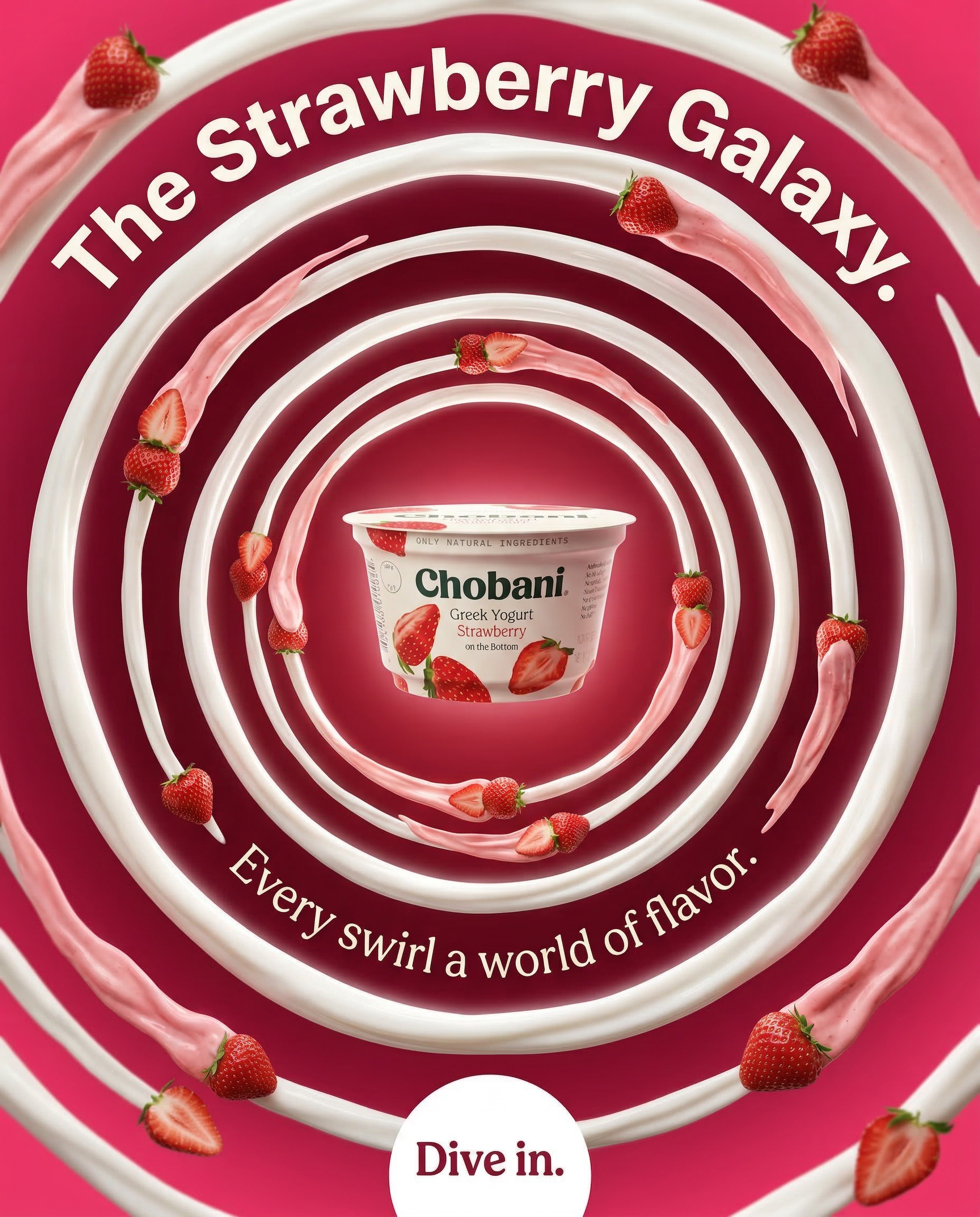
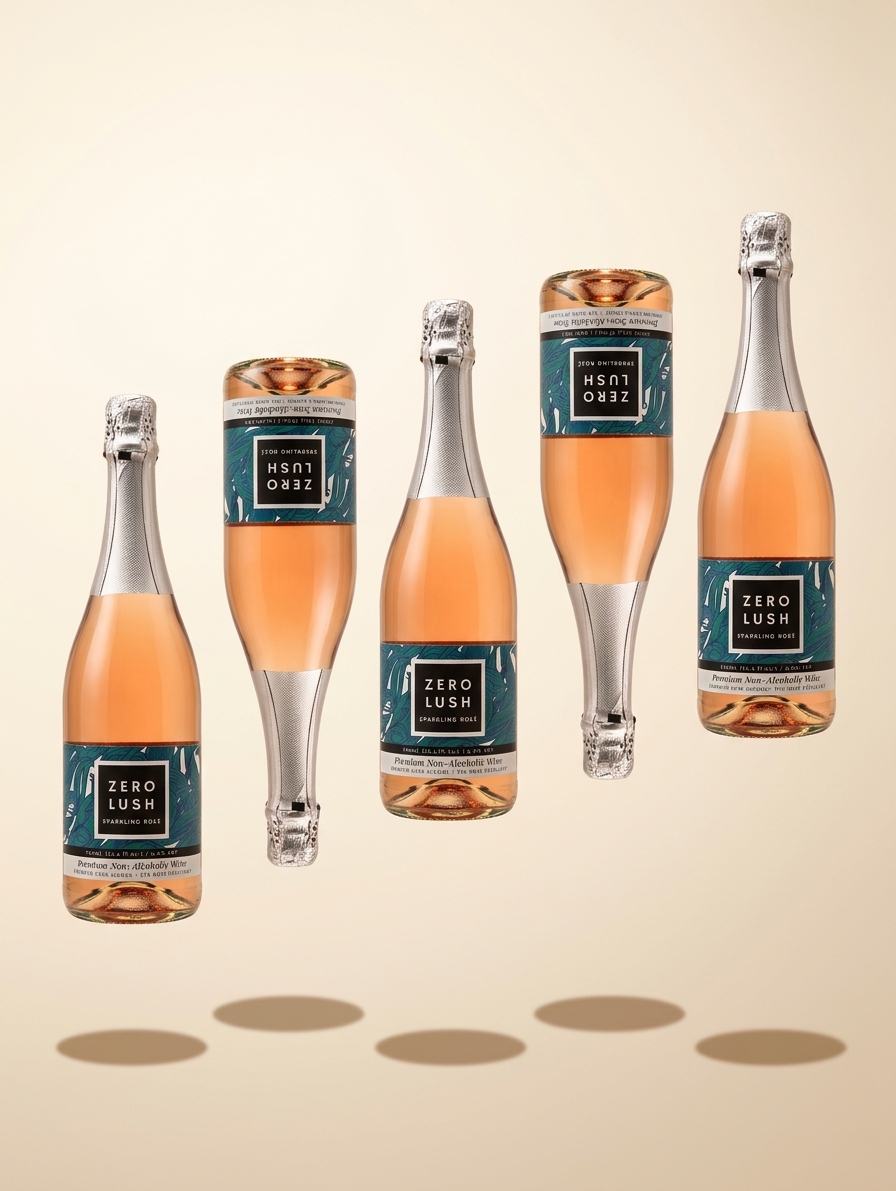
Which format wins for a given product is a testing question. How many ad creatives you need covers how many variations to run at a given spend.
Food brand marketing campaign launch: the ad plan for a new product
A launch campaign for a new food product, whether a tomato sauce, a snack or a drink, comes down to three sets of ads made before launch day: a reveal for people who already buy from you, a launch set that shows the new product the way it arrives, and a refresh set for the weeks after, when the first ads tire. This plan is written for Meta and TikTok, where most DTC food launches spend first, with Google picking up people who search the product name once they've seen it.
| Phase | Timing | Job of the ads | What we'd make | What has to be ready |
|---|---|---|---|---|
| Reveal | 1 to 2 weeks before launch | Tell existing customers and followers the flavor is coming | 3 to 4 statics (pack reveal, flavor name, launch date) and one short video | Final pack artwork |
| Launch | Launch week | Show the product as it arrives and where to buy it | 6 to 10 statics across the close-up, lineup, recipe card and occasion formats, plus 2 to 3 videos | Phone photos of the real product out of the pack, for the accuracy check |
| Refresh | Weeks 2 to 6 | Replace ads that stop earning clicks | New headlines, crops and backgrounds on the 2 or 3 concepts that earned spend | Your first week of results |
The counts in the table are our starting plan for a single new flavor, not a benchmark. Spend sets the real number, and how many ad creatives you need does that math by budget.
Work back from the pack, not the launch date
The date that controls a food launch is the day the pack artwork is final. Pack shots built from a draft dieline have to be redone when the printer's proof shifts a color or moves the flavor name, and on a jar or pouch that change shows up in every ad. With 48-hour batches and 48-hour revisions, the creative is the short part of the schedule. The slow parts sit on the brand side: final artwork, a written quote approved, and a real sample to check the renders against. If samples won't exist until launch week, we build from the final artwork and recheck the launch set against the first production units before it goes live.
A worked example: a new tomato sauce flavor
Take a hypothetical pasta sauce brand launching a roasted garlic flavor in a glass jar. The reveal ad is the jar alone, label square to the camera, flavor name readable at thumbnail size. The launch close-up is sauce coating rigatoni, and because the pasta isn't in the jar, a short line on the image calls it a serving suggestion. The lineup puts roasted garlic beside the existing flavors, all lit from the same side so the new jar doesn't look pasted in. The recipe card separates what's in the jar from what the viewer adds: pasta, parmesan, basil. The occasion ad is a weeknight table.
For UK sales, a cooking sauce sold on its own isn't named among the 13 categories in the less healthy food rule, but category 13 covers ready meals and products sold in or with a sauce as a main meal element (GOV.UK, checked October 2026). A sauce brand that also sells meal kits should check that line before it briefs UK ads.
Launch ads need a testing plan from the first day, so the refresh set is built on results rather than taste. The ad creative testing framework covers how to read the first week and what to change first.
Beverage ad creation service: what a drinks brand should get
A beverage ad creation service should hand a drinks brand finished ads for each placement it runs, the product imagery behind them, and versions that clear the alcohol rules in each market it sells to. At 100 Creatives that means statics and AI video for Meta, TikTok and Google, quoted per engagement from $4,000. This is what a typical drinks set contains and why each piece is there.
| Deliverable | Spec or rule | Why a drinks brand needs it |
|---|---|---|
| Feed static | 4:5, 1440 x 1800 px, JPG or PNG; Facebook Feed headline up to 27 characters (Meta Ads Guide, checked October 2026) | The main slot on Facebook and Instagram, where a can or bottle has to read at thumbnail width |
| Vertical version | 9:16 recrop of the same concept, with copy kept away from the top and bottom edges | Stories, Reels and TikTok cover the edges of the frame with buttons and captions |
| Pour or condensation video | Short loop made with AI video tools, art-directed by our team | Movement shows cold and fizz in a way a still can't |
| Flavor lineup | Every SKU in one frame under one light setup | Answers "which one is for me" and shows the range |
| Market variants | Alcohol versions targeted by each country's minimum age; non-alcoholic versions with nobody drinking | Meta's alcohol and non-alcoholic rules in the drinks section above |
Some searches for this come from beverage suppliers rather than DTC brands: a producer or distributor that sells to retailers, bars or other brands and wants ads for its own channels or a retail partner's. The imagery problem is the same, since the bottle still has to match the real one. The specs differ. A retailer's own ad network sets its own sizes and approval rules, so send those with the brief and the files are built to them. 100 Creatives doesn't buy media or run retailer ad accounts.
Most drinks programs run statics and video side by side. How to split the work between the two is on static vs video ads.
Product imagery without a shoot for every flavor
Food ad programs usually stall on imagery. Each new flavor, size or seasonal pack needs photos, and a food shoot means a stylist, props and a studio day. 100 Creatives makes its product and campaign images with Overs, an AI image tool that makes photos matching a brand without a shoot. Overs is our sister product, made by 100 Creatives' founder; both are brands of 2587689 Alberta Ltd.
Food took the most tries of anything we logged. Before Overs existed, we built four campaigns by hand with AI image models and kept the records. A food campaign with motion took 120 renders to get 10 usable images, the worst ratio of the four. A gummy supplement campaign took 38 renders for 12. Across all four, 361 renders produced 45 keepers, about eight renders per usable photo. Food sat at the hard end because texture, portion and label text all have to be right in the same frame.
Some food and drink ads still need a camera. A product demonstration (the sauce thickening, the tablet fizzing), a real customer eating it, a chef or founder who has to be recognizable: when you need a real photo shoot lists those cases, and we'll say so before quoting if your brief is one of them.
What this page used to say
An earlier version of this page described 100 Creatives as a full-stack food and beverage agency: brand campaigns, out-of-home, retail point-of-sale, creator casting and talent management, all from a named team on a flat monthly retainer. That overstated what we do. 100 Creatives makes paid-social and search ad creative, AI video and the product imagery behind them, quoted per engagement. It doesn't design packaging, shelf displays or billboards, and it doesn't run creator programs.
How an engagement works
It starts with a brand intake: visual language, model preferences, colorways and export specs, plus your pack files, photos of the real product out of the pack, and any claims your label carries. From there you get a written quote with a fixed total before any work starts, in one of four ranges: $4,000 to $10,000, $10,000 to $25,000, $25,000 to $50,000 or $50,000+. Product photography projects start at $5,000. Nothing is charged until you approve the quote in writing, quotes are valid for 30 days, and projects are invoiced in advance. Creative batches come back in 48 hours, and so do revisions. For how that compares with studios and subscriptions, see ad creative agency pricing. Snack and coffee boxes that ship a new lineup every month have their own scheduling problem, and subscription box product photography on a monthly cadence plans it backward from the reveal date.
Which should you buy?
Food or drink brand running paid social
Pack is settled, Meta, TikTok or Google drives sales, and you need statics, AI video and product imagery across flavors from $4,000 per engagement.
Hero campaign or demonstration
You need a real pour, a real bite or a real person on set, or a hero image for pack and website that has to be photographed.
New pack or retail launch
You need pack design, shelf materials or billboards. Paid-social ads come after that work.
Real people eating it
Your best ads are customers tasting on camera. That needs real creators; see UGC ad creatives.