The quick answer
Pick 100 Creatives if you run a food, beverage, snack, supplement, beauty or household brand whose pack and identity are finished, you sell or drive demand through Meta, TikTok and Google, and you need more ad variations than your team can make, with a budget of $4,000 or more per engagement.
- Every engagement is quoted in writing with a fixed total, from $4,000 to $50,000+, and nothing is charged before you approve it.
- Creative batches come back in 48 hours, and revisions within 48 hours.
- A brand intake before production covers visual language, model preferences, colorways and export specs, so the pack reads the same in every ad.
- Statics, AI video and product imagery come from one team, without booking a shoot for each flavor or size.
Pick something else if you need a new pack, a brand identity or shelf materials for a retail launch (a CPG branding or shopper marketing agency), you need someone to plan and buy the media (a media agency), or you need a few ads a month and can brief them yourself (a freelancer; see agency vs freelancer).
What a CPG creative agency does, and the four kinds you'll meet
Search "CPG creative agency" and the results mix shops that do very different work. A beverage founder who books calls with the first five will talk to a packaging studio, a retail display firm, an ad production studio and a media buyer, and each will describe itself with the same three words. Sorting them by what they deliver saves those calls.
| Kind of agency | What it delivers | Hire it when |
|---|---|---|
| Branding and packaging | Identity, pack design, brand guidelines, launch campaign concepts | You're launching, rebranding or redesigning the pack |
| Shopper and retail marketing | Shelf talkers, end caps, displays, retailer and distributor materials | A retail listing or a new chain is coming |
| Ad creative production | Static and video ads for paid social and search, product imagery for them | Your ads need more angles, sizes and refreshes than your team can make |
| Media | Channel plans, buying, bidding, reporting | You need someone to spend and manage the ad budget |
Large full-service agencies cover all four under one contract, usually at a price that assumes a national brand budget. Most growing CPG brands split the work: a branding studio once every few years, a retail specialist around listings, and an ad creative partner every month the ads are running. 100 Creatives sits in the third row only. If you're comparing costs across the rows, ad creative agency pricing lists what production studios and subscriptions charge, each price checked on the vendor's own page.
Why a paid-social ad is a different job from the shelf
A pack is designed to be recognized from a few feet away among competitors on a shelf. A Meta or TikTok ad is seen on a phone, next to posts from friends, by someone who wasn't shopping. The same pack that wins the shelf can shrink to a thumbnail where the flavor name is unreadable.
That changes what the ad has to do. The pack needs to be large enough to read at phone size, or the headline has to carry the flavor for it. The ad needs one reason to stop, stated in the first line, because there's no aisle context telling the viewer what category they're looking at. And it needs variations: the same product shot against three backgrounds, four headlines and two crops, since the platform decides which one earns the spend. A branding agency usually delivers a handful of hero images per campaign. An ad creative partner builds the dozens of versions around them. Sizes and safe zones for each Meta placement are on static ads for Meta, and the layout rules that hold across categories are on what makes a good static ad.
Category rules that change the brief
CPG covers categories with very different ad rules, and the rule usually decides the concept before design starts.
Alcohol. Meta requires alcohol ads to follow local law and industry codes, and never to target anyone under 18. Some countries set a higher floor: 21 or older in the United States, 19 in Canada, 25 in Sweden. A few countries, Norway and Turkey among them, don't allow alcohol ads at all (Meta Transparency Center, Alcohol, checked October 2026). Promoting a brand, showing its logo and posting a cocktail recipe all count as alcohol ads under that policy.
Non-alcoholic drinks. The same policy allows ads for non-alcoholic beverages, as long as they don't depict alcohol or people drinking it. For a non-alcoholic wine or spirit brand, that shapes the whole concept. The product can be celebratory and look like the real thing on the table; the ad can't borrow a scene of someone drinking wine to make the point.
Supplements, functional food and wellness drinks. Anything that promises a health effect falls under FDA claim categories, FTC substantiation and Meta's 18+ rule for dietary and health products. Our supplement ad creative page covers structure/function claims, and health and wellness ad creative covers Meta's wellness rules in full.
Food, snacks and household. Fewer platform restrictions, more competition for attention. The limits here are the claims on your own pack: an ad can repeat "20g protein" if the label says it, and shouldn't add a number the label doesn't carry. Food and beverage ad creatives covers the image side of that rule, and the UK's 2026 limits on less healthy food ads.
TikTok Shop for small CPG beverage, supplement and snack brands
A small CPG brand selling through TikTok Shop in the US in 2026 advertises through GMV Max. TikTok made it "the default and only supported campaign type for TikTok Shop Ads" from July 2025, and new Video Shopping Ads, Product Shopping Ads and LIVE Shopping Ads can no longer be created under the Sales objective with TikTok Shop as the destination (TikTok Ads Help, GMV Max migration, page updated March 2026, checked October 2026).
That changes the creative job. GMV Max "chooses the products, creative assets and placement options" itself (TikTok Ads Help, Product GMV Max, page updated June 2026, checked October 2026). The brand controls the pool of videos, not which one runs. A pool of two videos per product gives the system little to choose from; a pool with several hooks per flavor, a lineup video and a usage video gives it real options. The ad account also needs GMV Max authorization for the shop, and an agency needs ad promotion access plus operator or admin access to the advertiser account, according to the same page.
| Category | Check before you list or brief | What the video has to show |
|---|---|---|
| Beverage | Shelf-stable food and beverage is a category that needs qualification documents on TikTok Shop US, per PPC Land's June 2026 summary; confirm in Seller Center. Alcohol ads follow TikTok's alcohol policy: licenses from regulators, alcohol content and strength stated, a responsible drinking line, no one under 25 featured (TikTok ad policy, Alcohol, updated September 2025, checked October 2026) | The can or bottle at phone size, the pour, cold condensation, the flavor name readable in the first second |
| Supplement | Children's vitamins and supplements need product-level qualification, and expiration-date rules for dietary supplements took effect June 5, 2026, per the same PPC Land summary. Claims follow FDA and FTC rules, covered on supplement ad creative | The pack, the serving (gummy, scoop, capsule) and the routine it fits into, with no disease claim |
| Snack | Shelf-stable food qualification, as above. Any nutrition number in the ad must be on the pack | The texture and the bite, the open bag, the flavor lineup |
Secondary summaries of TikTok Shop's US policies change fast, and the policy center inside Seller Center is the version that binds you. Read it on the day you list.
Where 100 Creatives fits on TikTok Shop
We make the 9:16 AI video ads, the statics and the product imagery that go into the pool. We don't run Seller Center, recruit affiliate creators or manage GMV Max budgets. A brand searching for a CPG TikTok agency that runs the whole shop needs a TikTok Shop agency for that; a brand that has the shop running and is short on videos is the brief we take. Creator-led videos are a separate decision, covered on UGC ad creatives, and the static-or-video split on static vs video ads.
Six CPG ad formats that work as statics
These are the formats we reach for first on a CPG brief, because each one gives a static a single job and each can be varied cheaply once it works.
1. The pack hero
The product, large, with one line of copy. It's the simplest ad and the one most brands under-produce, because a single studio shot gets reused until it fatigues. New backgrounds, props and crops around the same pack give the platform fresh versions without changing the message.
2. The flavor or variant lineup
Four flavors in a row, or the full range of sizes. Lineups answer "is there one for me?" and work well as the second ad a person sees after the pack hero. They're also where inconsistent product photography shows up fastest, since four packs shot on different days rarely match.
3. The usage moment
Where the product lives: yogurt on a breakfast counter, sparkling water in a cooler, a detergent pod going into the drum. Usage ads show the product in a real setting without implying a result, which keeps them safe in regulated categories.
4. The ingredient or sourcing story
What's in it and where it comes from, stated plainly: real fruit on the bottom, seeds roasted in-house, a short ingredient list. Only run what the pack or your documentation supports.
5. The where-to-buy ad
For brands with retail distribution, "Now at" or "Find it in the chilled aisle" with the retailer named, if the retailer allows its name in your ads. These push paid social toward in-store sales, which matters for brands whose online store is a small share of revenue.
6. The seasonal or limited run
A new flavor, a summer pack, a holiday bundle. The date or the season carries the urgency, so the ad doesn't need to invent any. A countdown to a sale that never ends is its own FTC problem.
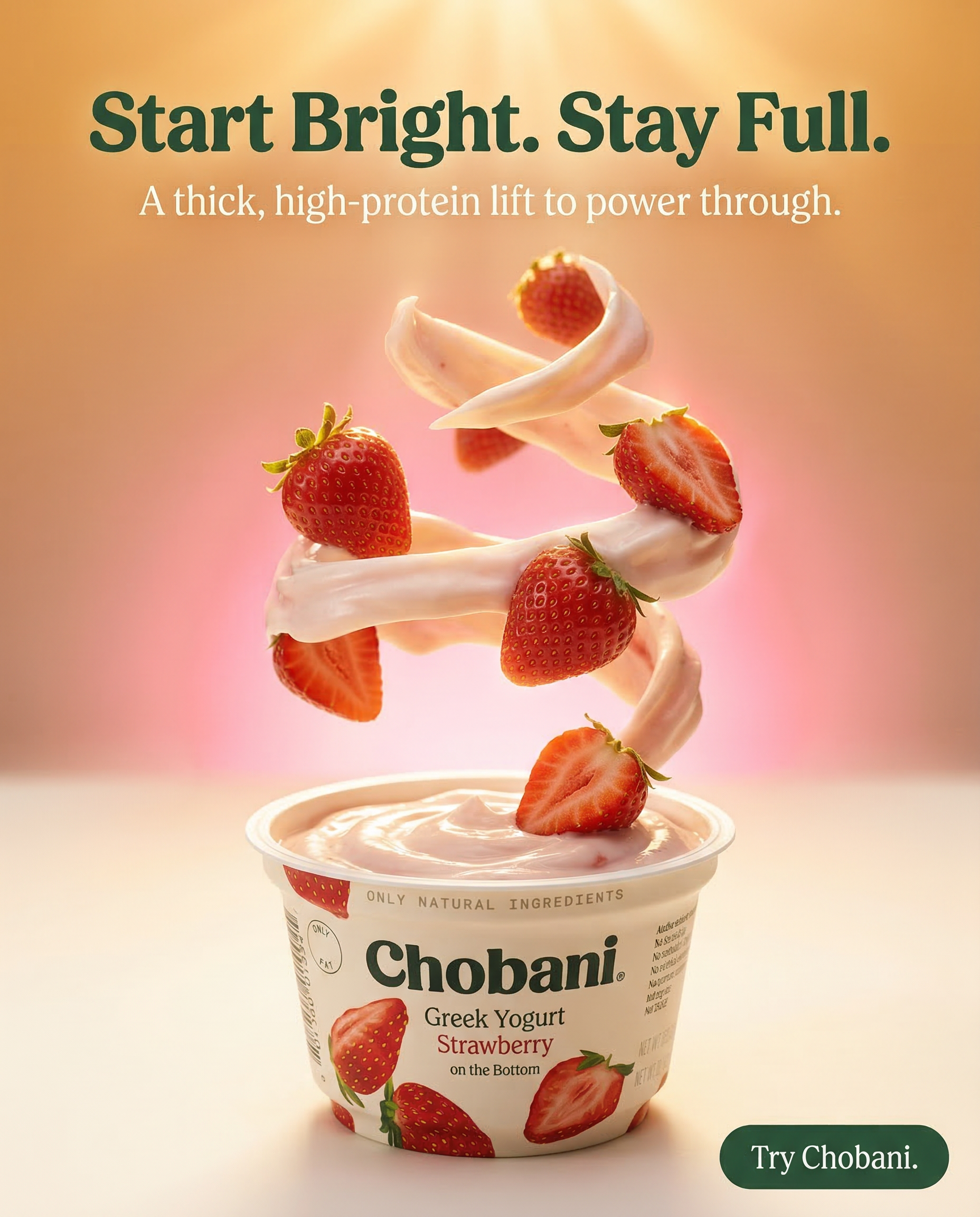
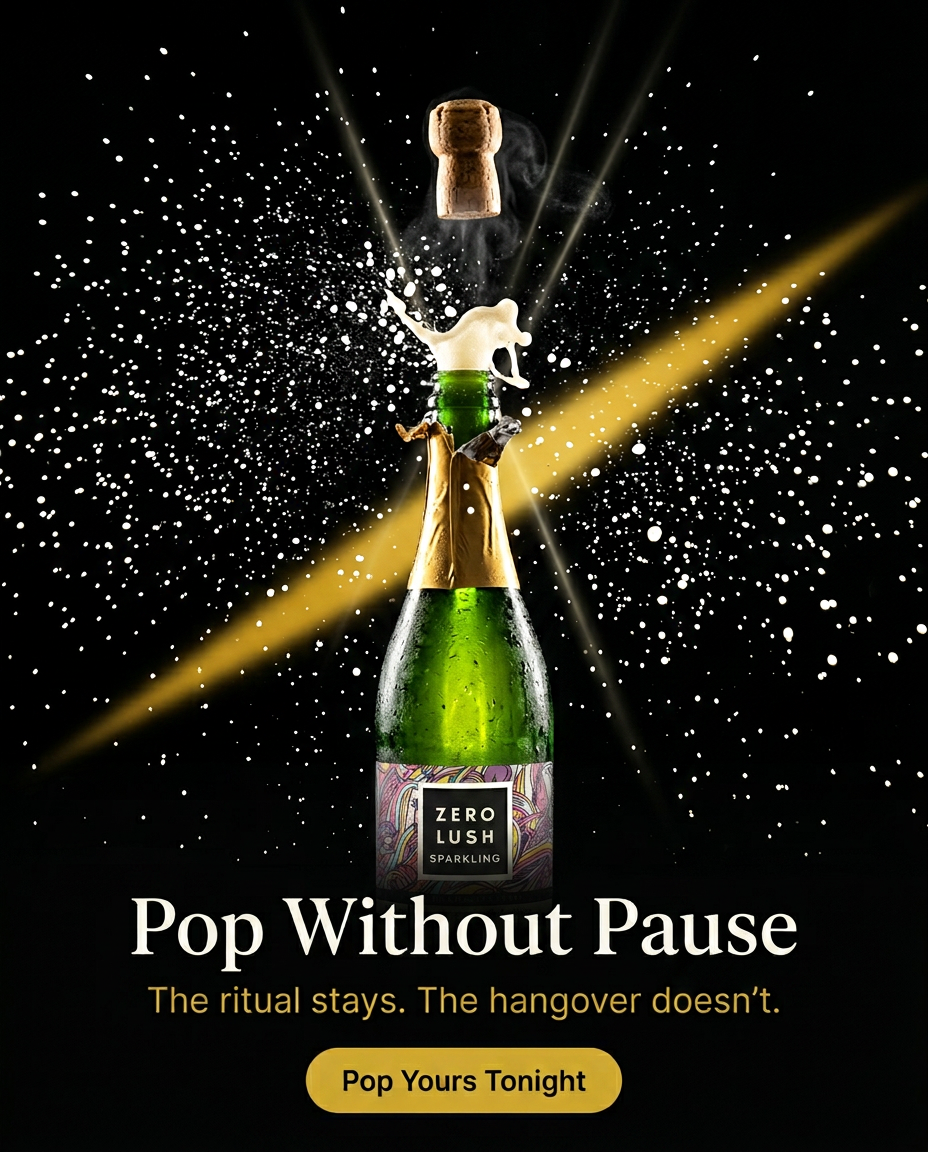
Which format wins for a given product is a testing question. How many variations to run at a given spend is covered on how many ad creatives you need.
Product imagery without a shoot for every SKU
Most CPG ad programs stall on imagery. Every new flavor, size or seasonal pack needs photos, and booking a studio day for each one is slow. 100 Creatives makes its product and campaign images with Overs, an AI image tool that makes photos matching a brand without a shoot. Overs is our sister product, made by 100 Creatives' founder; both are brands of 2587689 Alberta Ltd.
It takes many tries per image. Before Overs existed, we built four campaigns by hand with AI image models and kept the records. A food campaign with motion took 120 renders to get 10 usable images. A gummy supplement campaign took 38 renders for 12. Across all four, 361 renders produced 45 keepers, about eight renders per usable photo. That ratio is why the review step matters, and why a pack with fine print or an unusual shape can take longer. Product visuals at scale covers how references, brand rules and review time work for a large catalog.
Some CPG ads still need a camera: a stain coming out in real time, a real customer's result, a person who has to be there. When you need a real photo shoot lists those cases, and we'll say so before quoting if your brief is one of them.
Is 100 Creatives a CPG branding agency?
No. An earlier version of this page described 100 Creatives as a full-stack CPG agency handling brand campaigns, out-of-home, retail point-of-sale and a named team on a monthly retainer. That overstated what we do, and the page has been rewritten.
100 Creatives makes paid-social and search ad creative, AI video and the product imagery behind them, quoted per engagement. It doesn't design packaging, identities, shelf displays or out-of-home. Health and wellness CPG brands searching for a branding agency need a studio that does identity and packaging, and when the brand is set, an ad creative partner to run it on Meta, TikTok and Google.
What do CPG ads cost? Two bills, not one
CPG ads cost two separate bills: the creative, which you pay a studio, freelancer or subscription to make the ads, and the media, which you pay Meta, TikTok or Google to show them. With 100 Creatives the creative bill is a written quote with a fixed total, in one of four ranges from $4,000 to $50,000+, and the media bill is whatever you set in Ads Manager.
A quote that blends the two into one monthly number is hard to compare with anything. Keep them apart and both are easier to plan. The creative bill is mostly fixed per batch. The media bill scales with how many products, audiences and days you run.
| Bill | Who sets it | What moves it | With 100 Creatives |
|---|---|---|---|
| Ad creative | The studio, freelancer or subscription you hire | Number of flavors and SKUs, statics vs video, number of sizes, how many angles per product | Quoted in writing: $4,000 to $10,000, $10,000 to $25,000, $25,000 to $50,000 or $50,000+ |
| Product imagery | A photographer, a studio or an AI image workflow | Number of packs, scenes per pack, whether the pack has fine print | Product Photography from $5,000 per project |
| Media | You or your media agency, inside each ad platform | Number of campaigns and ad groups, days live, markets | Not sold. You pay the platform directly |
Do the media math before you ask for a creative quote
TikTok publishes its floors. A campaign daily budget has to be above $50, and each ad group's daily budget above $20; a 31-day ad group on a lifetime budget needs at least $620 (TikTok Ads Help, About budgets, page updated July 2026, checked October 2026). A snack brand testing three flavors as three ad groups at that floor spends a little over $1,800 a month on media before any ad has proven itself.
Our view: when the creative bill is several times the monthly media bill, fix the media plan first. A brand spending under $2,000 a month on TikTok usually gets more from a freelancer or its own team making a few ads than from a $4,000 engagement. Once spend grows and the same three ads start to fatigue, the variation count goes up and a studio starts to pay for itself. How many ad creatives you need sizes that count by spend, and ad creative agency pricing compares what studios and subscriptions charge.
What "buy CPG ads" usually means
The phrase covers three purchases. Some brands mean buying the ads themselves: statics and video made for them. Some mean buying media on social platforms. Some mean retail media, the ad networks run by retailers, where each network sets its own formats and minimums. 100 Creatives sells only the first. We don't buy media, run retailer ad accounts or manage TikTok Shop campaigns.
How an engagement works
It starts with a brand intake: visual language, model preferences, colorways and export specs, plus your pack files and any claims your label already carries. From there you get a written quote with a fixed total before any work starts, in one of four ranges: $4,000 to $10,000, $10,000 to $25,000, $25,000 to $50,000 or $50,000+. Product photography projects start at $5,000. Nothing is charged until you approve the quote in writing, quotes are valid for 30 days, and projects are invoiced in advance. Creative batches come back in 48 hours, and so do revisions.
Which should you buy?
CPG brand running paid social
Pack and brand are settled, Meta, TikTok or Google drives demand, and you need statics, AI video and product imagery from $4,000 per engagement.
Launch or rebrand
You need an identity, a new pack or brand guidelines. Ads come after that work.
Retail listing
A new chain wants displays, shelf materials and retailer presentations. That sits outside what a paid-social creative partner ships.
Low, occasional volume
A few ads a month and time to brief them yourself. See agency vs freelancer.